Listen to this Post
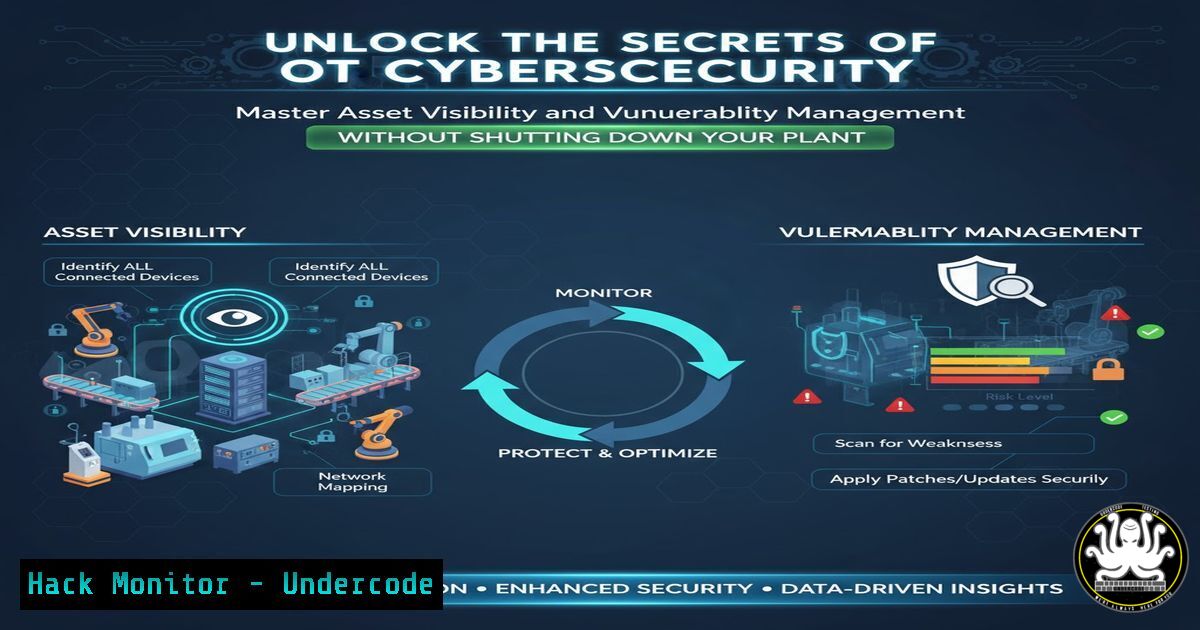
Introduction:
Operational Technology (OT) environments power critical infrastructure, but their unique protocols and availability requirements make traditional IT security tools ineffective. This article delves into the specialized techniques for achieving comprehensive asset visibility and vulnerability management in industrial control systems (ICS) without compromising operational integrity.
Learning Objectives:
- Understand the principles of protocol-aware active discovery for OT asset identification.
- Learn how to implement robust change management and detect unauthorized modifications.
- Master offline vulnerability management techniques to secure sensitive industrial networks.
You Should Know:
1. Protocol-Aware Active Discovery
The cornerstone of OT security is knowing what’s on your network. Unlike IT environments, active scanning with traditional tools like Nmap can disrupt delicate industrial processes. Protocol-aware discovery uses industrial communication protocols to safely interrogate assets.
 Example using a Python script with the pyModbus library for passive discovery
from pymodbus.client.sync import ModbusTcpClient

def discover_plc(host_ip):
try:
client = ModbusTcpClient(host_ip)
connection = client.connect()
if connection:
 Read holding registers to identify device
response = client.read_holding_registers(0, 10)
if not response.isError():
print(f"PLC found at {host_ip}: {response.registers}")
client.close()
except Exception as e:
print(f"Connection failed to {host_ip}: {str(e)}")

Usage for a common PLC range
for ip in ["192.168.1.100", "192.168.1.101"]:
discover_plc(ip)
Step-by-step guide:
- This script uses the Modbus TCP protocol, common in industrial environments, to safely communicate with Programmable Logic Controllers (PLCs).
- It attempts to connect to predefined IP addresses and read holding registers, which typically contain device identification information.
- The connection is properly closed after each attempt to prevent resource exhaustion on the PLC.
- This method is considered safe for most OT environments as it uses standard operational protocols rather than aggressive port scanning.
2. Configuration Change Monitoring with Wazuh
Detecting unauthorized changes is critical in OT environments where a single modification can cause catastrophic failures. Wazuh provides open-source security monitoring capable of tracking file integrity.
 Wazuh agent configuration for monitoring critical PLC files
<syscheck>
<disabled>no</disabled>
<directories check_all="yes" realtime="yes">/opt/plc/config</directories>
<directories check_all="yes">/etc/control_system</directories>
<ignore>/opt/plc/config/temp</ignore>
</syscheck>

Command to verify Wazuh agent status
systemctl status wazuh-agent
sudo wazuh-control status
Step-by-step guide:
- Configure the Wazuh agent to monitor critical directories containing PLC configurations and control system files.
- The `realtime=”yes”` attribute enables immediate detection of changes for the most sensitive directories.
- Use the systemctl commands to verify the agent is running properly.
- Regular integrity checks compare current file states against baselines and alert on any deviations, including unauthorized modifications to ladder logic or configuration files.
3. Offline Vulnerability Assessment with OVAL Definitions
In air-gapped or sensitive OT networks, you cannot directly connect to vulnerability databases. The Open Vulnerability and Assessment Language (OVAL) allows for offline vulnerability checking.
 Using OpenSCAP for offline vulnerability assessment
sudo yum install openscap-scanner scap-security-guide

Generate offline inventory of installed packages
rpm -qa > system_packages.txt

Run OVAL evaluation against stored definitions
oscap oval eval --results scan_results.xml --report vulnerability_report.html \
/usr/share/xml/scap/ssg/content/ssg-rhel7-ds.xml
Step-by-step guide:
- First, install the OpenSCAP scanner and security guide content on a system with internet access.
- Export the list of installed packages from your OT systems to removable media.
- Transfer both the OVAL definitions and package lists to the assessment workstation.
- Run the evaluation command to compare installed software against known vulnerabilities without requiring network connectivity to the OT environment.
4. Industrial Protocol Analysis with TShark
Understanding industrial network traffic is essential for both discovery and monitoring. TShark, the command-line version of Wireshark, can decode industrial protocols.
 Capture and analyze Modbus/TCP traffic
tshark -i eth0 -f "tcp port 502" -Y "modbus" -V -w modbus_capture.pcap

Analyze CIP (Common Industrial Protocol) communications
tshark -i eth0 -f "tcp port 44818 or udp port 2222" -Y "cip" -O enip

Extract statistics on industrial protocol usage
tshark -r ot_capture.pcap -q -z io,stat,300,"MODBUS"
Step-by-step guide:
- Use the first command to capture Modbus traffic on the standard port 502, filtering in real-time for Modbus packets.
- The second command targets EtherNet/IP and CIP protocols common in Allen-Bradley systems.
- The statistical analysis command processes a capture file to show MODBUS traffic patterns over time intervals.
- Always coordinate with operations teams before capturing traffic on production networks to avoid potential impacts.
5. Windows OT Server Hardening with DSC
Many OT environments use Windows-based HMIs and historians. Desired State Configuration (DSC) provides declarative hardening for these systems.
 DSC configuration for OT Windows server hardening
Configuration HardenedOTServer
{
Node "OT-HMI-01"
{
WindowsFeature DisableSMB1
{
Ensure = "Absent"
Name = "FS-SMB1"
}

Registry DisableLLMNR
{
Key = "HKLM:\SOFTWARE\Policies\Microsoft\Windows NT\DNSClient"
ValueName = "EnableMulticast"
ValueData = "0"
ValueType = "Dword"
Ensure = "Present"
}

Firewall OTAllowSpecific
{
Name = "AllowOTProtocols"
Ensure = "Present"
Enabled = "True"
Direction = "Inbound"
RemotePort = "502,44818,20000"
Protocol = "TCP"
Action = "Allow"
}
}
}

Apply the configuration
HardenedOTServer -OutputPath "C:\DSCConfigs"
Start-DscConfiguration -Path "C:\DSCConfigs" -Wait -Verbose
Step-by-step guide:
- This DSC configuration disables vulnerable protocols like SMB1 and LLMNR that have no place in OT environments.
- It configures Windows Firewall to only allow specific industrial protocol ports rather than using broad allow rules.
- The configuration is declarative, meaning the system will continuously enforce these settings, reverting any unauthorized changes.
- Test all hardening configurations in a non-production environment first to ensure they don’t impact control system functionality.
6. PLC Program Integrity Verification
Ensuring the integrity of PLC logic is critical for OT security. Hash verification of program files provides a method for detecting unauthorized changes.
import hashlib
import os

def verify_plc_program_integrity(program_path, expected_hash):
"""Verify PLC program file hasn't been modified"""
with open(program_path, 'rb') as f:
file_hash = hashlib.sha256(f.read()).hexdigest()

if file_hash == expected_hash:
print("PLC program integrity verified")
return True
else:
print("WARNING: PLC program hash mismatch!")
return False

Generate baseline hash for a new PLC program
def generate_baseline_hash(program_path):
with open(program_path, 'rb') as f:
return hashlib.sha256(f.read()).hexdigest()

Example usage
baseline_hash = generate_baseline_hash("/backup/plc_program.l5x")
verify_plc_program_integrity("/current/plc_program.l5x", baseline_hash)
Step-by-step guide:
- This Python script generates SHA-256 hashes of PLC program export files (commonly .L5X for Rockwell systems).
- Store baseline hashes securely offline or in a write-protected medium after commissioning or authorized changes.
- Regularly compare current program files against baseline hashes to detect tampering or unauthorized modifications.
- Integrate this verification into change management workflows to ensure only authorized program versions are deployed.
7. OT Network Segmentation with iptables
Proper network segmentation is the foundation of OT security, creating barriers between zones with different security requirements.
 iptables rules for OT DMZ segmentation
 Allow necessary industrial protocols from IT to OT DMZ
iptables -A FORWARD -i eth0 -o eth1 -p tcp --dport 502 -m state --state NEW,ESTABLISHED -j ACCEPT
iptables -A FORWARD -i eth1 -o eth0 -p tcp --sport 502 -m state --state ESTABLISHED -j ACCEPT

Block all other traffic from IT to OT
iptables -A FORWARD -i eth0 -o eth1 -j DROP

Allow historian data collection from OT to DMZ
iptables -A FORWARD -i eth1 -o eth2 -p tcp --dport 1433 -m state --state NEW,ESTABLISHED -j ACCEPT

Log rejected packets for monitoring
iptables -A FORWARD -j LOG --log-prefix "OT_SEGMENTATION_DENIED: " --log-level 4
Step-by-step guide:
- These iptables rules implement a basic Purdue Model segmentation between Level 3 (OT DMZ) and Level 4 (IT).
- The first ruleset allows Modbus TCP communications from IT systems to OT while maintaining stateful inspection.
- The historian rule permits SQL Server connections from OT to the DMZ for data aggregation.
- Logging rejected packets provides visibility into attempted cross-zone communications for security monitoring.
- Always implement and test segmentation rules during planned maintenance windows to avoid production impacts.
What Undercode Say:
- OT security requires specialized approaches that prioritize availability over confidentiality, unlike traditional IT security.
- Passive and protocol-aware discovery methods are non-negotiable in production OT environments where system stability is paramount.
- The convergence of IT and OT networks demands security professionals who understand both worlds and can bridge the cultural and technical divides.
The fundamental paradigm shift in OT security recognizes that these systems cannot be treated like corporate IT assets. Where IT security focuses on protecting data confidentiality, OT security’s primary concern is ensuring continuous operation and human safety. The techniques outlined—from protocol-aware discovery to offline vulnerability management—represent this specialized approach. Organizations that successfully secure their industrial environments are those that invest in both the technology and the specialized knowledge required to implement it properly. As threat actors increasingly target critical infrastructure, these capabilities transition from best practices to essential safeguards for public safety and economic stability.
Prediction:
The specialized OT security approaches discussed will become increasingly automated and integrated with AI-driven anomaly detection within five years. We’ll see the emergence of self-healing industrial networks that can automatically segment compromised systems and deploy virtual patches for vulnerabilities. However, this automation will also attract more sophisticated threats specifically designed to evade OT security controls, creating an ongoing arms race in critical infrastructure protection. The organizations that invest in building these capabilities today will be significantly better positioned to defend against the targeted OT attacks of tomorrow.
🎯Let’s Practice For Free:
IT/Security Reporter URL:
Reported By: Tahseen Saber – Hackers Feeds
Extra Hub: Undercode MoN
Basic Verification: Pass ✅


