Listen to this Post
Introduction:
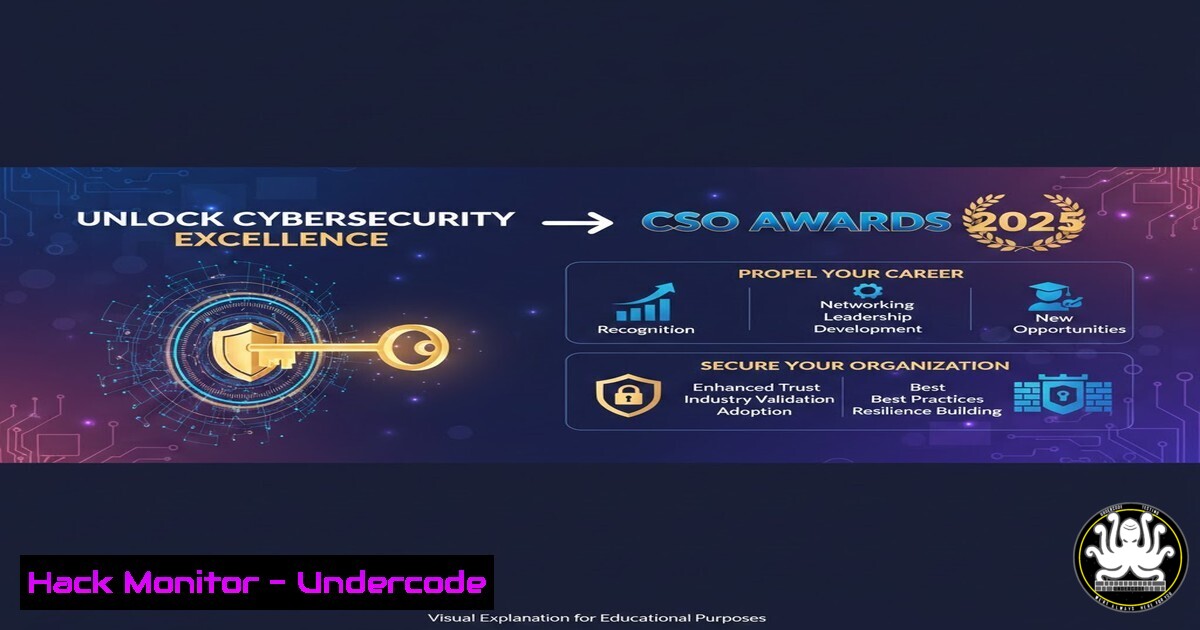
The landscape of digital threats is constantly evolving, demanding a proactive and skilled cybersecurity workforce. Recognition programs like the CSO Awards 2025 play a pivotal role in highlighting innovative strategies and individual excellence that define the future of cyber defense. This article delves into the significance of such accolades and provides a technical roadmap for professionals aiming to elevate their security posture and potentially become award-worthy.
Learning Objectives:
- Understand the core technical and strategic areas celebrated by industry awards like the CSO Awards.
- Develop actionable skills in threat detection, cloud security, and API hardening to build a robust security program.
- Learn how to document and present security initiatives effectively for professional recognition and organizational buy-in.
You Should Know:
1. Mastering Endpoint Detection and Response (EDR)
A cornerstone of modern cybersecurity, EDR solutions provide deep visibility into endpoint activities, allowing for rapid detection and response to malicious behavior. Simply having an EDR is not enough; mastery is key.
Step‑by‑step guide explaining what this does and how to use it.
1. Deployment & Baselining: Deploy your EDR agent across all endpoints (workstations, servers). Begin by establishing a baseline of normal activity to reduce false positives.
2. Threat Hunting Proactive Queries: Move beyond alerts. Use your EDR’s query language to hunt for IOCs (Indicators of Compromise). For example, to find processes making anomalous network connections in PowerShell on Windows:
`Get-WinEvent -LogName “Microsoft-Windows-Sysmon/Operational” | Where-Object {($_.ID -eq 3) -and ($_.Message -like “powershell”)} | Select-Object TimeCreated, Message`
On Linux, you might use `auditd` or EDR-specific commands to trace process lineage and network calls.
3. Automate Response: Configure automated containment rules. For instance, automatically isolate an endpoint if a known ransomware hash is executed or if a tool like Mimikatz is detected in memory.
2. Implementing Zero-Trust Network Access (ZTNA)
The traditional “trust but verify” model is obsolete. Zero Trust mandates “never trust, always verify,” ensuring that access to resources is granted on a per-session, least-privilege basis.
Step‑by‑step guide explaining what this does and how to use it.
1. Identify Critical Assets: Catalog your sensitive data, applications, and services. These will be your “protect surface.”
2. Micro-Segmentation: Create granular security policies. Instead of a flat network, segment it so that access to the finance database, for example, is isolated from the general corporate network. This can be done using cloud security groups or internal firewalls.
AWS Security Group Example (Denies all except from specific IP):
aws ec2 authorize-security-group-ingress \
--group-id sg-903004f8 \
--protocol tcp \
--port 3306 \
--cidr 192.0.2.0/24
3. Enforce Strict Access Controls: Implement multi-factor authentication (MFA) and device health checks for every access attempt to critical applications, regardless of user location.
3. Hardening Cloud Infrastructure (AWS S3 Focus)
Misconfigured cloud storage is a leading cause of data breaches. Proactive hardening is non-negotiable.
Step‑by‑step guide explaining what this does and how to use it.
1. Block Public Access: Enforce account-level S3 Block Public Access settings in AWS. This is your first and most critical defense.
2. Validate Bucket Policies: Use the AWS CLI to check and apply restrictive bucket policies.
Command to get bucket policy status: `aws s3api get-bucket-policy-status –bucket YOUR_BUCKET_NAME`
Apply a policy that denies non-SSL (HTTPS) requests:
{
"Version": "2012-10-17",
"Statement": [
{
"Sid": "EnforceTLS",
"Effect": "Deny",
"Principal": "",
"Action": "s3:",
"Resource": "arn:aws:s3:::YOUR_BUCKET_NAME/",
"Condition": {
"Bool": {"aws:SecureTransport": "false"}
}
}
]
}
3. Enable Logging and Monitoring: Turn on AWS CloudTrail for API auditing and S3 server access logging. Use AWS Config to monitor for compliance deviations in real-time.
4. Securing API Endpoints Against Common Exploits
APIs are the backbone of modern applications and a prime target for attackers. Securing them requires a multi-layered approach.
Step‑by‑step guide explaining what this does and how to use it.
1. Implement Robust Authentication & Rate Limiting: Use OAuth 2.0 or API keys combined with rate limiting (e.g., using a gateway like Kong or AWS API Gateway) to prevent brute-force and DDoS attacks.
2. Input Validation and Sanitization: Never trust client input. Validate all incoming data against a strict schema. For a Node.js/Express API, use a library like Joi:
const Joi = require('joi');
const schema = Joi.object({
username: Joi.string().alphanum().min(3).max(30).required(),
email: Joi.string().email().required()
});
const { error, value } = schema.validate(req.body);
if (error) {
return res.status(400).send(error.details[bash].message);
}
3. Conduct Static and Dynamic Security Testing (SAST/DAST): Integrate SAST tools into your CI/CD pipeline to find vulnerabilities in code before deployment. Use DAST tools to probe your running API for flaws like SQL injection or broken object-level authorization.
5. Developing an Effective Security Awareness Training Program
Technology is only as strong as its weakest link, which is often the human element. A compelling, continuous training program is a hallmark of a mature security organization.
Step‑by‑step guide explaining what this does and how to use it.
1. Phishing Simulation: Use platforms to run controlled phishing campaigns against your employees. Start with obvious lures and increase sophistication over time.
2. Gamified Learning: Move beyond boring slideshows. Implement interactive, gamified modules that reward employees for identifying threats and completing security challenges.
3. Measure and Adapt: Track metrics such as phishing click-through rates, training completion rates, and reported suspicious emails. Use this data to tailor future training to address specific weaknesses and demonstrate ROI to leadership.
What Undercode Say:
- Technical excellence must be matched by strategic communication. Winning awards often hinges on the ability to clearly articulate the business impact of your security initiatives, not just the technical specs.
- A proactive, intelligence-driven defense posture is no longer optional. The bar for recognition is set by organizations that can demonstrate not just response, but prediction and prevention.
Analysis: The call for entries to the CSO Awards signifies more than a competition; it’s a barometer for the industry’s priorities. The winners are typically those who have moved beyond basic compliance and checkbox security. They demonstrate a deep integration of security into the business fabric, leveraging automation, advanced analytics, and a strong security culture. For a professional, pursuing such recognition is not about vanity. It is a disciplined process that forces a critical evaluation of your security program’s effectiveness, encourages innovation, and provides a tangible framework for career advancement. It pushes you to answer the hard questions: “Is our logging actually useful for hunting?” “Are our cloud configurations truly secure by design?” This process, in itself, is a win.
Prediction:
The methodologies and technologies celebrated by awards like the CSO Awards in 2025 will increasingly focus on the integration of AI and Machine Learning for predictive threat modeling and automated response. We will see a shift from human-led triage to AI-augmented security operations centers (SOCs). Furthermore, as supply chain attacks rise, award-winning case studies will highlight innovative approaches to third-party risk management and software bill of materials (SBOM) adoption, making security transparency a key competitive differentiator.
🎯Let’s Practice For Free:
IT/Security Reporter URL:
Reported By: Lisaplaggemier Cso – Hackers Feeds
Extra Hub: Undercode MoN
Basic Verification: Pass ✅


