Listen to this Post
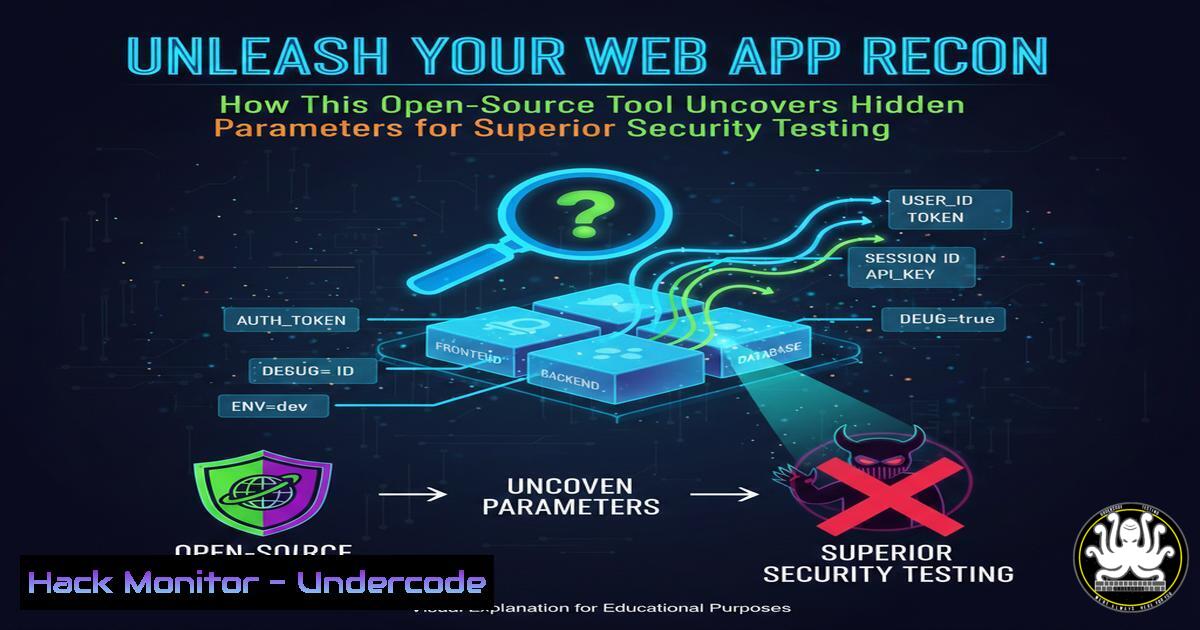
Introduction:
In the relentless cat-and-mouse game of web application security, visibility is the first and most critical line of defense. Attack surfaces are expanding, and hidden endpoints with unknown parameters are a primary source of vulnerabilities like SQL Injection, SSRF, and Cross-Site Scripting (XSS). Traditional crawling often misses these obscure inputs, leaving dangerous blind spots. This article explores “Find All Parameters,” a specialized open-source tool designed to automate and enhance the discovery of URL parameters, empowering security professionals to build a more robust and comprehensive testing strategy.
Learning Objectives:
- Understand the critical role of parameter discovery in modern web application penetration testing and bug bounty hunting.
- Learn how to install, configure, and effectively utilize the “Find All Parameters” tool in a security assessment workflow.
- Integrate custom wordlists and tool outputs with other security testing frameworks like Burp Suite and Nuclei to automate vulnerability discovery.
You Should Know:
- The Critical Role of Parameter Discovery in Web App Security
Web application parameters are the primary conduits for user-supplied data. They are passed via query strings, POST bodies, and HTTP headers. Each parameter represents a potential injection point. While common parameters are easily identified during manual testing or standard crawling, it’s the obscure, undocumented, and forgotten parameters that often lead to critical security breaches. Tools like “Find All Parameters” shift the paradigm from reactive detection to proactive discovery by programmatically analyzing JavaScript files and static page content to extract every possible parameter reference, including those added dynamically by client-side scripts. This process is essential for achieving full test coverage.
2. Tool Installation and Environment Setup
“Find All Parameters” is a Python-based tool, requiring a simple setup process. The first step is to ensure you have Python 3.7+ and Git installed on your system, which is typically pre-installed on most Linux distributions like Kali Linux and Parrot OS.
Step-by-Step Guide:
- Clone the Repository: Open your terminal and clone the tool’s repository from its public code hosting platform (e.g., GitHub).
git clone https://github.com/thetoolname/findallparameters.git
(Note: The actual URL from the LinkedIn post was a shortened lnkd.in link. The final command should use the resolved GitHub/GitLab URL).
-
Navigate to the Directory: Change into the newly created directory.
cd findallparameters
-
Install Dependencies: Use pip to install the required Python libraries. It is a best practice to use a virtual environment.
python3 -m venv venv
source venv/bin/activate
pip3 install -r requirements.txt
This isolates the tool’s dependencies from your system-wide Python packages, preventing potential conflicts.
-
Verify Installation: Run the help command to confirm the tool is installed correctly.
python3 find_all_params.py --help
You should see an output detailing the available command-line options.
3. Basic Usage and Core Functionality
The tool’s primary function is to crawl a given domain, parse its pages and linked JavaScript files, and extract potential parameter names.
Step-by-Step Guide:
- Run a Basic Crawl: To perform a fundamental scan against a target domain, use the following command. The `-d` flag specifies the target.
python3 find_all_params.py -d example.com
-
Understand the Output: The tool will output a list of discovered parameters to the terminal (stdout). The output might look like:
[+] Crawling started for: example.com
[+] Found 12 unique parameters.
id
user
admin
redirect
file
...
This raw list can be directly used for manual testing or piped into other tools.
-
Save Output to a File: For further analysis, it’s crucial to save the results. Use the `-o` parameter.
python3 find_all_params.py -d example.com -o parameters.txt
This creates a wordlist file (
parameters.txt) that can be fed into scanners like Burp Intruder or ffuf. -
Advanced Usage: Integrating Custom Wordlists and Recursive Crawling
To maximize effectiveness, you should combine the tool’s discovery capabilities with existing, high-quality wordlists.
Step-by-Step Guide:
- Use a Custom Wordlist: The tool can be seeded with a custom wordlist to check for parameters that may not be explicitly found in the page’s JavaScript but are known to be commonly used or vulnerable. Use the `-w` flag.
python3 find_all_params.py -d example.com -w /usr/share/wordlists/seclists/Discovery/Web-Content/burp-parameter-names.txt -o enhanced_parameters.txt
This command merges parameters discovered by crawling with those from a renowned wordlist like the one from SecLists.
-
Enable Recursive Crawling: To delve deeper into the application, use the recursive crawl option (if available in the tool, often `-r` or
--recursive). This follows links within the same domain to discover more pages and, consequently, more parameters.python3 find_all_params.py -d example.com -r -o recursive_parameters.txt
Be cautious with this option, as it can generate significant traffic and may be slow for large sites.
5. Integration with Automated Scanners and Fuzzers
The true power of parameter discovery is realized when integrated into an automated pipeline.
Step-by-Step Guide:
- FuFF Integration: Use the generated wordlist with a fuzzing tool like `ffuf` to discover active endpoints or test for specific vulnerabilities.
Fuzz for parameters that reflect input
ffuf -w recursive_parameters.txt:FUZZ -u "https://example.com/target.php?FUZZ=test" -fr "error"
2. Burp Suite Integration:
- Run the tool and save the output.
- In Burp Suite, send a request to the Intruder tab.
- Configure the attack type (e.g., Sniper).
- In the Positions tab, mark the value of a parameter for fuzzing.
- Go to the Payloads tab, load the `recursive_parameters.txt` file as the payload set, and start the attack. Burp will test each parameter name in the marked position.
- Nuclei Template Enhancement: The discovered parameters can be used to write more accurate and targeted Nuclei templates for automated vulnerability scanning, focusing on the specific inputs the application actually uses.
6. Mitigation and Defense: Securing Your Application
For developers and security engineers, understanding this reconnaissance technique is key to building defenses.
Step-by-Step Guide:
- Input Sanitization and Validation: Implement strict allow-list input validation on the server-side for every parameter, regardless of its perceived obscurity.
- Parameter Whitelisting: Where possible, define and accept only a specific set of parameters. Reject any request containing parameters not on the whitelist.
- Security Headers and WAFs: Deploy a Web Application Firewall (WAF) configured to block requests with a high number of unknown parameters. Use security headers like `Content-Security-Policy` to mitigate the impact of client-side attacks.
- Regular Security Audits: Use this very tool against your own applications in pre-production stages to discover and document all parameters before they can be exploited maliciously.
What Undercode Say:
- Automation is Non-Negotiable: Manual parameter discovery is obsolete for all but the smallest applications. Integrating tools like “Find All Parameters” into the initial reconnaissance phase is essential for comprehensive coverage and should be a standard step in every web app penetration test.
- The Power of the Hybrid Approach: The most effective strategy is not to rely on a single tool but to combine its output with established wordlists. This hybrid method leverages both passive discovery (crawling) and active intelligence (known lists), leaving far fewer stones unturned.
This tool represents a significant evolution in the reconnaissance toolkit. While comparisons to tools like ParamSpider are inevitable, the focus should be on the cumulative effect of using multiple tools to validate findings. The underlying trend is clear: the barrier to entry for sophisticated recon is lowering. As these tools become more accessible and powerful, the onus is on developers to assume a “zero-trust” stance towards their own application’s attack surface, rigorously validating every input. For offensive security professionals, failing to employ such utilities means starting the race already several laps behind.
Prediction:
The automation of the reconnaissance phase will only intensify. We predict the next evolution of such tools will be the deep integration of AI and machine learning to not only find parameters but also intelligently rank them based on the application’s technology stack and historical vulnerability data, predicting which parameters are most likely to be vulnerable. This will shift security testing from a coverage-based model to a risk-prioritized one, allowing defenders to focus their efforts more effectively and forcing attackers to innovate beyond automated discovery.
🎯Let’s Practice For Free:
IT/Security Reporter URL:
Reported By: Koutora Anicet – Hackers Feeds
Extra Hub: Undercode MoN
Basic Verification: Pass ✅


