Listen to this Post
Introduction:
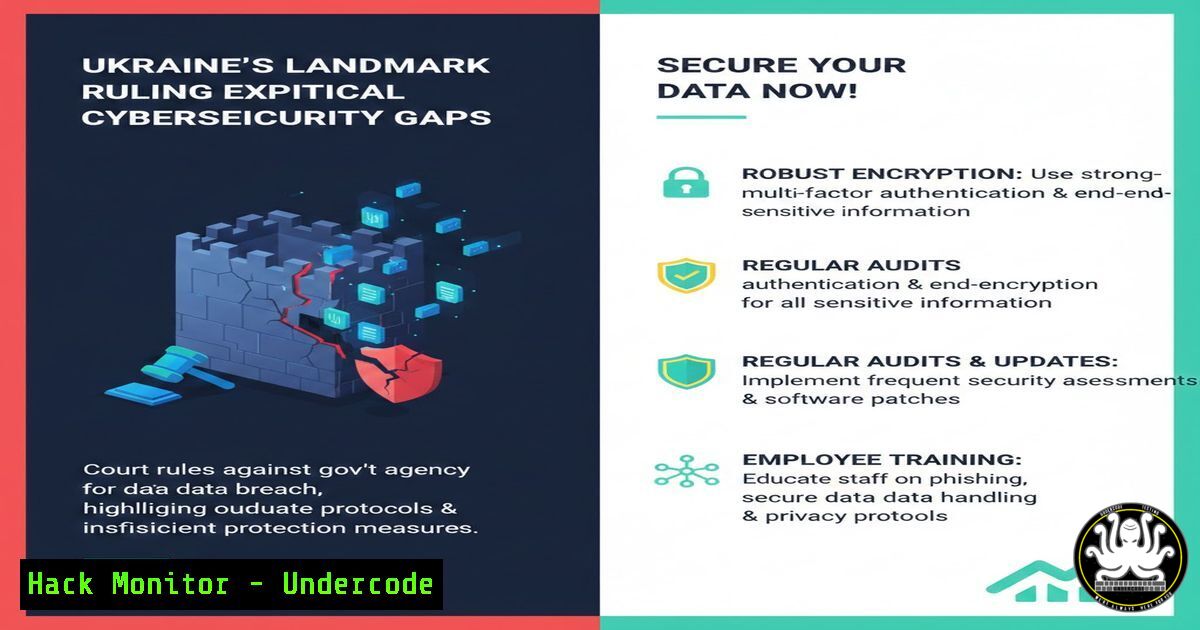
The recent Supreme Court of Ukraine ruling recognizing a same-sex relationship as a family may appear unrelated to cybersecurity, but it signals a broader shift in legal frameworks that directly impact data protection, privacy rights, and organizational security postures. As nations update family, privacy, and anti‑discrimination laws, businesses must adapt their cybersecurity strategies to ensure compliance, avoid legal penalties, and protect sensitive data from evolving threats. This article explores the technical steps required to align cybersecurity practices with changing legal landscapes.
Learning Objectives:
- Understand how legal rulings influence cybersecurity compliance and risk management.
- Implement Linux and Windows commands to audit, harden, and monitor systems in light of new regulations.
- Apply best practices for encryption, access control, and cloud security to meet evolving legal requirements.
You Should Know:
1. The Legal‑Cybersecurity Nexus: Why Court Decisions Matter
Legal rulings often redefine categories of protected data, retention periods, and access rights. For example, a ruling that recognizes new family structures may require updates to how organizations handle employee benefits data, customer relationship records, and even authentication systems. From a technical perspective, this means revisiting data classification schemas, access control lists (ACLs), and encryption policies. Failure to adapt can lead to non‑compliance with laws like GDPR or local privacy acts, resulting in fines and reputational damage.
- Auditing Data Residency and Flow with Linux Commands
Understanding where data resides is crucial when legal rulings impose geographic restrictions. Use the following Linux commands to trace data paths and verify storage locations:
– `geoiplookup` – Determine the country of a remote server.
– `curl -I https://example.com` – Inspect headers for server location hints.
– `traceroute` – Map network path to identify intermediate jurisdictions.
– `ss -tulpn` – List listening ports to see which services might expose data.
– `find / -type f -name “.db”` – Locate database files on local systems.
For Windows, use tracert, Get-NetTCPConnection, and `where /R C:\ .db` to achieve similar results.
3. Implementing Strong Encryption to Protect Sensitive Data
Legal changes often heighten the need for encryption, both at rest and in transit. Below are step‑by‑step guides for common platforms:
Linux (OpenSSL for file encryption):
 Generate a 256-bit AES key
openssl rand -base64 32 > key.bin
 Encrypt a file
openssl enc -aes-256-cbc -salt -in confidential.txt -out confidential.enc -pass file:key.bin
 Decrypt
openssl enc -d -aes-256-cbc -in confidential.enc -out decrypted.txt -pass file:key.bin
Windows (BitLocker via PowerShell):
 Enable BitLocker on C: drive with recovery password protector
Enable-BitLocker -MountPoint "C:" -EncryptionMethod Aes256 -PasswordProtector -Password (ConvertTo-SecureString "YourStrongPW" -AsPlainText -Force)
 Check status
Get-BitLockerVolume -MountPoint "C:"
For data in transit, enforce TLS 1.3 on web servers. On Apache, add:
SSLProtocol -all +TLSv1.3
SSLCipherSuite TLSv1.3
4. Hardening Access Controls with Firewalls and IAM
Adjust access controls to comply with new legal definitions of “authorized personnel.” Use these commands to tighten security:
Linux (iptables):
 Allow only specific IPs to SSH
iptables -A INPUT -p tcp --dport 22 -s 192.168.1.100 -j ACCEPT
iptables -A INPUT -p tcp --dport 22 -j DROP
 Save rules
iptables-save > /etc/iptables/rules.v4
Windows Firewall (PowerShell):
New-NetFirewallRule -DisplayName "Block RDP Except Admin" -Direction Inbound -Protocol TCP -LocalPort 3389 -Action Block -RemoteAddress "Any"
New-NetFirewallRule -DisplayName "Allow RDP From Admin" -Direction Inbound -Protocol TCP -LocalPort 3389 -Action Allow -RemoteAddress "192.168.1.0/24"
Cloud IAM (AWS CLI):
 List IAM users with excessive permissions
aws iam list-users --query "Users[].UserName" --output text | xargs -I {} aws iam list-attached-user-policies --user-name {}
 Attach a restrictive policy
aws iam put-user-policy --user-name john --policy-name RestrictS3 --policy-document file://policy.json
5. Cloud Hardening for Data Residency Compliance
Legal rulings may require data to remain within specific borders. Use cloud provider tools to enforce location constraints:
AWS S3 bucket policy to restrict access to a region:
{
"Version": "2012-10-17",
"Statement": [
{
"Effect": "Deny",
"Principal": "",
"Action": "s3:",
"Resource": "arn:aws:s3:::your-bucket/",
"Condition": {
"StringNotEquals": {
"aws:RequestedRegion": "eu-west-1"
}
}
}
]
}
Azure CLI to set data residency via policy:
az policy assignment create --name 'enforce-data-location' --policy 'policy-definition-id' --params '{"location":{"value":"westeurope"}}'
6. API Security in a Changing Legal Environment
APIs often handle sensitive personal data affected by legal updates. Implement these security measures:
- Rate limiting with Nginx:
limit_req_zone $binary_remote_addr zone=login:10m rate=5r/m; server { location /api/ { limit_req zone=login; proxy_pass http://backend; } } -
Input validation using OWASP ZAP for automated scanning:
zap-api-scan.py -t https://api.example.com/openapi.json -f openapi -r report.html
-
Enforce HTTPS and check TLS version with curl:
curl -vI --tlsv1.3 https://api.example.com
7. Continuous Learning: Essential Cybersecurity Certifications
To stay ahead of legal and technical shifts, pursue certifications that cover compliance, encryption, and risk management:
– Certified Information Systems Security Professional (CISSP) – Domain: Security and Risk Management.
– Certified Information Privacy Professional (CIPP) – Focus on privacy laws.
– Certified Cloud Security Professional (CCSP) – Cloud data protection.
– Offensive Security Certified Professional (OSCP) – Hands‑on penetration testing.
– GIAC Legal Issues in Information Security (GLEG) – Directly addresses legal‑cyber intersections.
Training platforms like SANS, Cybrary, and Pluralsight offer courses aligned with these certifications.
What Undecode Says:
- Key Takeaway 1: Legal rulings are not just compliance checkboxes—they directly alter technical requirements for data protection, access control, and encryption. Organizations must treat them as drivers for security architecture updates.
- Key Takeaway 2: Proactive auditing using simple Linux/Windows commands and cloud CLI tools can reveal gaps before they become legal liabilities. Regular reviews of data residency, encryption strength, and IAM policies are essential.
- Analysis: The Ukraine ruling reminds us that societal changes cascade into technical domains. Cybersecurity professionals must monitor legislative developments globally and translate them into actionable hardening steps. Ignoring the legal layer leaves organizations vulnerable to both attacks and penalties. Integrating legal expertise into security teams or continuous training will become a competitive advantage. As data knows no borders, but laws do, the ability to dynamically enforce compliance through code and configuration is the new frontier.
Prediction:
Future legal rulings will increasingly mandate specific technical controls—such as mandatory encryption algorithms, data localization, and breach notification timelines—forcing cybersecurity teams to embed legal compliance into CI/CD pipelines. We may see the rise of “Regulatory Technology” (RegTech) tools that automatically adjust firewall rules, access policies, and encryption settings in response to court decisions and legislative updates. Attackers will also exploit legal gray areas, targeting jurisdictions where laws are still evolving. The intersection of law and cybersecurity will become a primary battleground for both defenders and adversaries.
▶️ Related Video (82% Match):
🎯Let’s Practice For Free:
IT/Security Reporter URL:
Reported By: Noh8 Share – Hackers Feeds
Extra Hub: Undercode MoN
Basic Verification: Pass ✅


