Listen to this Post
Introduction:
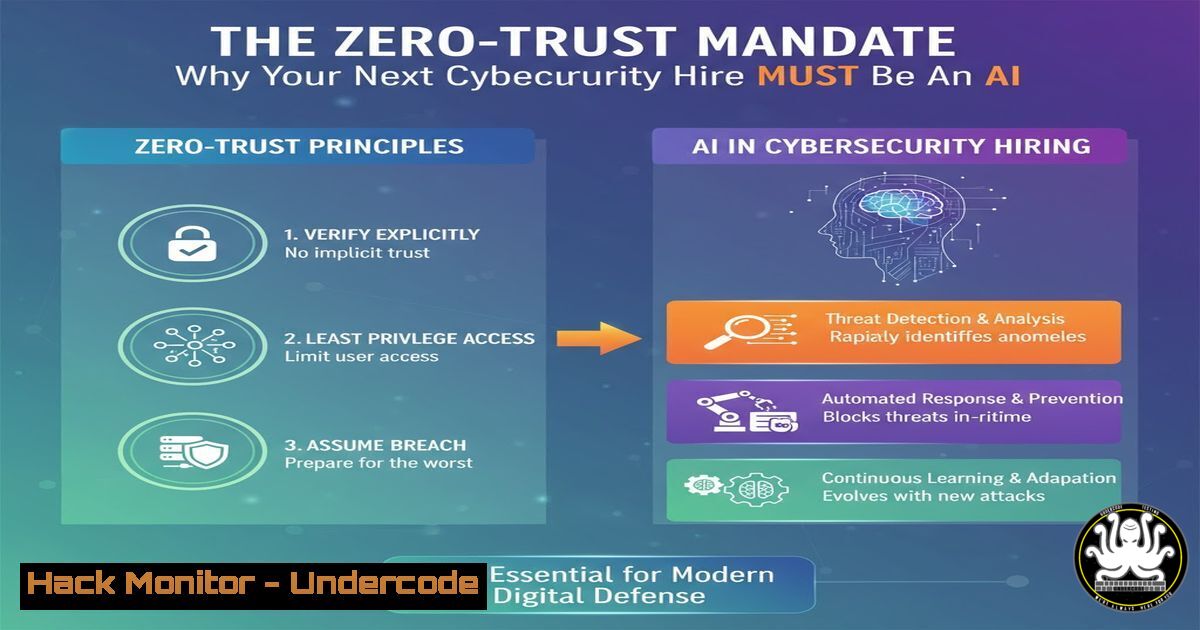
The appointment of an AI as Vice President of Cybersecurity is no longer science fiction; it is an operational reality signaling a fundamental shift in defense paradigms. This move underscores the escalating velocity and sophistication of cyber threats, which now outpace human-centric security models. Organizations must now integrate advanced AI not merely as a tool, but as a core decision-making entity within their security leadership.
Learning Objectives:
- Understand the core capabilities an AI-driven security executive brings to threat prediction and incident response.
- Learn to implement and interact with the technical frameworks that enable AI-powered security operations.
- Develop a skill set focused on overseeing, validating, and augmenting the decisions made by autonomous security systems.
You Should Know:
1. AI-Powered Log Analysis with Splunk and MLTK
Splunk queries augmented with the Machine Learning Toolkit (MLTK) can detect anomalous behavior that rules-based systems miss. This is the foundational data layer for an AI security executive.
| tstats `security_content_summariesonly` count from datamodel=Authentication by _time, Authentication.user, Authentication.src span=1h
`| eventstats avg(count) as average, stdev(count) as stdev by Authentication.user`
`| eval upperThreshold = average + (3 stdev), lowerThreshold = average – (3 stdev)`
`| eval isOutlier=if(count > upperThreshold OR count < lowerThreshold, 1, 0)`
`| search isOutlier=1`
Step-by-step guide:
This search calculates a rolling baseline of authentication attempts per user. It then identifies any activity that falls outside three standard deviations from that user’s norm, flagging it as a potential account compromise or brute-force attack. The AI executive would use this continuous analysis to automatically trigger investigation workflows or temporary account lockdowns.
2. Automated Threat Hunting with Sigma Rules
Sigma is a generic signature language for log events that can be converted into queries for any SIEM. An AI VP would manage a vast repository of these rules.
`title: Mimikatz Command Line Detection`
`description: Detects classic Mimikatz command line arguments`
`logsource:`
` category: process_creation`
` product: windows`
`detection:`
` selection:`
` CommandLine|contains:`
` – ‘sekurlsa::logonPasswords’`
` – ‘mimikatz.exe’`
` condition: selection`
Step-by-step guide:
This Sigma rule looks for the process creation events containing known Mimikatz commands. An AI security system would deploy this rule across all endpoints, but also correlate its hits with other contextual data (e.g., privilege level of the user, network connections) to reduce false positives and automatically initiate a containment playbook.
- Infrastructure as Code (IaC) Security Scanning with Terrascan
An AI executive ensures security is baked into the development lifecycle by scanning IaC templates for misconfigurations before deployment.
`terrascan scan -i terraform -t aws`
Step-by-step guide:
This command scans all Terraform files in the current directory for security misconfigurations against AWS best practices. It checks for overly permissive security group rules, unencrypted S3 buckets, and more. The AI would integrate this into the CI/CD pipeline, blocking any builds that contain critical vulnerabilities.
4. Container Vulnerability Assessment with Trivy
Securing the software supply chain is a primary function. Trivy scans container images for known vulnerabilities.
`trivy image –severity CRITICAL my-app:latest`
Step-by-step guide:
This command scans the `my-app:latest` Docker image and reports only CRITICAL vulnerabilities. In an AI-driven pipeline, this scan would be mandatory. If critical vulnerabilities are found, the AI would prevent the image from being promoted to production and automatically create a ticket for the development team.
- Cloud Security Posture Management (CSPM) with AWS CLI
An AI VP continuously audits the cloud environment for compliance deviations using CSPM checks.
`aws ec2 describe-security-groups –filter Name=ip-permission.cidr,Values=0.0.0.0/0 –query ‘SecurityGroups[].{GroupName:GroupName, GroupId:GroupId}’`
Step-by-step guide:
This AWS CLI command lists all security groups with a rule that allows inbound traffic from any IP address (0.0.0.0/0). The AI would run such audits continuously, automatically flagging these overly permissive rules and, based on policy, either alerting an engineer or reverting the change to a previously known secure state.
6. API Security Testing with OWASP ZAP
APIs are a major attack vector. The OWASP ZAP tool can be automated to test for common vulnerabilities.
`zap-baseline.py -t https://api.mycompany.com/graphql`
Step-by-step guide:
This command runs a baseline scan against a target API endpoint. It tests for issues like SQL injection, XSS, and broken authentication. The AI security system would schedule these scans regularly, ingest the results, and automatically prioritize remediation tasks for the development team based on risk score.
7. Deploying a Canary Token for Intrusion Detection
Canary tokens are decoy assets that alert you when an intruder interacts with them. An AI can manage thousands of these dynamically.
`curl -X POST -d “kind=aws-keys” -d “[email protected]” https://canarytokens.com/api/v1/token/create`
Step-by-step guide:
This API call to Canary Tokens generates a fake AWS key. When this key is used anywhere, an immediate alert is sent. The AI would strategically place these tokens in code repositories, file shares, and databases. When triggered, the AI would correlate the event with other anomalous activity to build a high-fidelity incident.
What Undercode Say:
- Human Oversight Shifts from Operator to Validator. The role of the human cybersecurity professional is evolving from hands-on keyboard operations to overseeing AI decisions, interpreting complex correlations, and providing ethical and strategic context that the AI may lack. The skill demand is moving towards data science and AI governance.
- The Attack Surface is Becoming Algorithmic. The primary vulnerability in an AI-driven security organization is the AI model itself. Adversaries will shift from attacking applications to performing model inversion, data poisoning, and adversarial machine learning attacks to corrupt the AI’s decision-making process.
The appointment of an AI to a C-suite position is a logical escalation in the arms race between defenders and attackers. It represents a capitulation to the sheer scale of the problem; human cognition alone is no longer sufficient. The critical analysis is that this forces a redefinition of trust and accountability. An AI VP operates on cold, probabilistic logic, potentially eliminating human bias but also lacking human intuition for “gut feeling” edge cases. The success of this model hinges on transparent, auditable AI and a human team skilled in curating its training data and challenging its conclusions. The greatest risk is not the AI making a wrong decision, but the human team blindly trusting the right one without understanding the “why.”
Prediction:
The “AI Executive” hack will fundamentally reshape the cybersecurity industry within five years. We will see the emergence of fully autonomous Security Operations Centers (SOCs) managed by AI “Chief Information Security Officers.” This will compress threat detection and response times from minutes to milliseconds, effectively neutralizing many fast-moving attacks like ransomware. However, this will also create a new niche for highly sophisticated “AI-on-AI” warfare, where threat actors develop their own AIs specifically designed to find and exploit biases, blind spots, and logical flaws in defensive AI systems. The regulatory and legal landscape will struggle to keep pace, leading to landmark cases defining liability for the actions of an autonomous corporate officer.
🎯Let’s Practice For Free:
IT/Security Reporter URL:
Reported By: Ninahaimoff What – Hackers Feeds
Extra Hub: Undercode MoN
Basic Verification: Pass ✅


