Listen to this Post
Introduction:
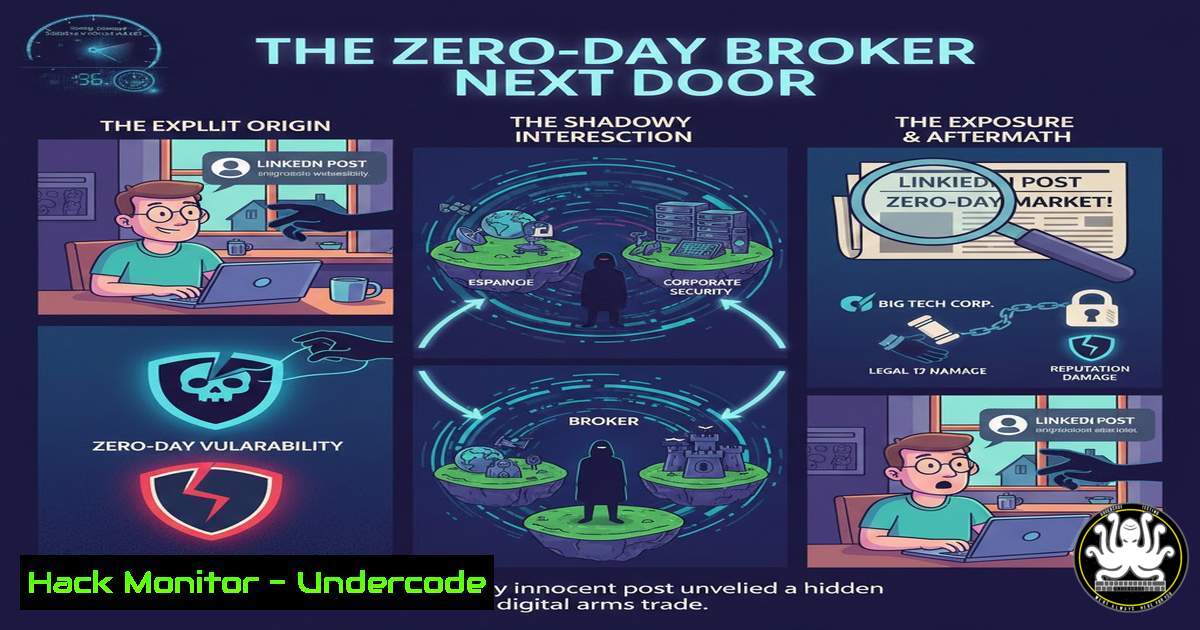
A viral LinkedIn discussion has unearthed staggering allegations linking a single individual to high-stakes zero-day development, government surveillance programs, and a major cybersecurity firm’s acquisition. This nexus underscores a critical, often overlooked vulnerability: the human element within the security supply chain. When the architects of defense may have histories in the offense-for-hire marketplace, it forces a reckoning on insider threats and the ethics of the digital arms race.
Learning Objectives:
- Understand the operational and ethical risks posed by the gray-market zero-day exploit economy.
- Learn fundamental Open-Source Intelligence (OSINT) techniques to investigate individuals and entities linked to cybersecurity.
- Implement technical controls and audit practices to mitigate risks from privileged insiders and supply chain compromises.
You Should Know:
- The Zero-Day Supply Chain: From Developer to Deployment
The core allegation involves a developer selling vulnerabilities (“0days”) with no public patch. These are digital weapons. The market flows from researchers to brokers (like the alleged individual) to clients—often nation-states. This creates a shadow ecosystem that undermines global software security.
Step‑by‑step guide explaining what this does and how to use it.
Reconnaissance with OSINT Tools: Begin by aggregating public data. Use tools like `theHarvester` to find emails and subdomains associated with a person or company.
 Linux Command Example
theHarvester -d "example-security-firm.com" -b google,linkedin
Analyzing Digital Footprints: Cross-reference names from acquisitions (e.g., “CrowdStrike acquisition 2017”) with legal documents, patent filings, and GitHub repositories. Use `sherlock` to check for consistent usernames across platforms.
 Linux Command Example
python3 sherlock "AllegedName"
Network Context: Utilize passive DNS databases like SecurityTrails or VirusTotal Intelligence to map historical infrastructure linked to the individual’s former companies, potentially revealing connections to hosting providers known for offensive operations.
2. Insider Threat Mitigation: Hardening Your Environment
The scenario of a high-level executive with a contentious past highlights extreme insider risk. Mitigation requires a blend of technical controls and rigorous policies.
Step‑by‑step guide explaining what this does and how to use it.
Implement Strict Privileged Access Management (PAM): No user, especially in leadership, should have persistent admin rights. Use a PAM solution or native tools for just-in-time elevation.
 Windows: Audit accounts with privileged group membership
Get-ADGroupMember "Domain Admins" | Select-Object name, samaccountname
Enable Comprehensive Logging and Behavioral Analytics: Ensure command-line auditing is enabled on all critical assets. Forward logs to a secured SIEM.
 Linux: Enable process auditing
sudo auditctl -a always,exit -F arch=b64 -S execve
Segment Network Access: Ensure R&D, executive, and production networks are firewalled. An executive in security should not have unfettered access to source code repositories or live incident response tools.
- Vulnerability Management in the Age of Private Exploits
When exploits are sold privately, they bypass public disclosure databases like CVE. Your vulnerability scanning is blind to them. Defense must shift to behavior-based detection and proactive hardening.
Step‑by‑step guide explaining what this does and how to use it.
Deploy Endpoint Detection and Response (EDR): Configure EDR rules to detect exploit-like behaviors—e.g., unusual process injection, memory allocation in uncommon regions, or exploitation of known vulnerable function calls.
Apply Exploit Mitigation Techniques: These are controls that make exploitation harder, regardless of the vulnerability.
 Linux: Check and enforce kernel hardening
sudo sysctl kernel.kptr_restrict=2
sudo sysctl kernel.dmesg_restrict=1
 Windows: Enable Exploit Protection for a critical application
Set-ProcessMitigation -Name "javaw.exe" -Enable DEP,ASLR
Threat Hunting: Proactively search for indicators of compromise (IoCs) related to known exploit brokers and their associated malware families. Use YARA rules to scan for payloads.
- Due Diligence in Mergers & Acquisitions (M&A) Cybersecurity
The acquisition of a company by a major firm like CrowdStrike is a key event. Technical due diligence must include the background of key personnel and their assets.
Step‑by‑step guide explaining what this does and how to use it.
Technical Audit of Acquired Assets: Before integration, conduct a full code audit of any security tools or libraries acquired. Look for backdoors, weak crypto, or call-home functions.
 Example: Simple strings search for suspicious URLs in a binary
strings acquired_tool.exe | grep -E "(http|https)://[a-zA-Z0-9./?=_-]"
Review Incident Response History: Analyze the acquired company’s pre-merger IR logs for any evidence of prior compromises or suspicious internal activity.
Re-key and Re-certificate: Assume all cryptographic keys and certificates from the acquired entity are compromised. Generate new ones upon integration.
5. API Security and Surveillance Tool Implications
The alleged involvement in establishing a government surveillance program highlights the abuse potential of APIs and monitoring tools.
Step‑by‑step guide explaining what this does and how to use it.
Harden Monitoring APIs: If you deploy security monitoring agents (like EDR), ensure their management APIs are strictly authenticated, rate-limited, and logged. Use API gateways.
Audit Access to Sensitive Data: Regularly review who can access logs, call recording data, or user communications within your organization.
-- Example SQL query to audit access to a sensitive table
SELECT user, action, timestamp FROM audit_log WHERE table_name = 'user_communications';
Implement Legal and Ethical Guards: Ensure all monitoring complies with laws like GDPR. Use technical controls to enforce data minimization and retention policies automatically.
What Undercode Say:
- The Human Layer is the Ultimate Attack Surface: The most sophisticated firewall is useless against a privileged insider with malicious intent and deep knowledge. Security programs must invest as much in personnel vetting, behavioral monitoring, and ethical culture as they do in technology.
- The Cyber-Industrial Complex is Opaque and Dangerous: The seamless movement of personnel and technology between offensive operations, private exploit brokerage, and defensive public companies creates profound conflicts of interest and systemic risk. The industry lacks transparency and meaningful regulation.
Analysis: This LinkedIn thread is not just gossip; it’s a case study in the dystopian reality of modern cybersecurity. It reveals a world where the lines between white hat and black hat are not just blurred but actively erased by market forces. The technical skills required to find and weaponize vulnerabilities are identical whether used for defense or offense; only the intent and buyer differ. This creates a moral hazard where the financial incentives of the private exploit market can dwarf responsible disclosure bounties. For CISOs, the lesson is to practice “zero trust” not just towards network traffic, but towards the entire supply chain—including the human capital acquired through corporate mergers. The technical controls outlined are essential, but they are secondary to cultivating an organizational culture of integrity and transparent accountability.
Prediction:
The convergence of exploit development, private brokerage, and consolidated cybersecurity power will accelerate. We will see more “boomerang” experts—individuals who cycle between government intelligence, private offensive shops, and major defensive corporations. This will lead to increased insider threat incidents and sophisticated, supply chain attacks originating from within the security industry itself. In response, expect (and demand) the emergence of radical transparency initiatives, perhaps leveraging blockchain for verifiable audit trails of code contributions and stricter, legally-enforced “cooling-off” periods for personnel moving between offensive and defensive roles. The industry will be forced to regulate itself or face imposing external regulation.
▶️ Related Video (70% Match):
🎯Let’s Practice For Free:
IT/Security Reporter URL:
Reported By: Nickvangilder It – Hackers Feeds
Extra Hub: Undercode MoN
Basic Verification: Pass ✅


