Listen to this Post
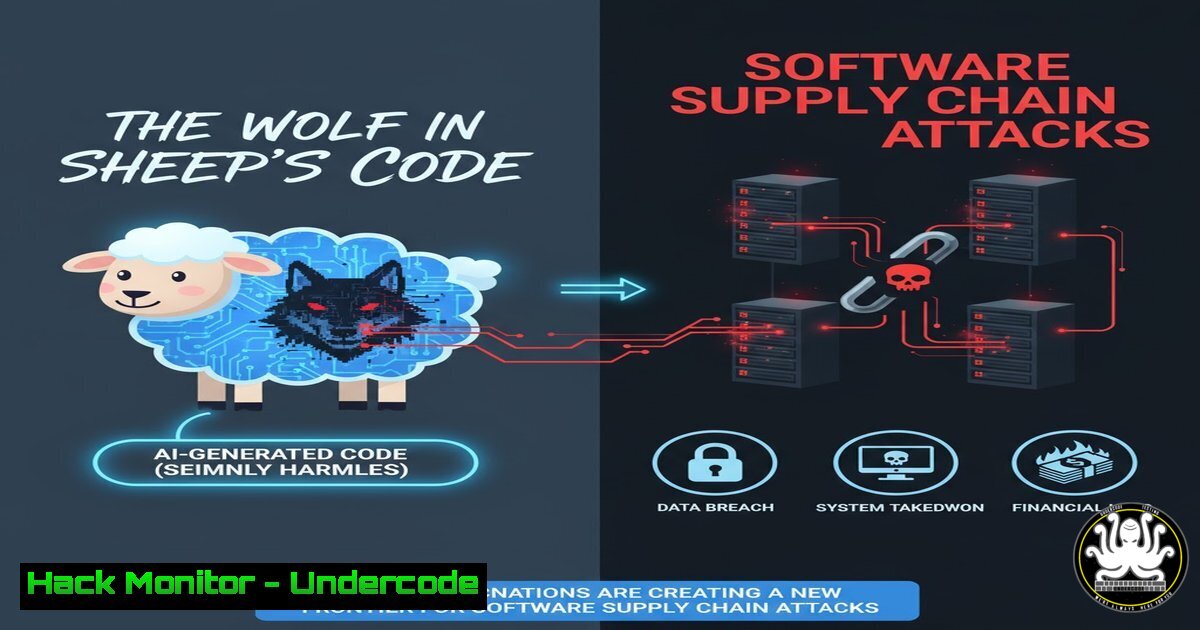
Introduction:
The integration of AI-powered coding assistants has introduced a novel and insidious vulnerability vector: AI hallucinated packages. These non-existent libraries, confidently suggested by AI tools, are being unknowingly incorporated into production code by developers, creating a software supply chain attack surface ripe for exploitation. This article deconstructs this emerging threat and provides a comprehensive defense strategy.
Learning Objectives:
- Understand the mechanism and risk of AI package hallucination in software development.
- Implement technical controls and verification processes to detect and prevent the use of hallucinated dependencies.
- Harden your CI/CD pipeline and development environment against this novel attack vector.
You Should Know:
- The Anatomy of an AI Hallucination Dependency Attack
When a developer uses an AI coding assistant to solve a complex problem, the model may generate code that includes an import statement or a function call from a package that does not exist in any public or private repository. For example, it might suggest using `from security_utils import sanitize_input` or adding `axios-security-wrapper` to a `package.json` file. A rushed or trusting developer adds this dependency and their code breaks, prompting them to search for the missing package. An attacker, monitoring for these exact failed dependency pulls, quickly registers the package name on a public registry (like PyPI or npm) and populates it with a malicious version. The developer then installs the weaponized package, granting the attacker a foothold.
Step‑by‑step guide explaining what this does and how to use it.
This attack is not technical exploitation but social engineering at scale. It preys on developer workflow and trust in automation. The steps are:
1. Reconnaissance: Attackers use scripts to monitor AI model suggestions or scan public code repositories for import statements of non-existent packages.
2. Weaponization: Upon identifying a frequently hallucinated package name, the attacker creates a malicious package with that exact name. The code may contain obfuscated backdoors, data exfiltration routines, or credential stealers.
3. Delivery: The package is published to an official public registry (PyPI, npm, RubyGems).
4. Exploitation: A developer, following the AI’s suggestion, installs the package, executing the malicious code during installation or at runtime.
- Proactive Defense: Verifying Dependencies with Package Manager CLI
The first line of defense is rigorous verification. Never install a package suggested by an AI without validating its existence and reputation through official channels.
Linux/macOS (Bash)
 Check if a Python package exists on PyPI
curl -s https://pypi.org/pypi/requested-package/json | jq .info.version

Check an npm package
npm view requested-package version

Search for a package manually on the official registry website
Step‑by‑step guide:
- When an AI suggests a new package, open your terminal.
- Use the `curl` command for PyPI or `npm view` for npm to check for the package’s metadata. If the command returns a version number, the package exists. If it returns a `404` error, it is likely a hallucination.
- Cross-reference the package on the official registry website (pypi.org, npmjs.com) to check its creation date, number of downloads, and maintainer information. A new package with few downloads is a red flag.
-
Securing Your Environment: Implementing Pip and NPM Install Guards
Configure your package managers to only install packages from trusted sources or to warn you before installing new, unknown packages.
Linux/macOS (Bash) / Windows (PowerShell)
 Use pip with a hash check to ensure integrity
pip install requested-package --require-hashes -r requirements.txt

Configure npm to only install from a specific, vetted registry (e.g., an internal Artifactory)
npm config set registry https://your-internal-registry.company.com/

Use 'npm audit' and 'pip-audit' to scan for known vulnerabilities after installation
npm audit
pip-audit
Step‑by‑step guide:
- For Python, maintain a `requirements.txt` file with hashes for all dependencies. This prevents a compromised package from being installed even if the name is correct.
- Configure your npm client to use a company-internal registry that proxies and vets public packages. This adds a layer of scrutiny.
- Integrate `npm audit` and `pip-audit` into your CI/CD pipeline to automatically reject builds with critical vulnerabilities.
-
Infrastructure as Code (IaC) Security: Scanning for Hallucinations
Infrastructure code (Terraform, CloudFormation) is also susceptible. An AI might suggest a non-existent AWS resource or a malicious Terraform provider.
Bash/Terraform
 Use tfsec to scan Terraform code for misconfigurations, including unknown providers
tfsec .

Use checkov for a broader IaC scan
checkov -d /path/to/iac/code
Terraform Snippet (Bad vs. Good)
 BAD: AI-suggested non-existent resource
resource "aws_fake_encrypted_volume" "example" {
 ... this resource type does not exist
}

GOOD: Using a verified, existing resource
resource "aws_ebs_volume" "example" {
encrypted = true
 ...
}
Step‑by‑step guide:
- Integrate static analysis tools like `tfsec` or `checkov` into your version control system (e.g., as a GitHub Action).
- These tools will fail the build if they encounter an unknown resource type or provider, effectively blocking hallucinated IaC code.
5. CI/CD Pipeline Hardening with Automated Verification
Your Continuous Integration system is the gatekeeper. It must be configured to automatically detect and block hallucinated dependencies.
YAML for GitHub Actions
name: Security Scan
on: [push, pull_request]
jobs:
dependency-check:
runs-on: ubuntu-latest
steps:
- uses: actions/checkout@v4
- name: Set up Python
uses: actions/setup-python@v4
- name: Validate dependencies exist
run: |
for pkg in $(cat requirements.txt | grep -o '^[^=]'); do
pip index versions $pkg || exit 1
done
- name: Scan for vulnerabilities
run: |
pip-audit
Step‑by‑step guide:
- Create a CI job that runs on every pull request.
- The job should iterate through your dependency file (e.g.,
requirements.txt,package.json) and attempt to fetch metadata for each package. - If the `pip index versions` command fails for any package, the build fails, preventing the merge of code with a potentially hallucinated dependency.
6. Developer Training and Policy: The Human Firewall
Technical controls are futile without process. Establish and enforce a clear policy for using AI coding tools.
Policy Checklist:
- [ ] All AI-suggested packages must be verified in a public registry before use.
- [ ] New dependencies require a peer review before being added to a project.
- [ ] Use AI tools that cite their sources or can link to official documentation.
- [ ] Mandatory security training on software supply chain risks.
Step‑by‑step guide:
- Draft a formal policy document outlining the verification steps for AI-generated code.
- Conduct training sessions to make developers aware of the “hallucinated package” threat.
- Configure your pull request templates to include a checkbox confirming that all new dependencies have been manually verified.
7. Advanced Monitoring: Detecting Post-Exploitation
If a malicious package slips through, you must detect its activity. Monitor your systems for anomalous behavior.
Linux Command Line (for detection)
 Check for unknown outgoing network connections
netstat -tunlp | grep ESTABLISHED

Monitor for unexpected child processes
ps aux --forest

Check for unauthorized file modifications (use a baseline tool like AIDE)
aide --check
Step‑by‑step guide:
- Employ Endpoint Detection and Response (EDR) tools to monitor process execution and network traffic.
- Regularly run commands like `netstat` on critical servers to establish a baseline and investigate unknown connections.
- Use File Integrity Monitoring (FIM) to alert on changes to critical system files or application code, a common action of a successful supply chain attack.
What Undercode Say:
- The Attack Surface is Pre-Built: The most alarming aspect of this threat is that attackers no longer need to find vulnerabilities in existing code; they can simply wait for AI to create the vulnerability for them, and then exploit the developer’s trust to populate it.
- Shifting Left is Not Enough: While “shifting left” with security checks in the IDE and CI is crucial, this threat requires a cultural shift. Developer education and skepticism are now primary security controls.
This phenomenon represents a fundamental shift in software supply chain risk. It inverts the traditional attack model. Instead of hunting for bugs in legitimate code, attackers can passively harvest targets—the hallucinated package names—and weaponize them with high efficiency. The defense requires a symbiotic combination of automated, tool-based verification and a heightened level of human vigilance. Organizations that fail to adapt their developer protocols and CI/CD pipelines to account for AI’s creative inaccuracies are building their future security incidents into their code today.
Prediction:
The sophistication and frequency of AI package hallucination attacks will increase dramatically over the next 18-24 months. We will see the emergence of automated “squatting bots” that use large language models themselves to predict and pre-register packages that AIs are likely to hallucinate, creating a fully automated attack loop. This will force a paradigm shift in open-source ecosystem trust models, leading to the rise of cryptographically signed, vetted “curated registries” as a standard enterprise practice, and potentially the integration of real-time AI-suggestion blocklists directly into development environments.
🎯Let’s Practice For Free:
IT/Security Reporter URL:
Reported By: Jamie Williams – Hackers Feeds
Extra Hub: Undercode MoN
Basic Verification: Pass ✅


