Listen to this Post
Introduction:
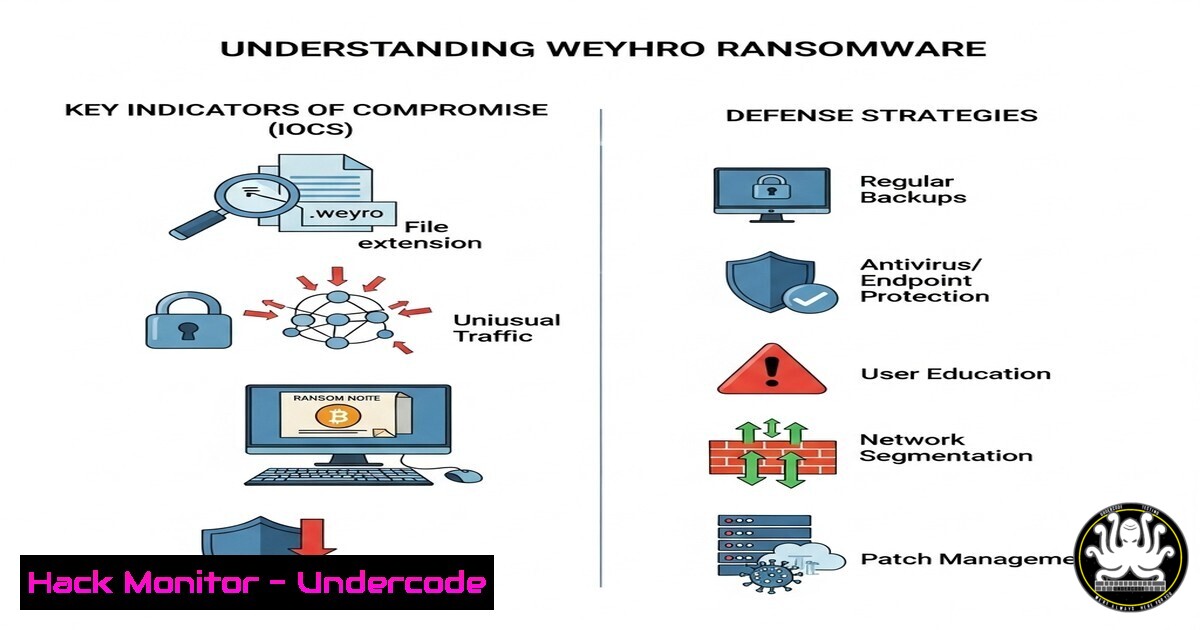
A new ransomware strain dubbed “Weyhro” has emerged, targeting organizations and leaking stolen data online. This campaign, active since March 2025, utilizes specific infrastructure and poses a significant threat to enterprise security. Understanding its mechanics is the first step toward building an effective defense.
Learning Objectives:
- Identify and block Weyhro ransomware Indicators of Compromise (IOCs).
- Implement network monitoring to detect suspicious command and control (C2) activity.
- Harden systems against common ransomware initial access vectors.
You Should Know:
- Blocking Malicious IPs and Domains at the Firewall
The first line of defense is preventing communication with known malicious infrastructure. Weyhro utilizes specific IPs and a domain for C2 communications.For Linux iptables firewall: sudo iptables -A INPUT -s 194.87.85.168 -j DROP sudo iptables -A INPUT -s 185.106.94.255 -j DROP sudo iptables -A OUTPUT -d weyhro[.]hk -j DROP For Windows PowerShell (using Windows Defender Firewall): New-NetFirewallRule -DisplayName "Block Weyhro IP 1" -Direction Inbound -RemoteAddress 194.87.85.168 -Action Block New-NetFirewallRule -DisplayName "Block Weyhro IP 2" -Direction Inbound -RemoteAddress 185.106.94.255 -Action Block
This proactively blocks any inbound connection attempts from the attacker’s infrastructure and prevents any outbound calls from compromised systems to the C2 domain.
2. Hunting for Network Connections
Monitor active connections on critical systems to identify potential compromises communicating with the Weyhro C2 servers.
 Linux - List all established network connections:
sudo netstat -tulnap | grep ESTABLISHED

Windows - List all active connections and the processes owning them:
Get-NetTCPConnection -State Established | Select-Object LocalAddress, LocalPort, RemoteAddress, RemotePort, OwningProcess | Get-Process -Id {OwningProcess}
Scrutinize the output for connections to the IOCs listed above. Any match indicates a likely compromise that requires immediate incident response.
3. Analyzing Running Processes for Malware
Ransomware often creates visible processes. Identifying unknown or suspicious processes is key.
 Linux - List all running processes with full command line arguments:
ps aux | grep -i weyhro

Windows - Using PowerShell to get detailed process information:
Get-WmiObject -Class Win32_Process | Select-Object Name, ProcessId, CommandLine | Where-Object {$_.Name -like "weyhro"}
This helps in spotting the ransomware binary itself. Look for processes with high CPU or memory usage that are unfamiliar.
4. Querying and Isolating Tox ID Communications
Weyhro uses a Tox ID for communications. Blocking Tox protocol traffic or hunting for it on your network can mitigate data exfiltration.
 Using Wireshark display filter for Tox traffic (often UDP):
udp && (ip.src == <internal_network> || ip.dst == <internal_network>) && udp.port == 33445

Blocking Tox traffic at the network perimeter (common Tox port):
sudo iptables -A OUTPUT -p udp --dport 33445 -j DROP
The provided Tox ID `6CD290BA0876417B…` is a unique identifier for this threat actor’s node. Blocking the protocol can disrupt their operations.
5. Implementing Filesystem Monitoring for Ransomware
Ransomware is characterized by mass file encryption. Monitoring for these changes can trigger alerts.
 Linux - Using auditd to monitor a directory for write and attribute changes:
sudo auditctl -w /home/important_data/ -p wa -k weyhro_monitor

Windows - Using PowerShell to create a FileSystemWatcher:
$watcher = New-Object System.IO.FileSystemWatcher
$watcher.Path = "C:\Sensitive\"
$watcher.NotifyFilter = [System.IO.NotifyFilters]::LastWrite, [System.IO.NotifyFilters]::FileName
$watcher.EnableRaisingEvents = $true
These commands set up monitoring on critical directories. A flurry of file modification events is a primary indicator of active ransomware encryption.
6. Cloudflare-specific Log Analysis
Given the C2 domain uses Cloudflare, analyzing your own Cloudflare logs can reveal malicious actors hiding behind the same service.
 Example command to filter your own Cloudflare logs for requests mimicking the Weyhro User-Agent:
cat your_cloudflare_logs.csv | grep "weyhro" | cut -d',' -f1,2,5

Analyzing for suspicious IPs from the Weyhro ASN (AS13335) making requests:
cat your_cloudflare_logs.csv | grep "13335" | cut -d',' -f1,2,5
This helps identify if attackers are probing your infrastructure from the same networks they use for their C2, potentially identifying targeted reconnaissance.
7. Building a YARA Rule for Detection
A YARA rule can help detect Weyhro ransomware samples on disk or in memory based on its unique characteristics.
rule Weyhro_Ransomware {
meta:
description = "Detects Weyhro Ransomware variants"
author = "Your Name"
date = "2025-08-15"
hash = "N/A"
strings:
$tox_id = "6CD290BA0876417B649DEA72CCD9E4052E40B53178521F1DB8844A29E6180F0AED874C9155C1"
$domain = "weyhro.hk"
condition:
any of them
}
Use this rule with the YARA tool (yara -r weyhro_rule.yar /path/to/scan) to scan filesystems for matches, which would indicate the presence of the malware.
What Undercode Say:
- Infrastructure is Key. The reliance on Cloudflare and public Tox protocols demonstrates a shift towards using legitimate, encrypted services to hide malicious traffic, making traditional blacklisting less effective. Defense must focus on behavioral analysis and egress filtering.
- Vigilance is Non-Negotiable. With only 14 known victims, Weyhro appears targeted. This does not mean it’s less dangerous; it means attacks are deliberate and potentially more devastating for the victims chosen. Proactive hunting using the provided IOCs is critical.
The Weyhro campaign exemplifies the modern ransomware playbook: leverage robust infrastructure, use strong encryption for C2, and apply pressure through data leaks. Its relatively low victim count suggests a focused, potentially hands-on approach rather than a widespread spray-and-pray campaign. This makes accurate detection and rapid response even more vital, as the attackers are likely pursuing high-value targets.
Prediction:
The Weyhro operation is likely in its development and testing phase. Future iterations will almost certainly evolve to include more advanced persistence mechanisms, stronger encryption algorithms to prevent decryption, and multi-extortion techniques such as DDoS attacks to force payment. Organizations should expect to see this ransomware, or its codebase, incorporated into Ransomware-as-a-Service (RaaS) offerings, broadening its reach and impact significantly in the next 6-12 months.
🎯Let’s Practice For Free:
IT/Security Reporter URL:
Reported By: UgcPost 7370047847582396417 – Hackers Feeds
Extra Hub: Undercode MoN
Basic Verification: Pass ✅


