Listen to this Post
Introduction:
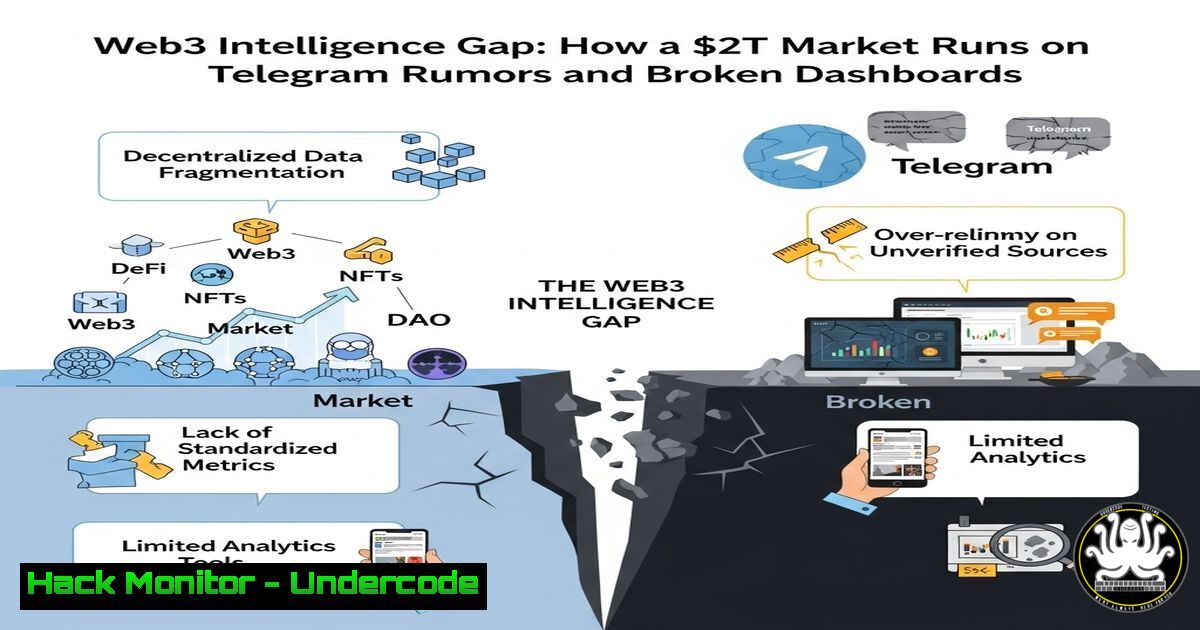
The decentralized finance (DeFi) and Web3 ecosystem, a market valued at over $2 trillion, is operating with a critical intelligence deficit. While blockchain technology has advanced at a breakneck pace, the analytical tools required for institutional-grade decision-making have stagnated, forcing analysts to rely on a fragmented mess of dashboards and unverified social media signals. This article explores the cybersecurity and data integrity challenges inherent in this gap and provides technical command-line and analytical techniques for security professionals to navigate and secure this new landscape.
Learning Objectives:
- Understand the critical data vulnerabilities and attack surfaces in the current Web3 analytical toolchain.
- Learn command-line and programming techniques to directly query blockchain data, bypassing unreliable third-party dashboards.
- Implement security best practices for verifying on-chain data, monitoring smart contracts, and mitigating intelligence-gathering risks.
You Should Know:
- Direct Blockchain Querying with `curl` and Web3 Providers
Verified command list:
curl -X POST https://mainnet.infura.io/v3/YOUR-INFURA-API-KEY \
-H "Content-Type: application/json" \
--data '{"jsonrpc":"2.0","method":"eth_getBlockByNumber","params":["latest", true],"id":1}'

For Solana:
curl https://api.mainnet-beta.solana.com -X POST -H "Content-Type: application/json" -d '{"jsonrpc":"2.0","id":1, "method":"getBlockHeight"}'
Step-by-step guide:
This bypasses potentially compromised dashboards by querying blockchain nodes directly. Replace `YOUR-INFURA-API-KEY` with a valid key from Infura or another provider. The first command fetches the latest Ethereum block with full transaction details. The second checks the current block height on Solana. This provides a ground-truth data source against which to verify the information presented on dashboards, mitigating the risk of data manipulation or front-end exploits.
2. On-Chain Data Integrity Verification with `ethereum-etl`
Verified command list:
 Install ethereum-etl
pip install ethereum-etl

Export blocks and transactions to verify dashboard data
ethereumetl export_blocks --start-block 18000000 --end-block 18000010 --provider-uri https://mainnet.infura.io/v3/YOUR-API-KEY --output-file blocks.csv
ethereumetl export_transactions --start-block 18000000 --end-block 18000010 --provider-uri https://mainnet.infura.io/v3/YOUR-API-KEY --output-file transactions.csv
Step-by-step guide:
The `ethereum-etl` toolkit allows for the extraction and transformation of blockchain data into analyzable formats. By exporting blocks and transactions directly to CSV, analysts can perform independent verification of volume, transaction counts, and wallet activities. This process mitigates the risk of relying on dashboards that may have been compromised or which present misleading information. Compare the data in these CSV files to the outputs of your analytical dashboards to identify discrepancies.
- Monitoring Smart Contract Events for Treasury and Unlock Data
Verified command list:
// Web3.js snippet to listen for transfer events from a treasury contract
const Web3 = require('web3');
const web3 = new Web3('wss://mainnet.infura.io/ws/v3/YOUR-INFURA-API-KEY');

const contractAddress = '0x123...';
const abi = [{"anonymous":false,"inputs":[{"indexed":true,"name":"from","type":"address"},{"indexed":true,"name":"to","type":"address"},{"indexed":false,"name":"value","type":"uint256"}],"name":"Transfer","type":"event"}];

const contract = new web3.eth.Contract(abi, contractAddress);
contract.events.Transfer({fromBlock: 'latest'})
.on('data', event => console.log(event))
.on('error', err => console.error(err));
Step-by-step guide:
Token unlocks and treasury movements are critical data points often misreported. This JavaScript code using Web3.js listens for real-time Transfer events emitted by a smart contract. By monitoring these events directly, you can track token movements from treasury wallets or vesting contracts without relying on delayed or inaccurate dashboards. This provides early warning of large transfers that may signal unlocks or fund movements before they are widely reported—and potentially manipulated—on social media.
4. Cross-Chain Data Validation with Subgraphs and GraphQL
Verified command list:
 Querying a subgraph for curated on-chain data
curl -X POST https://api.thegraph.com/subgraphs/name/uniswap/uniswap-v2 \
-H "Content-Type: application/json" \
--data '{"query":"{ pairs(first: 5) { id token0 { symbol } token1 { symbol } volumeUSD } }"}'

For a custom subgraph
curl -X POST https://api.thegraph.com/subgraphs/name/your-subgraph-name \
-H "Content-Type: application/json" \
--data '{"query":"{ tokenLocks(first: 10 orderBy: unlockedAmount orderDirection: desc) { id unlockedAmount lockDate } }"}'
Step-by-step guide:
The Graph protocol allows for the creation of indexed blockchain data (subgraphs) that can be queried using GraphQL. While more reliable than many dashboards, subgraphs must still be validated. These commands query both a public Uniswap subgraph and a hypothetical custom subgraph for token unlock data. Always verify critical data points against direct node queries, as subgraphs can be manipulated if the indexing logic is flawed or compromised. This dual-source validation is key to securing your analytical pipeline.
- Securing Your Data Pipeline with API Key Hardening
Verified command list:
 Linux: Securely store API keys using environment variables
echo 'export INFURA_API_KEY="your-api-key"' >> ~/.bashrc
echo 'export THEGRAPH_API_KEY="your-graph-key"' >> ~/.bashrc
source ~/.bashrc

Then use in scripts:
curl -X POST https://mainnet.infura.io/v3/$INFURA_API_KEY ...

Restrict file permissions on configuration files
chmod 600 ~/.bashrc
chmod 600 config.json

Use ssh-agent for secure remote access
eval "$(ssh-agent -s)"
ssh-add ~/.ssh/your_private_key
Step-by-step guide:
The APIs and node providers you rely on for data are critical infrastructure. These commands ensure that API keys are stored as environment variables rather than hardcoded in scripts, reducing the risk of exposure through version control leaks. Restricting file permissions on configuration files prevents unauthorized users or processes from reading your credentials. Using `ssh-agent` manages keys for secure remote server access, protecting your entire data pipeline from compromise.
- Telegram and Discord Signal Monitoring with Secure Bots
Verified command list:
 Python snippet for secure Telegram API monitoring
from telegram import Update
from telegram.ext import Updater, CallbackContext
import os

API_KEY = os.environ.get('TELEGRAM_API_KEY')
CHANNEL_ID = '@your_target_channel'

def callback(update: Update, context: CallbackContext):
message = update.message.text
 Perform security validation on message here
if 'unlock' in message.lower() or 'treasury' in message.lower():
log_alert(message)

updater = Updater(API_KEY)
updater.dispatcher.add_handler(MessageHandler(Filters.text, callback))
updater.start_polling()
Step-by-step guide:
While social media signals are unreliable, they cannot be ignored. This Python code sets up a secure Telegram bot that monitors specified channels for keywords like “unlock” or “treasury.” The API key is stored in an environment variable for security. Crucially, any signals received should be treated as unverified and must be validated against on-chain data before acting. This approach allows you to monitor these channels without manually exposing yourself to potential misinformation campaigns.
7. Building a Personal Verification Dashboard with Docker
Verified command list:
 Docker compose for isolated analytical environment
version: '3'
services:
grafana:
image: grafana/grafana
ports:
- "3000:3000"
volumes:
- grafana-storage:/var/lib/grafana
prometheus:
image: prom/prometheus
volumes:
- ./prometheus.yml:/etc/prometheus/prometheus.yml
ports:
- "9090:9090"
node-exporter:
image: prom/node-exporter
ports:
- "9100:9100"

volumes:
grafana-storage: {}
Step-by-step guide:
Rather than relying on external dashboards, security-conscious analysts should build their own verification systems. This Docker Compose file sets up an isolated monitoring stack with Grafana for visualization and Prometheus for data collection. By running this stack locally or on a secure server, you can create personalized dashboards that pull data from verified sources through secure APIs. This approach eliminates the risk of front-end compromises on third-party dashboards and ensures that your analytical environment remains under your control.
What Undercode Say:
- The lack of reliable intelligence infrastructure in Web3 represents not just an opportunity but a critical security vulnerability that threatens market integrity.
- The solution requires a dual approach: building better institutional tools while security professionals develop techniques to verify and secure existing data sources.
The intelligence gap in Web3 is fundamentally a security problem. When a $2T market operates on Telegram rumors and unverified dashboards, it creates fertile ground for manipulation, misinformation, and exploitation. The technical commands and procedures outlined above represent stopgap measures—ways for security professionals to navigate the current landscape while longer-term solutions are built. The real opportunity lies in creating verified, secure data pipelines that provide institutional-grade intelligence without compromising the decentralized ethos of Web3. This requires not just better data aggregation but robust security practices around data verification, source validation, and infrastructure hardening.
Prediction:
Within two years, we will see the first major market manipulation incident directly caused by compromised or malicious analytical dashboards, resulting in billions in losses and triggering regulatory scrutiny. This event will catalyze massive investment in secure, verifiable Web3 data infrastructure, creating a new cybersecurity niche focused on blockchain data integrity. The teams building secure data operating systems today will become the Bloomberg-level institutions of tomorrow, while those relying on current fragmented tools will face existential risks.
🎯Let’s Practice For Free:
IT/Security Reporter URL:
Reported By: Aditya Desai – Hackers Feeds
Extra Hub: Undercode MoN
Basic Verification: Pass ✅


