Listen to this Post
Introduction:
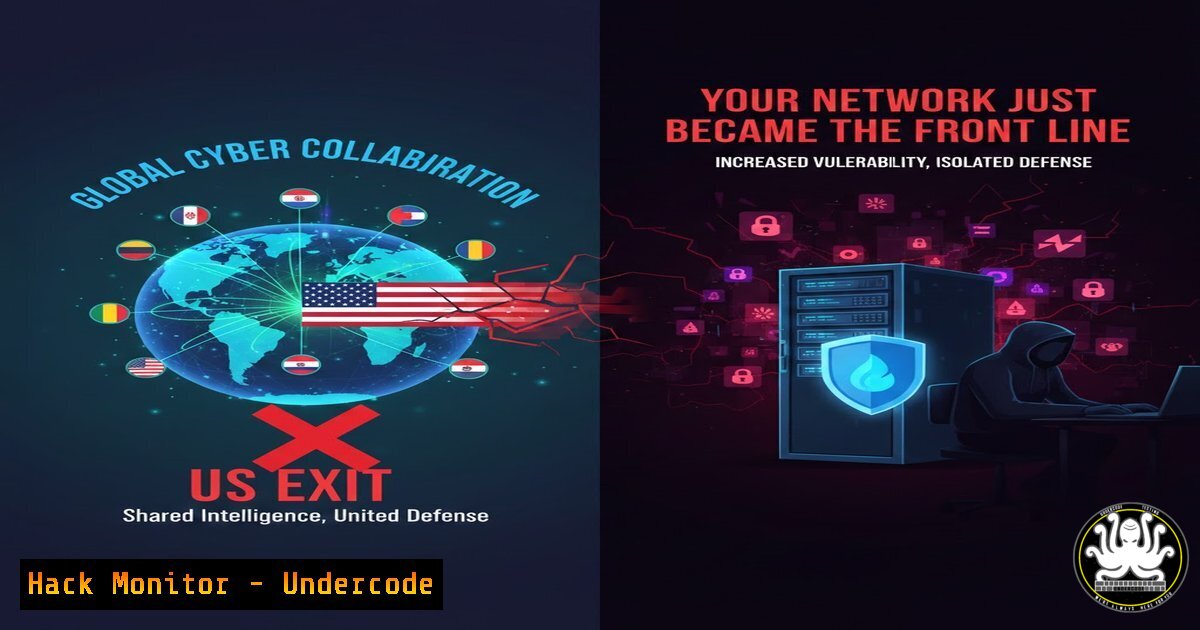
The recent executive order to withdraw U.S. support from the Global Forum on Cyber Expertise (GFCE) and the European Centre of Excellence for Countering Hybrid Threats (Hybrid CoE) marks a pivotal shift in the international cybersecurity landscape. This move away from multilateral cooperation frameworks threatens to fragment the shared intelligence and standardized best practices that form the bedrock of modern cyber defense, potentially leaving organizations to face advanced threats in isolation. Security professionals must now proactively compensate for this gap by hardening their own infrastructures and seeking alternative intelligence sources.
Learning Objectives:
- Understand the operational impact of reduced global threat intelligence sharing on organizational security.
- Implement technical measures to harden systems against threats that may proliferate in a less-cooperative environment.
- Establish internal procedures for incident response that assume a potentially slower, less coordinated global response ecosystem.
You Should Know:
- The Immediate Intelligence Gap: Replicating Shared Threat Feeds
The GFCE facilitates collaboration on threat intelligence, malware analysis, and vulnerability disclosure. With the U.S. stepping back, access to a consolidated, vetted global feed may diminish. Organizations can partially replicate this by aggregating open-source intelligence (OSINT) and industry-specific feeds.
Step‑by‑step guide explaining what this does and how to use it.
Step 1: Set Up a MISP Threat Intelligence Platform. MISP (Malware Information Sharing Platform & Threat Sharing) is an open-source solution for collecting, sharing, and correlating threat indicators.
Linux Command to Install (Ubuntu):
sudo apt-get update
sudo apt-get install misp
Step 2: Integrate Alternative Threat Feeds. Add feeds from organizations like Abuse.ch, AlienVault OTX, and your sector’s ISAC (Information Sharing and Analysis Center).
MISP Feed Addition (via UI): Navigate to `Sync Actions` > List Feeds. Add a new feed, e.g., from Abuse.ch URL: `https://ransomwaretracker.abuse.ch/downloads/RW_IPBL.txt`.
Step 3: Automate Indicator Blocking. Use the output from MISP to update firewall blocklists or Security Information and Event Management (SIEM) rules.
2. Hardening Endpoints Against “Wild West” Threats
A fragmented global stance can lead to faster exploitation of known vulnerabilities. System hardening is no longer optional.
Step‑by‑step guide explaining what this does and how to use it.
Step 1: Implement Strict Configuration Baselines. Use established benchmarks from the Center for Internet Security (CIS).
Windows (PowerShell – Audit): Use the `Microsoft Security Compliance Toolkitto compare your settings against CIS benchmarks.sudo lynis audit system
Linux (Check): Use `lynis` for auditing:.sudo apt update && sudo apt full-upgrade -y
Step 2: Enforce Automated Patching. Beyond OS updates, ensure firmware and third-party software are patched.
Linux (Debian/Ubuntu):.Install-Module -Name PSWindowsUpdate; Get-WindowsUpdate -Install -AcceptAll`.
Windows (PowerShell):
3. Enhancing Network Segmentation & Monitoring
Reduced collaboration elevates the risk of undetected lateral movement post-breach. Segmentation limits blast radius.
Step‑by‑step guide explaining what this does and how to use it.
Step 1: Map Critical Assets and Data Flows. Identify and isolate sensitive segments (e.g., finance, R&D).
Step 2: Implement Micro-segmentation Rules.
Linux (Using iptables as example): `sudo iptables -A FORWARD -s 10.0.1.0/24 -d 10.0.2.0/24 -j DROP` to block traffic between two subnets.
Concept for Cloud: Use native Network Security Groups (Azure) or Security Groups (AWS) to enforce least-privilege access between instances.
Step 3: Deploy Intrusion Detection on Segments. Use a tool like `Wazuh` or `Security Onion` to monitor east-west traffic for anomalies.
4. Securing APIs in an Uncoordinated Ecosystem
APIs are prime targets. Lack of international norms can lead to inconsistent security practices among partners.
Step‑by‑step guide explaining what this does and how to use it.
Step 1: Enforce Strong Authentication & Rate Limiting.
Example Nginx Rate Limiting Config:
limit_req_zone $binary_remote_addr zone=api:10m rate=10r/s;
location /api/ {
limit_req zone=api burst=20 nodelay;
proxy_pass http://api_backend;
}
Step 2: Implement Rigorous Input Validation and Schema Checks. Reject malformed JSON or unexpected data types immediately.
Step 3: Use a Dedicated API Security Tool. Deploy tools like `OWASP ZAP` for continuous testing: `zap-cli quick-scan –self-contained –start-options ‘-config api.disablekey=true’ http://yourapi.test`.
- Building a Resilient, Self-Reliant Incident Response (IR) Plan
Assume slower cross-border legal cooperation and intelligence sharing. Your IR plan must be comprehensive and internalized.
Step‑by‑step guide explaining what this does and how to use it.
Step 1: Develop Playbooks for Critical Scenarios (Ransomware, Data Exfiltration). Include internal escalation paths and decision trees.
Step 2: Prepare Forensic Readiness.
Linux (Acquire memory image): Use LiME: sudo insmod lime.ko "path=/tmp/memdump.lime format=lime".
Windows (Acquire volatile data): Use `KAPE` or Magnet RAM Capture.
Step 3: Conduct Regular Tabletop Exercises. Simulate attacks that involve threat actors from jurisdictions where information sharing may now be hindered.
What Undercode Say:
- The Burden of Defense Shifts Inward. The primary consequence of this geopolitical shift is that individual organizations and national agencies must invest significantly more resources into building independent defensive and intelligence capabilities. You can no longer rely as heavily on the global “neighborhood watch.”
- Fragmentation Benefits Adversaries. Cybercriminals and state-sponsored actors operate without borders. A less coordinated international defense framework creates exploitable gaps, slower attribution, and safe havens, directly increasing risk for all entities.
Analysis: This move represents a fundamental recalibration of cyber strategy from collective security to unilateral resilience. While framed politically as sovereignty, the technical reality is increased complexity and cost for security teams. The standards and trust painstakingly built through forums like GFCE are not easily replaced by bilateral agreements or private contracts. In the short term, we will likely see a surge in alternative information-sharing groups forming among aligned nations and corporations, but these may lack the inclusivity and scale needed to combat truly global threats. The onus is now on Chief Information Security Officers (CISOs) to advocate for increased budget and focus on foundational security hygiene, advanced detection, and in-house threat intelligence to mitigate the growing isolation.
Prediction:
In the next 2-3 years, the withdrawal from cooperative cyber forums will lead to a measurable increase in the dwell time of advanced persistent threats (APTs) within victim networks, as shared indicators of compromise (IOCs) become less timely and comprehensive. We will see the rise of more polarized “cyber blocs” with competing technical standards, complicating defense for multinational corporations. Furthermore, ransomware groups will exploit jurisdictional friction, making disruption and prosecution more difficult, ultimately leading to more frequent and severe attacks on critical infrastructure and medium-sized businesses that lack the resources to build sovereign cyber fortresses.
▶️ Related Video (80% Match):
🎯Let’s Practice For Free:
IT/Security Reporter URL:
Reported By: Michael Tchuindjang – Hackers Feeds
Extra Hub: Undercode MoN
Basic Verification: Pass ✅


