Listen to this Post
Introduction:
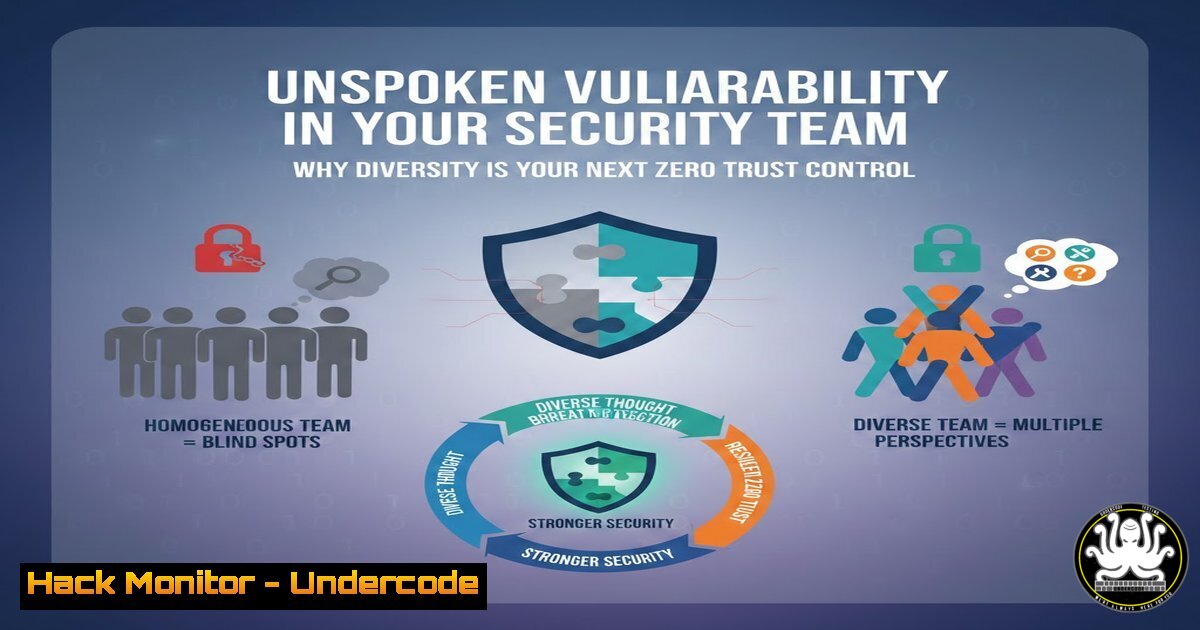
While the cybersecurity industry focuses on hardening endpoints, patching zero-days, and deploying AI-driven defense platforms, a critical attack surface is often overlooked: the homogeneity of the security team itself. As highlighted by leaders like Vasu Jakkal of Microsoft Security, the “arena” of cybersecurity requires diverse perspectives to anticipate the multifaceted nature of modern threats. This article analyzes why a lack of diversity is not just a human resources issue, but a security architecture flaw, providing actionable strategies to build resilient, multi-perspective defense units.
Learning Objectives:
- Understand the correlation between cognitive diversity and improved threat modeling.
- Identify systemic barriers that create echo chambers in security operations centers (SOCs).
- Implement recruitment and retention strategies that close the cyber skills gap by widening the talent funnel.
You Should Know:
1. The Homogeneity Blind Spot in Threat Modeling
Security teams often consist of individuals from similar educational backgrounds, socioeconomic statuses, and life experiences. This creates a “cognitive monoculture.” When an organization faces a sophisticated social engineering attack or a threat targeting a specific demographic, a homogenous team may lack the lived experience to recognize the subtle cues. This is akin to a firewall configured only for known IPs—it fails against novel attack vectors rooted in human behavior.
Step‑by‑step guide to auditing your team’s cognitive diversity:
- Linux/Mac Command for Log Analysis (Diversity of Thought in Data): While you can’t grep for diversity, you can analyze the sources of your threat intelligence.
Analyze the geographic and cultural sources of your threat intel feeds
cat threat_intel_sources.csv | awk -F ',' '{print $2}' | sort | uniq -c | sort -nr
What this does: If 90% of your intel comes from Western sources, you may be blind to TTPs used in other regions. This command visualizes the “sources” of your knowledge.
- Windows PowerShell (Active Directory Review): Review the composition of high-level security groups.
Get-ADGroupMember -Identity "Domain Admins" | Get-ADUser -Properties Department, , LastLogonDate | Select-Object Name, Department,
What this does: This lists the departments and titles of your most privileged users. If they all come from the same background (e.g., Network Engineering), you have a concentration of risk and a potential blind spot regarding endpoint or application security.
- Breaking the “Bro Culture” Barrier in SOC Operations
A toxic or exclusionary environment leads to high turnover and burnout. In cybersecurity, losing a Tier 2 analyst costs an organization not only recruitment fees but also institutional threat knowledge. High-pressure environments that do not support diverse work styles or communication methods lead to missed alerts and alert fatigue.
Step‑by‑step guide to fostering an inclusive SOC:
- Tool Configuration (SIEM Rule Tuning): Create a feedback loop where junior analysts from diverse backgrounds can suggest rule changes without fear of reprisal.
- Action: Implement a “Blue Team Idea Board” using a simple ticketing system or shared document (e.g., Jira, Trello).
- Process: Require that every sprint review includes at least one rule modification suggested by a junior or non-traditional team member. This ensures that detection logic isn’t solely dictated by senior staff who may have entrenched, outdated views of the threat landscape.
3. Recruitment: Moving Beyond the “Security Nerds” Filter
Traditional cybersecurity hiring relies heavily on specific certifications (CISSP, CEH) and years of experience, automatically filtering out career-changers, veterans, and individuals from non-traditional educational paths. This is operationally unsound, as it ignores raw talent in favor of pedigree.
Step‑by‑step guide to alternative hiring practices:
- Linux Command (Simulating Skills-Based Hiring): Instead of asking for theory, test for aptitude.
Create a practical test
echo "You have a pcap file. Find the IP that is scanning the network." > interview_challenge.txt
sudo tcpdump -r sample_traffic.pcap -nn | grep "SYN" | awk '{print $3}' | cut -d. -f1-4 | sort | uniq -c | sort -nr
What this does: This provides a real-world task. Candidates are judged on their logic and ability to find answers (using Google, man pages), not just rote memorization. This levels the playing field for autodidacts and career-changers.
- Windows Command (Active Directory Cleanup for Onboarding): Remove degree requirements from automated filters.
Instead of filtering resumes by "Degree" in an HR database,
focus on scripting skills.
Review user accounts of top performers to find commonalities.
Get-ADUser -Filter  -Properties Description, Info | Where-Object {$_.Description -like "Incident Response"} | Select-Object Name, Info
What this does: Look at the “Info” field or descriptions of your current top performers. You may find they joined from non-traditional paths (e.g., “Former Teacher,” “Military Transition”). Use this data to redefine your ideal candidate profile.
What Undercode Say:
- Key Takeaway 1: Cyber resilience is not just a function of software, but of perspective. A team that looks the same, thinks the same, and will miss the same anomalies.
- Key Takeaway 2: Actively recruiting for neurodiversity, gender balance, and cultural background is a strategic defense-in-depth measure that mitigates the risk of social engineering and broadens threat coverage.
Analysis: The call to action from leaders like Vasu Jakkal is a direct challenge to the cybersecurity status quo. We spend billions on AI that detects anomalies in code, yet we ignore the anomalies in our own thinking. By applying the same rigorous analysis we use for network traffic to our hiring and retention practices—looking for outliers, unusual patterns, and untapped sources of data—we build a human firewall that is as adaptive and intelligent as the threats we face. The “arena” of security is brutal, and it requires a full roster of players with different strengths to survive.
Prediction:
Within the next five years, Gartner will release a “Hype Cycle for People-Centric Security” where “Cognitive Diversity” will move from a niche concept to a mainstream KPI for Security Operations. Organizations failing to measure and improve their team’s diversity will face higher cyber insurance premiums due to increased susceptibility to sophisticated phishing and business email compromise (BEC) attacks that exploit cultural and linguistic blind spots.
▶️ Related Video (78% Match):
🎯Let’s Practice For Free:
IT/Security Reporter URL:
Reported By: Vasu Jakkal – Hackers Feeds
Extra Hub: Undercode MoN
Basic Verification: Pass ✅


