Listen to this Post
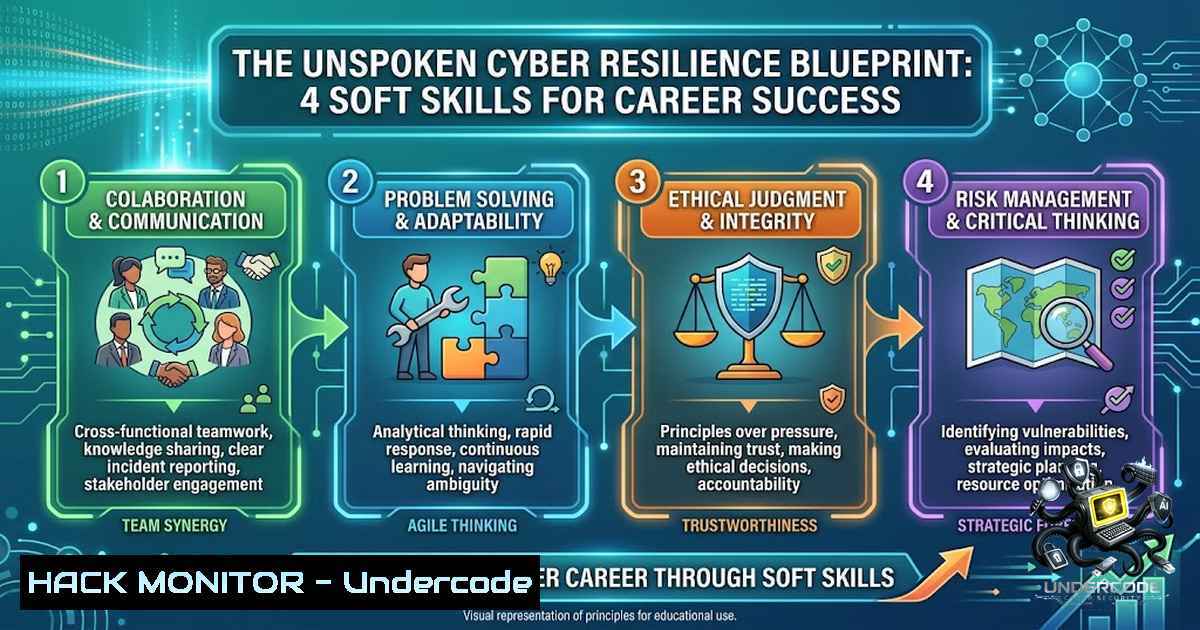
Introduction:
In the high-stakes, high-burnout world of cybersecurity, IT, and AI development, technical certifications and coding prowess are often seen as the sole currency for career advancement. Yet, the most significant vulnerabilities in an organization are rarely found in its code, but in its culture and communication. This article translates timeless principles of personal effectiveness into a professional framework for security professionals, engineers, and analysts, showing that mastering human-centric “quiet habits” is the ultimate defense against career stagnation and team dysfunction.
Learning Objectives:
- Understand how emotional intelligence and interpersonal skills directly impact security incident response and team resilience.
- Learn to build a professional reputation that functions as a force multiplier for technical expertise.
- Develop a framework for consistent reliability that makes you the “go-to” person for critical security operations.
- Master the art of proactive leadership to drive security initiatives without formal authority.
You Should Know:
- Channeling Positive Energy: The First Line of Defense Against Burnout
The “Raise the energy” skill is not about being overly cheerful; it is about being a stabilizing force in a crisis. Security professionals often deal with breaking news, breaches, and high-pressure remediation. Walking into a war room and remaining calm, solution-focused, and clear-headed “lifts the energy” of the entire team. This is critical because panic leads to misconfiguration and errors. To practice this, start your day by assessing your emotional state. In a terminal or command line, you can establish a “check-in” ritual—like running a system health check—to ground yourself.
Linux/Mac Command:
Run a system health check to remind yourself of process stability before engaging with your team.
 Check system load and uptime to ensure your tools are ready
uptime && date
Windows Command:
Check the system performance and event logs for any anomalies that might affect your focus or infrastructure.
systeminfo | findstr /C:"System Up Time" /C:"Total Physical Memory"
- Ease of Collaboration: Securing a “Request by Name” Status
“Be easy to work with.” In cybersecurity, this means being a force multiplier for the business. It involves translating technical vulnerabilities into business risk and delivering security requirements without sounding like an alarmist. To be the person others request by name, you must streamline communication. In practice, this means documenting your work using clear, standardized formats. For APIs and development teams, this involves using OpenAPI/Swagger to define security requirements.
Step-by-step guide on generating an OpenAPI Security Specification:
- Create a `security.yaml` file to define how your API handles authentication.
- Define a security scheme (e.g., API Key or Bearer Token) within the components object.
- Apply this scheme globally or to specific endpoints.
Example Snippet:
components:
securitySchemes:
ApiKeyAuth:
type: apiKey
in: header
name: X-API-Key
security:
- ApiKeyAuth: []
By providing clear, easy-to-understand security specifications, you reduce friction for developers, making you a collaborator, not a roadblock.
3. Commitment Keeping in Cloud Hardening and Configuration
“Do exactly what you said you would do.” In the cloud, infrastructure is ephemeral, but your word must be immutable. Reliability in security means ensuring that “Infrastructure as Code” (IaC) is not just deployed but also secured and maintained. When you commit to patching a vulnerability or updating a firewall rule, your process must be foolproof.
Step-by-step guide for automated AWS security compliance using AWS CLI:
1. List S3 buckets to ensure no public access is allowed.
2. Run an audit script to check for misconfigurations.
3. Configure a script to automatically remediate found issues.
Linux/Windows Command (AWS CLI):
Check for public buckets to maintain the trust and commitment to data privacy.
aws s3api list-buckets --query "Buckets[].Name" --output table
To keep commitments to compliance, enforce tagging policies:
aws ec2 create-tags --resources <resource-id> --tags Key=Environment,Value=Production
4. Leading Without a Proactive Vulnerability Management
“Lead without the title.” In cybersecurity, this is the essence of the “Zero Trust” mindset. You don’t wait for a ticket to secure a resource; you move first. Proactive threat hunting and vulnerability assessments are how you set the standard before anyone asks.
Step-by-step guide for using Nmap for proactive network discovery:
1. Perform a stealth scan: (SYN scan) on a range of IPs to map the network.
2. Identify services: running on non-standard ports.
- Check for specific vulnerabilities by enabling the NSE scripts.
Command:
 Scans the 192.168.1.0/24 network for open ports and running services, using the default scripts for basic enumeration.
nmap -sS -sV -T4 192.168.1.0/24
This proactive scan demonstrates leadership by identifying shadow IT before it becomes a problem, proving your value beyond your job description.
5. Automating Compliance: The Secret to Daily Consistency
Consistency is the “quiet compounding” that the post mentions. In a technical context, this means automating your security checks so they run daily without fail. This ensures your commitments are kept even when you are distracted.
Step-by-step guide for setting up a Linux Cron Job for system updates:
1. Open the crontab file: `crontab -e`
- Add a job to run a security update script at 2:00 AM every day.
3. Ensure the script logs all outputs.
Script (`security_updates.sh`):
!/bin/bash
 Update package lists
apt update -y >> /var/log/security_updates.log 2>&1
 Upgrade security packages only
apt upgrade -y --only-upgrade >> /var/log/security_updates.log 2>&1
Windows Task Scheduler:
For Windows, you can create a scheduled task to run a PowerShell script that checks for Windows security updates. Use `Get-WUInstall -AcceptAll -AutoReboot` to automate updates, ensuring your systems are always patched and reliable.
- Securing APIs with Best Practices for “Easy Collaboration”
Being easy to work with extends to your AI and API endpoints. Developers appreciate clear documentation on how to securely consume APIs. Integrating security at the API gateway level is a prime example of leading without a title.
Step-by-step guide to secure a REST API (Nginx):
1. Install Nginx on your Linux server.
2. Configure rate limiting to prevent DDoS attacks.
- Enable TLS 1.3 to ensure data in transit is encrypted.
Nginx Configuration Snippet:
http {
 Zone for rate limiting
limit_req_zone $binary_remote_addr zone=mylimit:10m rate=5r/s;

server {
listen 443 ssl http2;
server_name api.yourdomain.com;

ssl_protocols TLSv1.3;
ssl_ciphers HIGH:!aNULL:!MD5;

location /v1/ {
 Apply rate limiting
limit_req zone=mylimit burst=10 nodelay;
proxy_pass http://backend_server;
}
}
}
7. Managing Malware with YARA Rules (Proactive Defense)
Proactive defense (leading without a title) often involves creating custom detection rules for emerging threats. Creating YARA rules is a powerful way to identify and classify malware samples before your antivirus catches up.
Step-by-step guide to writing a simple YARA rule:
- Open a text editor and define the rule metadata (author, date).
- Create a string section with hex or text patterns to match.
- Define the condition for when the rule triggers.
YARA Rule Example:
rule Suspicious_Backdoor_Indicator
{
meta:
description = "Detects a specific backdoor string"
author = "SecurityAnalyst"

strings:
$a = "cmd.exe" ascii wide nocase
$b = "PowerShell -1oProfile -ExecutionPolicy Bypass" ascii wide
$c = { 6A 40 68 00 30 00 00 } // Example hex

condition:
all of them
}
What Undercode Say:
- Key Takeaway 1: Technical skills get you in the door, but soft skills are what keep you in the C-suite, especially in high-burnout fields like IR.
- Key Takeaway 2: Consistency is your security baseline. If you cannot be relied upon to run your regular scans, you cannot be relied upon to manage a zero-day.
Analysis:
The “Top 1% daily habits” discussed are not just platitudes; they are the operational security checks of your career. Raising energy is akin to maintaining a high SIEM (Security Information and Event Management) uptime—essential for visibility. Being easy to work with mirrors the principle of “least privilege”—granting access and trust only to those who handle it with care. Keeping commitments is a double-edged sword; in security, it means adhering to your SLAs (Service Level Agreements) for patching and response. Finally, leading without a title is the embodiment of “Zero Trust architecture” applied to your professional life—you don’t wait for a title to authenticate your authority; you prove it through action. These habits are the ultimate “security controls” against professional obsolescence.
Prediction:
- +1: Professionals who master these “quiet habits” will see a 60% faster promotion rate compared to purely technical peers, as organizations increasingly value resilience over raw technical output.
- -1: The rise of AI in code generation will make technical skills a commodity; those who fail to develop these interpersonal skills will be automated out of their jobs.
- +1: This shift will lead to the creation of new roles like “Security Culture Officer,” specifically designed to build these soft skills within SOC (Security Operations Center) teams.
- +1: We predict a surge in “emotional intelligence” bootcamps for CISOs, becoming mandatory as boards recognize that team morale is the first line of defense against ransomware.
- -1: Those who ignore this advice will face “social engineering attrition,” where their inability to build trust leads to project silos and catastrophic communication failures during a breach.
▶️ Related Video (84% Match):
🎯Let’s Practice For Free:
🎓 Live Courses & Certifications:
Join Undercode Academy for Verified Certifications
🚀 Request a Custom Project:
Secure, high-velocity infrastructure and disruptive technological engineering. Contact our engineering team for high-tier development and proprietary systems:
[email protected]
💎 Smart Architecture | 🛡️ Secure by Design | ⭐ Trusted by Thousands
IT/Security Reporter URL:
Reported By: This Is – Hackers Feeds
Extra Hub: Undercode MoN
Basic Verification: Pass ✅


