
Listen to this Post
Introduction:
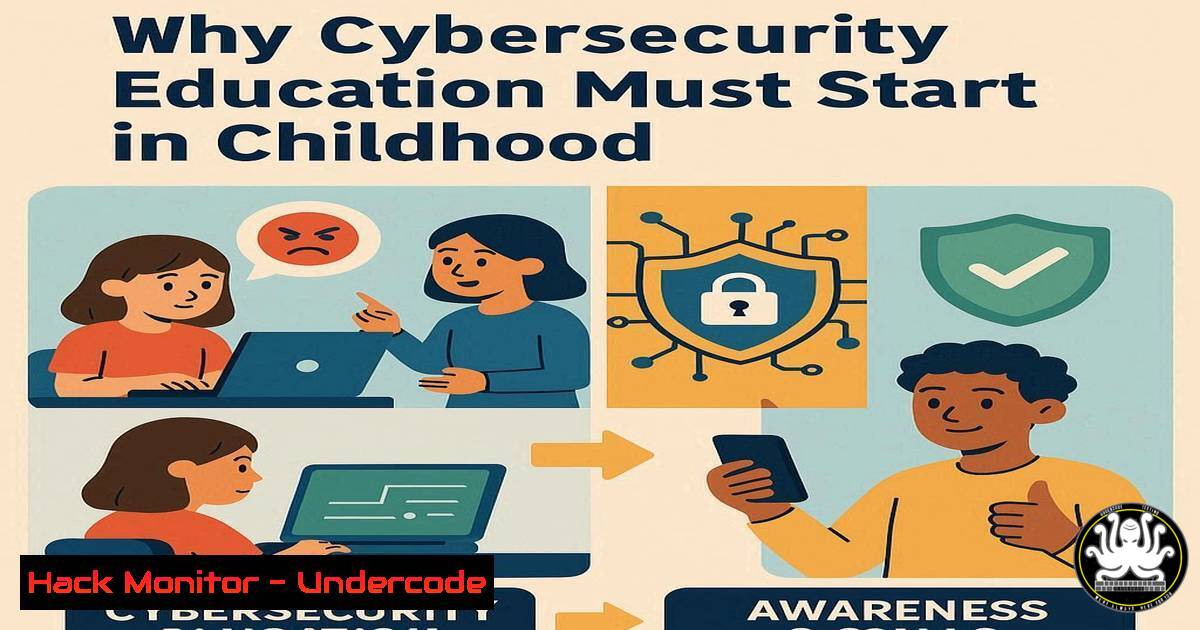
The growing digitization of our world makes cybersecurity a critical life skill, not just a professional discipline. As Mike Holcomb’s viral OT/ICS coloring book highlights, engaging the next generation requires creative, accessible methods that demystify complex concepts from an early age, building a foundational culture of security.
Learning Objectives:
- Understand the critical importance of early-stage cybersecurity education.
- Learn fundamental commands and tools for securing both IT and OT environments.
- Develop strategies for implementing basic security monitoring and incident response.
You Should Know:
1. Building a Foundation: Basic Network Reconnaissance
Understanding what is on your network is the first step in securing it. The `nmap` command is the industry standard for network discovery and security auditing.
 Basic network scan to discover live hosts
nmap -sn 192.168.1.0/24

Scan for open ports and service versions on a target
nmap -sV -sC 192.168.1.100

Perform a script scan using the default NSE scripts
nmap -sC -sV -O target_ip
Step-by-step guide:
The `-sn` flag (ping scan) discovers active devices without port scanning. The `-sV` flag probes open ports to determine service and version information. The `-sC` flag runs scripts from the Nmap Scripting Engine (NSE) to gather further intelligence. Always ensure you have explicit permission to scan any network.
2. Securing the Perimeter: Windows Firewall Rule Management
A hardened firewall is a primary defense. Windows PowerShell allows for granular control.
 Create a new firewall rule to block a specific port
New-NetFirewallRule -DisplayName "Block Inbound Port 12345" -Direction Inbound -LocalPort 12345 -Protocol TCP -Action Block

View all active firewall rules
Get-NetFirewallRule | Where-Object {$_.Enabled -eq 'True'}

Remove a specific firewall rule
Remove-NetFirewallRule -DisplayName "Block Inbound Port 12345"
Step-by-step guide:
The `New-NetFirewallRule` cmdlet is used to create new rules. The `-Direction` parameter specifies if the rule applies to inbound or outbound traffic. `-Action Block` will deny the connection. Regularly audit your rules with `Get-NetFirewallRule` to ensure your configuration matches your security policy.
3. Linux System Hardening: File Permissions and sudoers
Improper permissions are a common attack vector. Securing sensitive files and configuring sudo access is crucial.
 Remove world-write permissions from critical directories
sudo chmod o-w /etc/passwd /etc/shadow /etc/group

Set the sticky bit on /tmp to prevent file deletion by non-owners
sudo chmod +t /tmp

Edit the sudoers file safely (always use visudo)
sudo visudo
 Inside visudo, add a user-specific rule:
 username ALL=(ALL) /usr/bin/systemctl, /bin/systemctl
Step-by-step guide:
The `chmod o-w` command removes write permissions for “others” on critical system files. The `+t` (sticky bit) on directories like `/tmp` ensures only the file owner can delete their files. `visudo` validates syntax before saving, preventing a misconfigured sudoers file from locking you out of administrative access.
4. OT/ICS Protocol Monitoring with Wireshark
Operational Technology (OT) networks use specialized protocols like Modbus and DNP3 that require specific monitoring.
 Capture traffic on a specific network interface
wireshark -i eth0

Apply a display filter for Modbus TCP traffic
modbus.tcp

Filter for specific Function Codes (e.g., Write Single Coil)
modbus.func_code == 5
Step-by-step guide:
Launch Wireshark and select the interface connected to the OT network (ensure this is authorized). Use the `modbus.tcp` display filter to isolate Modbus traffic. Analyzing Function Codes (like 5 for Write Single Coil) helps identify potentially malicious write commands attempting to manipulate physical processes.
5. Cloud Security: Auditing AWS S3 Buckets
Misconfigured cloud storage is a leading cause of data breaches. The AWS CLI is essential for security checks.
 List all S3 buckets in your account
aws s3 ls

Check the ACL (Access Control List) of a specific bucket
aws s3api get-bucket-acl --bucket my-bucket-name

Check the bucket policy
aws s3api get-bucket-policy --bucket my-bucket-name
Step-by-step guide:
The `aws s3 ls` command provides a high-level overview. `get-bucket-acl` shows granted permissions via ACLs, which should be reviewed for public access. `get-bucket-policy` retrieves the resource-based IAM policy. Any policy containing `”Effect”: “Allow”` and `”Principal”: “”` indicates a public bucket, which is a severe risk.
6. API Security Testing with curl
APIs are a major attack surface. Simple command-line tools can test for common vulnerabilities.
 Test for SQL Injection in a GET parameter
curl "https://api.example.com/v1/users?id=1' OR '1'='1'"

Test for Broken Object Level Authorization (BOLA)
curl -H "Authorization: Bearer <USER_A_TOKEN>" https://api.example.com/v1/users/12345
curl -H "Authorization: Bearer <USER_B_TOKEN>" https://api.example.com/v1/users/12345

Send a POST request with JSON data
curl -X POST -H "Content-Type: application/json" -d '{"username":"admin","password":"test"}' https://api.example.com/login
Step-by-step guide:
The first command tests if the `id` parameter is vulnerable to SQL injection. The BOLA test checks if User B can access User A’s data (a common flaw). The final command demonstrates how to interact with a login endpoint. Always perform these tests in authorized environments like penetration testing engagements.
7. Incident Response: Process Analysis and Memory Dumping
During a security incident, rapid triage of a compromised system is critical.
 Linux: List all running processes in a detailed hierarchy
ps auxf

Windows: List processes with command lines (PowerShell)
Get-WmiObject Win32_Process | Select-Object Name, ProcessId, CommandLine

Create a memory dump of a suspicious process (Linux, requires gcore)
sudo gcore -o /tmp/dump <PID>

On Windows, use the Sysinternals ProcDump tool
procdump -ma <process_name_or_PID>
Step-by-step guide:
`ps auxf` provides a forest view of processes, making parent-child relationships clear. On Windows, `Get-WmiObject` reveals the full command line, which can expose malicious arguments. Creating a memory dump with `gcore` or `procdump` preserves the process’s volatile memory for later forensic analysis, capturing evidence like malware payloads.
What Undercode Say:
- The human element remains the weakest link; education that starts in childhood creates a more resilient long-term defense than any single piece of technology.
- The convergence of IT and OT (Operational Technology) means attacks can now cause physical disruption, making foundational knowledge a matter of public safety.
+ analysis around 10 lines.
The viral success of a cybersecurity coloring book is not a gimmick; it is a symptom of a growing realization that technical controls alone are insufficient. As cyber threats become more pervasive and sophisticated, building a inherent “security mindset” from a young age is as fundamental as teaching children to look both ways before crossing the street. The commands and techniques outlined for IT and OT security are powerful, but they are reactive tools. The proactive, long-term solution lies in cultural change. By using creative methods to introduce concepts like ethical hacking, privacy, and critical infrastructure protection to children, we are not just training future professionals—we are building a society that instinctively questions suspicious links, values personal data, and understands the real-world consequences of a cyber attack. This cultural shift will ultimately prove more impactful than the next generation of firewalls.
Prediction:
The normalization of cybersecurity education at a young age will create a generational shift, producing a workforce and public that is inherently more skeptical and resilient to social engineering. This will force threat actors to rely increasingly on sophisticated AI-driven attacks, moving the primary battlefield from human manipulation to AI-vs-AI conflicts in cyberspace.
🎯Let’s Practice For Free:
IT/Security Reporter URL:
Reported By: Mikeholcomb Cybersecurity – Hackers Feeds
Extra Hub: Undercode MoN
Basic Verification: Pass ✅


