
Listen to this Post
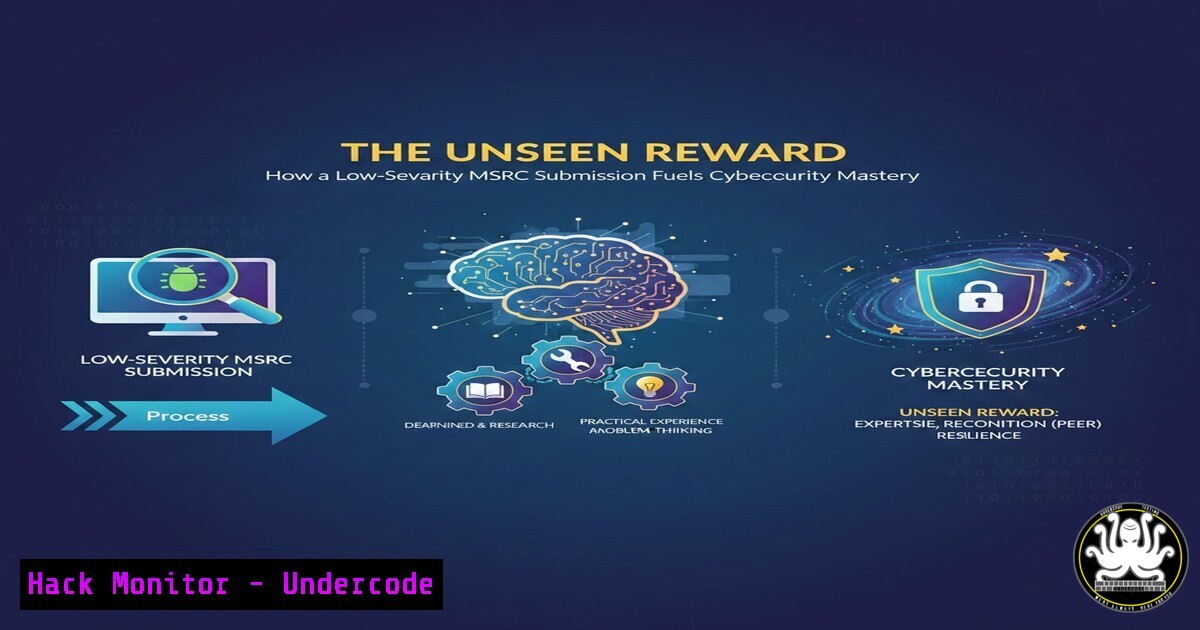
Introduction:
Submitting security findings to vendors like Microsoft is a cornerstone of responsible disclosure, bridging the gap between researchers and product teams. While not all submissions yield monetary rewards, they offer invaluable insights into real-world security triage and impact assessment, fostering professional growth beyond bounties. This article explores the technical journey from vulnerability discovery to ethical reporting, equipping you with tools and methodologies to thrive in cybersecurity research.
Learning Objectives:
- Master the end-to-end process of submitting vulnerabilities to the Microsoft Security Response Center (MSRC), including portal navigation and report drafting.
- Learn to critically assess the impact and severity of security findings using industry standards like CVSS and proof-of-concept development.
- Develop a mindset for continuous learning through responsible disclosure, triage feedback, and personal brand building in the cybersecurity community.
You Should Know:
1. Setting Up Your Security Research Lab
Step‑by‑step guide explaining what this does and how to use it.
A controlled lab environment is essential for safe vulnerability testing without legal risks. Start by virtualizing systems using VMware Workstation or VirtualBox, then install Kali Linux as your primary penetration testing platform. On Linux, use commands like `sudo apt update && sudo apt install kali-linux-default` to deploy tools like Metasploit and Wireshark. Configure network settings in bridged or NAT mode to isolate tests, and always obtain written permission before assessing any external system. For Windows researchers, enable Hyper-V via PowerShell: Enable-WindowsOptionalFeature -Online -FeatureName Microsoft-Hyper-V -All, then set up Windows Server VMs for Active Directory or API testing. This foundation ensures reproducible experiments and skill development in ethical hacking.
2. Identifying Vulnerabilities: Reconnaissance and Scanning
Step‑by‑step guide explaining what this does and how to use it.
Reconnaissance involves gathering intelligence on targets to identify potential attack surfaces. Use Nmap for network scanning: `nmap -sV -sC -O target.com` reveals open ports, service versions, and OS details, while `nmap –script vuln target.com` runs vulnerability detection scripts. For web applications, configure Burp Suite as a proxy to intercept HTTP requests; automate scans with OWASP ZAP using `zap-cli quick-scan -s all http://target.com`. API security testing requires tools like Postman or curl: craft malicious payloads with `curl -X POST https://api.target.com/data -H “Authorization: Bearer token” -d ‘{“query”:”{user(id:\”1\”){admin}}”}’` to check for GraphQL injections. Document all findings with screenshots and logs for later severity assessment.
3. Assessing Severity: CVSS Scoring and Impact Analysis
Step‑by‑step guide explaining what this does and how to use it.
The Common Vulnerability Scoring System (CVSS) quantifies vulnerability severity based on exploitability and impact. Calculate scores using the NVD calculator or offline tools like `cvss-sdk` in Python. For instance, a remote code execution flaw might score 9.8 (Critical) due to high impact on confidentiality and integrity, while an information disclosure may be 5.3 (Medium). Analyze context: if a vulnerability affects cloud-hardened Azure instances, use Azure CLI to check configurations: az security assessment list --query "[?displayName=='Ensure storage accounts restrict network access']". Always differentiate between theoretical flaws and practical exploits; low-severity issues, like those Sai Jayanth reported, often have limited scope or require privileged access, reducing immediate risk but offering learning value.
- The MSRC Submission Process: From Discovery to Report
Step‑by‑step guide explaining what this does and how to use it.
Navigate to the MSRC portal at https://msrc.microsoft.com/, create an account, and select “Submit a report.” Prepare a detailed report including vulnerability description, affected products (e.g., Windows 11, Azure API), and step‑by‑step reproduction steps. For example, if reporting a kernel flaw, provide Windows debugger commands: `!analyze -v` and `dt nt!_KPROCESS` to showcase memory corruption. For cloud misconfigurations, include Azure PowerShell output:Get-AzStorageAccount -Name Example | FL NetworkRuleSet. Attach proof-of-concept code, such as Python scripts for exploit verification, and submit. MSRC acknowledges receipts within 24 hours and may request clarifications—respond promptly to advance triage.
5. Understanding Triage: What Happens After Submission
Step‑by‑step guide explaining what this does and how to use it.
Post-submission, MSRC’s triage team validates findings against severity criteria, scope, and duplicate reports. They use internal tools like Azure DevOps for tracking; emulate this with Jira or GitHub Issues to monitor your submissions. If classified as low severity, analyze feedback: perhaps the vulnerability required physical access or was mitigated by existing controls. Use Linux command-line tools to rehearse triage: `grep -r “CVE-2023” /var/log/` to search for known exploits, or run `docker scan image:latest` for container vulnerabilities. This process hones your ability to prioritize findings, aligning with Sai Jayanth’s insight on impact vs. findings—a key skill for security analysts.
6. Responsible Disclosure and Ethical Considerations
Step‑by‑step guide explaining what this does and how to use it.
Responsible disclosure mandates giving vendors adequate time to patch before public disclosure, typically 90 days. Use encrypted channels like PGP for communication; generate keys with `gpg –gen-key` and share public keys via keyservers. For bug bounty programs, adhere to platforms’ scopes—test only authorized assets. In cloud hardening, avoid data exfiltration; instead, use read-only commands: `aws s3 ls s3://bucket –no-sign-request` to check for misconfigured S3 buckets. Document ethics in your reports, citing standards from OWASP or CERT, to build trust with vendors and avoid legal repercussions.
7. Building Your Cybersecurity Personal Brand
Step‑by‑step guide explaining what this does and how to use it.
Leverage experiences like MSRC submissions to showcase expertise. Write technical blogs using static site generators like Hugo; share code snippets on GitHub with detailed READMEs. On LinkedIn, use hashtags like CyberSecurity and BugBounty to engage communities. Participate in capture-the-flag events on TryHackMe—use Linux commands `thcli start machine` to practice—or contribute to open-source tools like Snort IDS. Regularly update your skills with courses from platforms like Cybrary or Coursera, focusing on API security and cloud hardening. This consistent visibility, as Sai Jayanth demonstrated, turns growth into career opportunities.
What Undercode Say:
- Key Takeaway 1: Low-severity vulnerability submissions are not failures but critical learning milestones that refine technical acumen and ethical reporting practices.
- Key Takeaway 2: Engagement with vendor triage processes, like MSRC’s, builds a nuanced understanding of real-world risk assessment, surpassing the allure of immediate rewards.
Analysis: Sai Jayanth’s experience highlights a paradigm shift in cybersecurity success metrics—from bounty counts to knowledge accumulation. The MSRC’s review of a low-severity finding underscores the industry’s appreciation for diligent research, even when impacts are minimal. This fosters a culture of resilience, where researchers learn to balance exploit sophistication with practical significance. As tools automate scanning, human judgment in triage and disclosure becomes the differentiator, making such experiences invaluable for long-term career growth in an evolving threat landscape.
Prediction:
In the next five years, AI-driven platforms will streamline vulnerability submission and triage, using natural language processing to auto-generate reports from researcher logs. However, the human elements of impact analysis and ethical discretion will grow in demand, with low-severity findings integrated into continuous learning ecosystems. MSRC and similar programs may offer personalized feedback loops, leveraging machine learning to suggest skill gaps based on submission trends. This will lower entry barriers for new researchers while elevating the overall security posture of vendors, creating a symbiotic growth environment where every submission, regardless of severity, contributes to collective cyber resilience.
▶️ Related Video (86% Match):
🎯Let’s Practice For Free:
IT/Security Reporter URL:
Reported By: Sai Jayanth – Hackers Feeds
Extra Hub: Undercode MoN
Basic Verification: Pass ✅


