
Listen to this Post
Introduction:
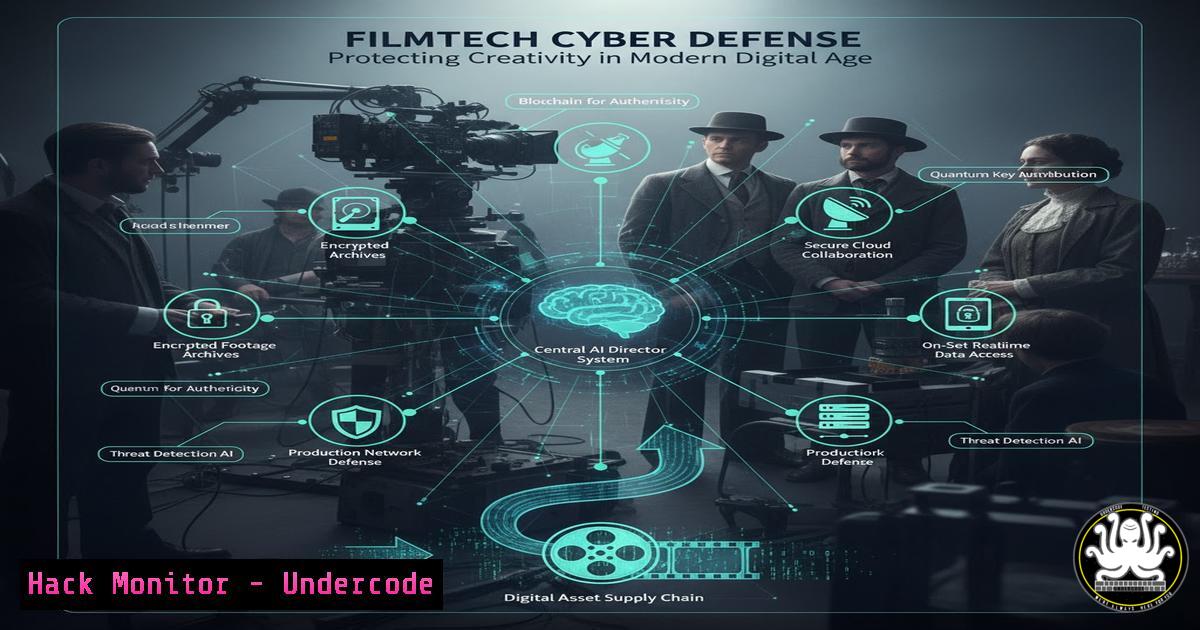
Behind the seamless magic of modern cinema lies a complex and often overlooked digital infrastructure. As highlighted in a recent industry overview by Christine Raibaldi, technologies utilized in the film industry—from CGI rendering farms to drone cameras and cloud-based editing suites—are pushing the boundaries of creativity. However, this rapid digital transformation introduces significant cybersecurity vulnerabilities. For IT and security professionals, the post-production studio is no longer just an artist’s workshop; it is a high-value target for data breaches, ransomware, and intellectual property theft, demanding the same rigorous security protocols as any financial institution.
Learning Objectives:
- Identify the unique cybersecurity attack vectors present in modern film production environments (Drones, Cloud Editing, CGI).
- Understand how to harden both Linux and Windows-based workstations used in rendering and editing.
- Implement network segmentation and API security measures to protect sensitive pre-release content.
You Should Know:
- Securing the “Digital Backlot”: Linux Server Hardening for Rendering Farms
Modern CGI and VFX (Visual Effects) rely heavily on Linux-based render farms (often running distributions like CentOS or Rocky Linux) to process millions of frames. These servers are prime targets for cryptojackers who hijack processing power to mine cryptocurrency, slowing down production.
– Step‑by‑step guide: To secure a render node, start by disabling unnecessary services. Use `systemctl list-units –type-service –running` to identify running services, then `systemctl disable [bash] –now` to stop and disable unneeded ones (like `cups` or avahi-daemon). Next, implement Mandatory Access Control. Ensure SELinux is in enforcing mode by checking `/etc/selinux/config` (SELINUX=enforcing). Finally, restrict SSH access to specific production IPs only by editing `/etc/ssh/sshd_config` and setting AllowUsers renderadmin@[production-IP].
2. Hardening Windows Workstations for Non-Technical Creatives
Editors and colorists often use powerful Windows workstations but may lack cybersecurity awareness, making them susceptible to phishing attacks that could leak a blockbuster film.
– Step‑by‑step guide: Apply the “Principle of Least Privilege.” Create a standard user account for daily editing tasks instead of allowing administrators to run everything. In Command Prompt (as Admin), use `net user Editor [bash] /add` and net localgroup Administrators Editor /delete. Then, enable Windows Defender Attack Surface Reduction (ASR) rules via PowerShell to block common office applications from creating child processes, a common malware tactic: Set-MpPreference -AttackSurfaceReductionRules_Ids [bash] -AttackSurfaceReductionRules_Actions Enabled. Finally, enforce BitLocker on all external RAID drives containing footage using manage-bde -on D: -used.
3. Drone Technology and Air-Gapped Network Threats
Drones used for aerial cinematography often communicate via RF and store footage on onboard SD cards. The vulnerability lies in the “sneakernet” transfer of this footage into the editing network.
– Step‑by‑step guide: Create a “Kiosk” sanitization station. Before connecting any drone SD card to the main network, mount it as read-only on a Linux air-gapped machine: sudo mount -o ro /dev/sdX1 /mnt/drone_footage. Run a full antivirus scan using ClamAV: clamscan -r /mnt/drone_footage. Only after the scan passes should the footage be transferred via a secure, monitored SCP/SFTP transfer to a staging server, never directly to the production SAN.
4. API Security in Cloud-Based Post-Production
Collaboration tools like Frame.io or DaVinci Resolve Cloud rely heavily on APIs to sync projects. A misconfigured API can expose scripts, rushes, and final cuts.
– Step‑by‑step guide: When configuring cloud storage integrations (like AWS S3 for media), never use Access Keys with “FullAccess” policies. Utilize the AWS CLI to create fine-grained policies. Generate a policy that allows `PutObject` and `GetObject` but explicitly denies `DeleteObject` and `ListBucket` on the root of the bucket. Use aws iam create-policy --policy-name MediaEditPolicy --policy-document file://media_policy.json. Rotate access keys frequently via `aws iam create-access-key` and deactivate old ones immediately.
5. Vulnerability Exploitation: The “First-Look Deal” Phishing Vector
Cybercriminals often target executives and distributors with “screening links” that are actually malware.
– Step‑by‑step guide: Mitigation requires DNS filtering and email gateway hardening. On a Linux DNS server (like Pi-hole or Bind), block known malicious domains by adding them to a blacklist file. For proactive defense, security teams should simulate these attacks. Use a tool like `SET` (Social-Engineer Toolkit) in a controlled lab to educate staff: sudo setoolkit. Select “Spear-Phishing Attack Vectors” and create a malicious “screening invite” to show users what to look for, ensuring the lab environment is isolated to prevent actual harm.
What Undercode Say:
- Key Takeaway 1: The film industry’s reliance on hybrid cloud and high-performance computing makes it a mirror of enterprise IT; the same hardening principles (least privilege, network segmentation) apply to protecting the “crown jewels”—unreleased films.
- Key Takeaway 2: The human element remains the weakest link. Whether it is a colorist clicking a malicious link or a drone operator plugging in an infected SD card, technical controls must be supplemented with rigorous, role-based cybersecurity training.
The integration of IT, AI upscaling tools, and remote collaboration in cinematography has effectively turned every film studio into a data center. The race is no longer just about rendering the next frame before the competition, but about ensuring that those frames do not end up on the dark web before the premiere. The cybersecurity mesh must extend from the Linux kernel on a render node to the API endpoint of a cloud editor, creating a resilient barrier against the modern threats targeting digital artistry.
Prediction:
Within the next three years, we will see the emergence of dedicated “Cyber Insurance for Media Production” policies that mandate specific controls (such as ASR rules and render farm segmentation) before coverage is issued. As AI-generated content becomes indistinguishable from reality, the focus will shift from simply protecting data to authenticating its provenance, utilizing blockchain and digital watermarking to verify that a leaked asset is genuinely from the studio’s pipeline, ensuring legal enforceability against leaks.
▶️ Related Video (80% Match):
🎯Let’s Practice For Free:
IT/Security Reporter URL:
Reported By: Christine Raibaldi – Hackers Feeds
Extra Hub: Undercode MoN
Basic Verification: Pass ✅


