Listen to this Post
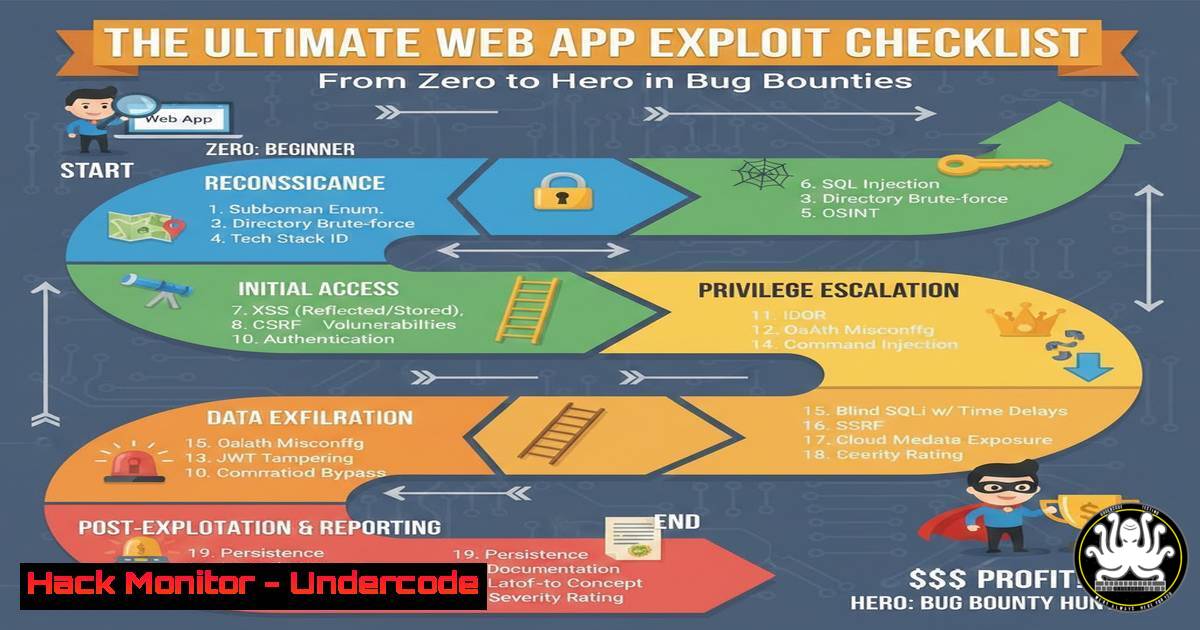
Introduction:
In the high-stakes arena of cybersecurity, bug bounty hunting has emerged as a critical front line for securing web applications. This professional pursuit requires a systematic, knowledge-driven approach to uncover vulnerabilities before malicious actors can exploit them. By mastering a structured methodology, aspiring hunters can transform from beginners into proficient security researchers, contributing to a safer digital ecosystem while building a rewarding career.
Learning Objectives:
- Understand and implement a professional reconnaissance and enumeration workflow.
- Learn to identify and test for critical OWASP Top 10 vulnerabilities with verified commands.
- Develop a systematic reporting and continuous learning practice to grow your bug bounty expertise.
You Should Know:
1. The Foundation: Comprehensive Reconnaissance & Enumeration
Before launching any attack, a successful hunter must map the target’s digital footprint thoroughly. This phase involves discovering all associated assets, subdomains, and technologies to identify potential attack surfaces that others might miss.
Step‑by‑step guide:
- Subdomain Enumeration: Use tools like `ffuf` (Fast Web Fuzzer) to discover hidden subdomains.
ffuf -w /usr/share/wordlists/SecLists/Discovery/DNS/subdomains-top1million-5000.txt -u https://FUZZ.target.com -H "Host: FUZZ.target.com" -fs 4242
This command fuzzes for subdomains, filtering out responses of a specific size (
-fs). Always ensure you have authorization to test the target. -
Technology Stack Identification: Use `Wappalyzer` (browser extension) or `whatweb` from the command line.
whatweb -a 3 https://target.com
This reveals the web server, programming languages, frameworks, and CMS in use, guiding your exploit strategy.
-
Endpoint Discovery: Use a tool like `gobuster` or `dirsearch` to find hidden directories and files.
gobuster dir -u https://target.com -w /usr/share/wordlists/SecLists/Discovery/Web-Content/common.txt -t 50
-
Testing for Injection Flaws: SQLi & Command Injection
Injection vulnerabilities, especially SQL Injection (SQLi), remain a top critical risk. They occur when untrusted data is sent to an interpreter as part of a command or query.
Step‑by‑step guide:
- Manual Probing: For a parameter like
?id=1, test with basic payloads:',",1' OR '1'='1,1 AND 1=2. - Tool-Assisted Testing: Use `sqlmap` for in-depth exploitation after initial manual findings.
sqlmap -u "https://target.com/page?id=1" --batch --level=2 --risk=2
Always use `–batch` with caution on authorized targets only. This automates the process, attempting to identify database type and extract data.
- Command Injection Test: On a suspected input field (e.g., search, ping tool), try payloads like:
; whoami
| dir
$(cat /etc/passwd)
Observe the output for system command responses.
3. Attacking Authentication & Session Management
Broken authentication is a prime entry point. This involves testing for weak login mechanisms, credential stuffing, and session hijacking.
Step‑by‑step guide:
- Credential Testing: Use `hydra` for brute-force testing on login forms (only on authorized targets with explicit permission).
hydra -L userlist.txt -P passlist.txt target.com https-post-form "/login:username=^USER^&password=^PASS^:F=incorrect"
- Session Analysis: Examine cookies for predictability or lack of security flags. Use browser developer tools (Application tab) to check if cookies lack
HttpOnly,Secure, or use weak `SessionID` generation. - Testing for Logic Flaws: Attempt to bypass multi-factor authentication (MFA) by intercepting requests with Burp Suite and skipping verification steps, or test for account takeover via flawed password reset functionality.
4. Exploiting Broken Access Control & IDOR
Insecure Direct Object References (IDOR) and broken access control allow users to act outside their intended permissions, such as viewing another user’s data.
Step‑by‑step guide:
- Parameter Tampering: Identify parameters that reference objects (e.g.,
?uid=100,?file=report.pdf). - Horizontal Privilege Escalation: Change the `uid` parameter from `100` (your account) to
101. If you access another user’s data, an IDOR exists. - Vertical Privilege Escalation: As a regular user, access URLs or API endpoints meant only for administrators (e.g.,
/admin/dashboard,/api/admin/users). Use a wordlist with common admin paths ingobuster.
5. Client-Side Vulnerabilities: XSS & CSRF
Cross-Site Scripting (XSS) allows attackers to inject malicious scripts, while Cross-Site Request Forgery (CSRF) tricks a user into performing unwanted actions.
Step‑by‑step guide for XSS:
- Test Input Fields & Parameters: Inject basic payloads and observe if they execute.
<script>alert('XSS')</script> <img src=x onerror=alert(1)> - Context Matters: If input appears inside an HTML attribute, try closing it:
" onmouseover="alert(1). - Use a Proxy & Scanner: Configure Burp Suite to intercept traffic and use its built-in scanner to automate XSS detection during your manual browsing.
6. Security Misconfigurations & Information Disclosure
This broad category includes default credentials, verbose error messages, exposed directories, and unprotected cloud storage (e.g., AWS S3 buckets).
Step‑by‑step guide:
- Check for Default Files: Request common files like
/robots.txt,/.git/HEAD,/server-status,/phpinfo.php. - Analyze HTTP Headers: Use `curl` to check for missing security headers.
curl -I https://target.com | grep -i "server|x-powered-by|strict-transport-security|content-security-policy"
Missing `Strict-Transport-Security` or `Content-Security-Policy` is a common finding.
- Cloud Bucket Enumeration: For targets using cloud services, use tools like `s3scanner` or `cloud_enum` to find misconfigured, publicly readable storage buckets.
7. The Professional’s Edge: Documentation & Continuous Learning
The final, most crucial step is to document your findings meticulously and engage with the security community to stay ahead of the curve.
Step‑by‑step guide:
- Craft a Clear Proof-of-Concept (PoC): For every valid bug, create a reproducible PoC. Include: Vulnerable URL, steps to reproduce, request/response captures (screenshots or Burp files), and the potential impact.
- Engage with Communities: Join platforms like the WhatsApp Community (`https://lnkd.in/gX35krCa`) mentioned by experts like Deepak Saini to discuss live hunting techniques with peers.
- Learn from Live Hunts: Subscribe to dedicated YouTube Channels (`https://lnkd.in/gUUF4HuW`) that provide walkthroughs of real-world bug discoveries, illustrating the thought process behind successful exploits.
What Undercode Say:
- Methodology Over Tools: Success in bug bounties is 80% systematic process and creative thinking, and only 20% tool proficiency. A checklist ensures thorough coverage.
- Persistence is Currency: The majority of valuable bugs are found by hunters who persist just beyond the initial surface-level testing where others stop.
The provided exploit checklist is a roadmap, but its value is unlocked through consistent application and adaptation. The linked resources for community (WhatsApp) and visual learning (YouTube) are not mere promotions; they are critical accelerants. The field evolves daily, and isolation is the hunter’s greatest weakness. Engaging with a community provides real-time insights into novel techniques, while video tutorials crystallize abstract concepts into actionable knowledge. This blend of personal practice and communal learning is the definitive path from following a checklist to authoring your own discoveries.
Prediction:
The bug bounty landscape will increasingly be shaped by automation and AI-assisted reconnaissance, pushing human hunters to specialize in complex business logic flaws and chained attacks that machines cannot easily replicate. Platforms will evolve towards more structured, continuous scoping programs, and the premium for hunters who can clearly articulate risk impact—bridging technical flaw and business consequence—will skyrocket. The community-focused, open-knowledge model championed by today’s trainers will become the cornerstone of a new, more robust application security paradigm.
▶️ Related Video (82% Match):
🎯Let’s Practice For Free:
IT/Security Reporter URL:
Reported By: Deepak Saini – Hackers Feeds
Extra Hub: Undercode MoN
Basic Verification: Pass ✅


