Listen to this Post
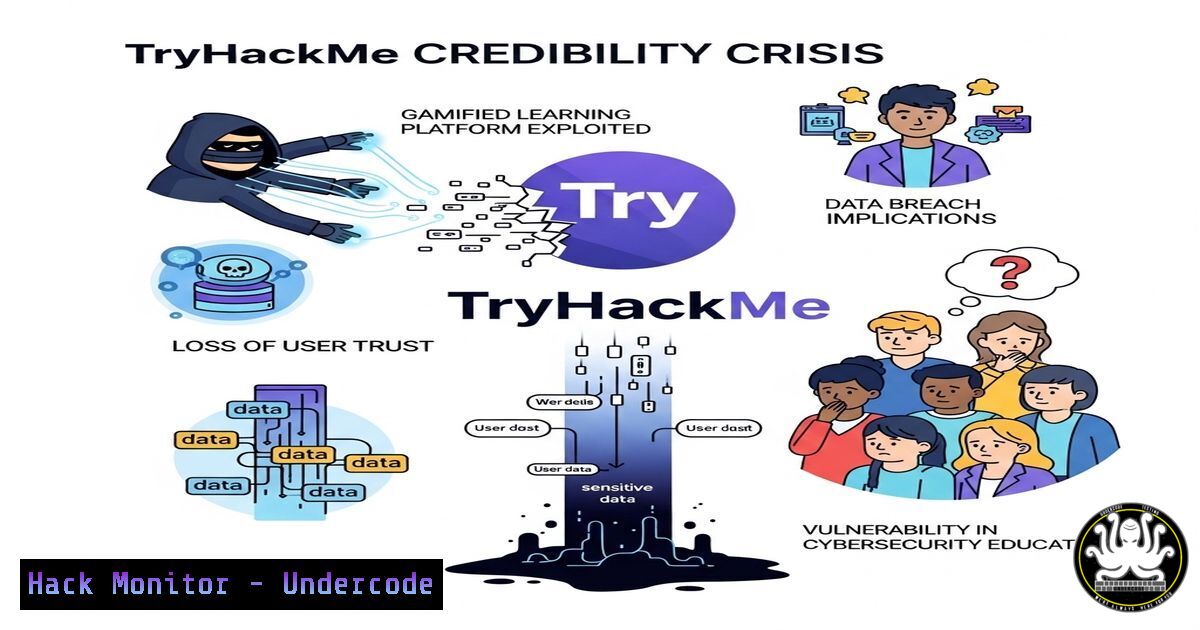
Introduction:
The recent public outcry from top-ranked TryHackMe users has exposed critical vulnerabilities in the platform’s ranking system, raising serious questions about the validity of gamified cybersecurity education. As seasoned professionals report being displaced by users completing hundreds of challenges in impossibly short timeframes, the cybersecurity community faces a reckoning with credential verification in digital learning environments.
Learning Objectives:
- Understand the technical mechanisms behind challenge platform ranking systems
- Identify methods for detecting and preventing learning platform exploitation
- Implement verification techniques to validate genuine skill acquisition
You Should Know:
1. Detecting Automated Challenge Completion
 Analyze user event logs for abnormal patterns
grep "challenge_complete" user_logs.json | awk -F'"' '{print $4}' | sort | uniq -c | sort -nr

Check for time between completions (impossible human speed)
jq '.events[] | select(.type=="challenge_complete") | .timestamp' user_logs.json | sort | awk 'NR>1{print prev" "$0}{prev=$0}' | awk '{print $2-$1}'
This command sequence analyzes user completion patterns by extracting challenge completion events from JSON logs, counting occurrences, and calculating time intervals between completions. Security administrators can use this to flag users completing challenges at superhuman speeds.
2. Web Request Analysis for Walkthrough Usage
import requests
from bs4 import BeautifulSoup
import time

def detect_walkthrough_usage(user_agent, referrer):
suspicious_patterns = ['medium.com', 'youtube.com', 'github.com/walkthrough']
for pattern in suspicious_patterns:
if pattern in referrer:
return True
return False

Monitor outbound requests during challenge sessions
This Python script monitors web requests during active challenge sessions, detecting when users access known walkthrough sites. Platform developers can implement such detection to flag potential cheating behavior.
3. Challenge Integrity Verification System
 Docker container for isolated challenge environments
docker run --rm -it --name thm-challenge \
--cpu-quota 50000 \
--memory 512M \
--network none \
tryhackme/challenge-container:latest

Monitor system calls during execution
strace -f -e trace=execve -o challenge_monitor.log python challenge.py
This Docker configuration creates an isolated environment for challenge execution with resource limitations, while strace monitors for unauthorized system calls or external program execution that might indicate automation.
4. Behavioral Biometrics Implementation
// Track user interaction patterns
const interactionMetrics = {
mouseMovement: [],
keystrokeTiming: [],
clickPatterns: [],
scrollBehavior: []
};

// Calculate deviation from human patterns
function calculateBehaviorScore(metrics) {
const avgKeystroke = metrics.keystrokeTiming.reduce((a,b)=>a+b)/metrics.keystrokeTiming.length;
const deviation = metrics.keystrokeTiming.map(t => Math.abs(t - avgKeystroke));
return deviation.reduce((a,b)=>a+b)/deviation.length;
}
This JavaScript implementation tracks user interaction patterns to detect bot-like behavior by analyzing keystroke timing, mouse movements, and other human-computer interaction metrics.
5. API Rate Limiting and Challenge Submission Throttling
 Nginx configuration for challenge submission rate limiting
limit_req_zone $binary_remote_addr zone=challengezone:10m rate=1r/s;

server {
location /api/challenge/submit {
limit_req zone=challengezone burst=5 nodelay;
proxy_pass http://challenge_backend;
}
}
This Nginx configuration implements rate limiting on challenge submission endpoints to prevent automated tools from flooding the API with completions.
6. Timestamp Anomaly Detection
-- SQL query to detect impossible completion timelines
SELECT user_id, challenge_id, completion_time,
LAG(completion_time) OVER (PARTITION BY user_id ORDER BY completion_time) as prev_time,
EXTRACT(EPOCH FROM (completion_time - LAG(completion_time) OVER (PARTITION BY user_id ORDER BY completion_time))) as time_diff
FROM challenge_completions
WHERE completion_time > NOW() - INTERVAL '24 hours'
HAVING time_diff < 60 -- Less than 60 seconds between completions
ORDER BY time_diff ASC;
This SQL query identifies users completing challenges at impossible speeds by calculating time differences between consecutive completions and flagging those exceeding human capability thresholds.
7. Multi-Factor Challenge Verification
 Additional verification for rapid completions
def require_verification(user_id, challenge_id, completion_time):
recent_completions = get_recent_completions(user_id, hours=1)
if len(recent_completions) > 10:  More than 10 completions per hour
initiate_video_verification(user_id)
require_code_explanation(user_id, challenge_id)
return True
return False
This Python function triggers additional verification measures when users complete challenges at suspicious rates, including video verification and code explanation requirements.
What Undercode Say:
- Gamified learning platforms must implement robust anti-cheating measures to maintain credibility
- Industry hiring managers cannot rely solely on platform rankings for skill validation
- The incident demonstrates critical need for practical skill verification in cybersecurity education
The TryHackMe situation reveals a fundamental flaw in gamified education: when rankings become career-relevant, exploitation follows. Platforms must balance accessibility with integrity measures, implementing technical safeguards like behavioral analysis, rate limiting, and challenge randomization. The cybersecurity industry should develop standardized practical assessments that complement rather than rely on platform rankings, ensuring skills validation remains rigorous and cheat-resistant.
Prediction:
The exploitation of TryHackMe’s ranking system will trigger industry-wide changes in how cybersecurity skills are validated online. Within two years, we’ll see widespread adoption of AI-proctored challenges, blockchain-verified accomplishments, and mandatory practical examinations for credential validation. Platforms that fail to implement robust anti-cheating measures will lose credibility among employers, while those prioritizing verification will become the new standard for technical hiring assessments. This incident will ultimately lead to more sophisticated skill validation methodologies across the cybersecurity education landscape.
🎯Let’s Practice For Free:
IT/Security Reporter URL:
Reported By: Ahmed Salah – Hackers Feeds
Extra Hub: Undercode MoN
Basic Verification: Pass ✅


