Listen to this Post
Introduction:
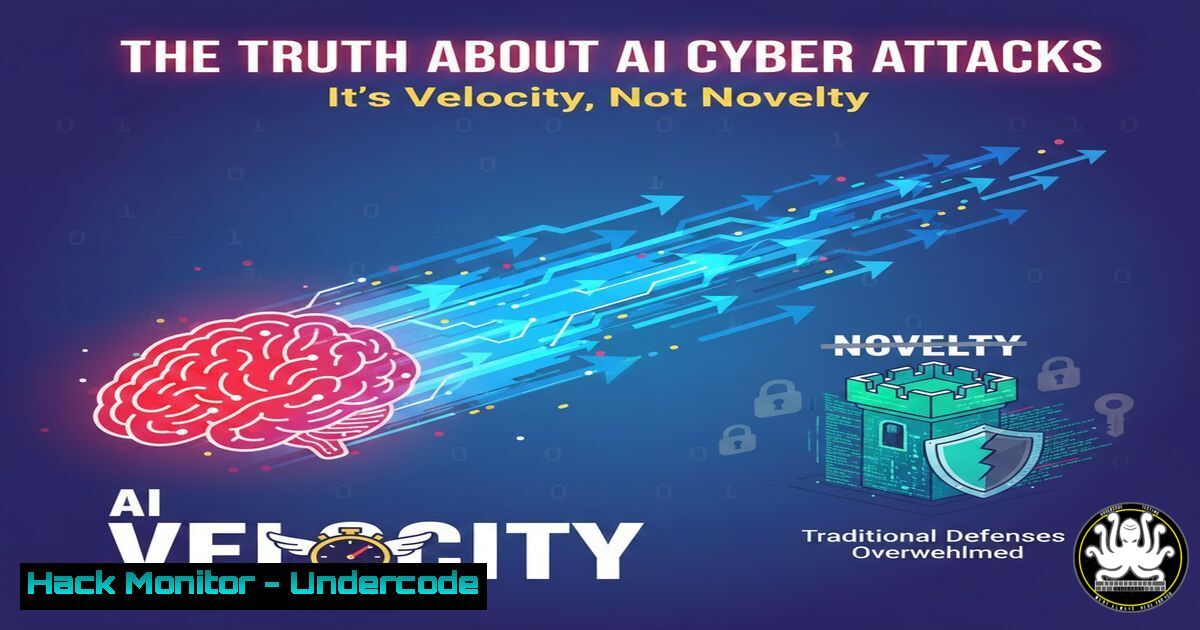
The cybersecurity landscape is buzzing with apocalyptic predictions about AI-powered threats, but the reality is more nuanced. Artificial intelligence is not creating fundamentally new classes of attacks; instead, it is supercharging existing techniques, increasing their speed, scale, and efficiency. This article deconstructs the real-world implications of AI for adversaries and reinforces why a rock-solid foundation in security fundamentals remains our most potent defense.
Learning Objectives:
- Understand how AI automates and accelerates each stage of the cyber kill chain, from reconnaissance to exploitation.
- Learn practical commands and techniques to defend against AI-augmented phishing, password attacks, and vulnerability discovery.
- Reinforce the critical security controls and foundational practices that effectively mitigate AI-driven threats.
You Should Know:
1. AI-Powered Reconnaissance and Social Engineering
The initial phases of an attack are becoming brutally efficient with AI. Adversaries can use large language models (LLMs) to scrape LinkedIn and other social platforms, generating highly personalized phishing emails at an unprecedented scale. This moves beyond traditional spam to create convincing, context-aware messages that are far more likely to deceive targets.
Step‑by‑step guide explaining what this does and how to use it.
Step 1: Adversary Action. An attacker uses a script to feed a target’s public professional profile into an LLM API with a prompt like: “Write a convincing email from a recruiting manager at a major tech firm, referencing my experience with [Specific Skill], and urging me to click a link to review a potential opportunity.”
Step 2: AI Output. The AI generates a polished, targeted email free of the grammatical errors that typically mark phishing attempts.
Step 3: Defense Mitigation. Security awareness training must evolve. Conduct internal phishing simulations that use these more sophisticated lures. Technically, implement strict email security controls:
DMARC, DKIM, SPF Records: Ensure these are properly configured to prevent domain spoofing.
Advanced Email Filtering: Deploy solutions that use AI and sandboxing to analyze links and attachments in real-time.
2. Automated Vulnerability Discovery and Exploit Development
AI can significantly reduce the time between vulnerability discovery and weaponization. Tools can now automatically analyze code, binaries, or even public advisories to identify potential weaknesses and suggest or generate proof-of-concept exploits. This compresses the timeline for which defenders must patch systems.
Step‑by‑step guide explaining what this does and how to use it.
Step 1: Adversary Action. An attacker uses an AI-powered code analysis tool to scan a public GitHub repository for a web application, identifying a potential SQL injection flaw.
Step 2: AI-Assisted Exploitation. The tool suggests a payload to exploit the flaw. The attacker then uses this payload in an automated scanner to find more instances of the same vulnerability across the internet.
Step 3: Defense Mitigation. A rigorous and accelerated patch management process is non-negotiable. Furthermore, implement strong input validation and use parameterized queries. For cloud environments, tools like AWS Inspector or Azure Security Center can continuously scan for vulnerabilities.
Linux Command (Example WAF Rule): On a server using ModSecurity, a rule to detect basic SQLi patterns might look like: `SecRule ARGS “@detectSQLi” “id:1001,deny,status:403,msg:’SQL Injection Attack'”`
Windows Command (Audit): Use PowerShell to regularly audit for missing patches: `Get-Hotfix | Sort-Object -Property InstalledOn -Descending | Select-Object -First 20`
3. The End of Password-Based Authentication? AI and Credential Stuffing
AI makes traditional brute-force attacks obsolete by enabling intelligent, context-aware password guessing. Instead of trying every word in a dictionary, AI can analyze leaked password databases to learn common patterns, structures, and user behaviors, generating a high-probability subset of passwords to try first. This dramatically increases the success rate of credential stuffing attacks.
Step‑by‑step guide explaining what this does and how to use it.
Step 1: Adversary Action. An attacker obtains a list of leaked emails and passwords from a breach. They use a tool like Hashcat, but instead of a simple wordlist, they use an AI model trained on the leak to generate new, likely password variants.
Step 2: AI-Powered Attack. The tool `hashcat -m 1000 -a 0 hashes.txt ai_generated_wordlist.txt` runs, but with a much more effective wordlist, cracking more hashes in less time.
Step 3: Defense Mitigation. Enforce multi-factor authentication (MFA) universally. It is the single most effective control against credential stuffing. Additionally, implement account lockout policies and monitor for anomalous login attempts, such as those from unfamiliar locations or at strange times.
- AI in the Malware Lifecycle: Polymorphic and Metamorphic Code
AI can be used to create malware that dynamically alters its own code signature with each infection, making traditional signature-based antivirus solutions nearly useless. This polymorphism is done intelligently, preserving the malware’s functionality while changing its appearance.
Step‑by‑step guide explaining what this does and how to use it.
Step 1: Adversary Action. A malware author designs a payload with an AI-powered polymorphic engine. Each time it is downloaded, the engine obfuscates the code, changes variable names, and inserts junk instructions.
Step 2: Evasion. The newly created variant has a completely different hash, allowing it to bypass static AV signatures.
Step 3: Defense Mitigation. Defenders must shift to behavior-based detection. Use Endpoint Detection and Response (EDR) tools that monitor for malicious behaviors rather than static file signatures.
YARA Rule Example: Create more sophisticated YARA rules that look for code structure and logic rather than simple strings: `rule Suspicious_PS_Behavior { strings: $a = “Invoke-Expression” $b = “DownloadString” condition: all of them and filesize < 200KB }`
5. Defensive AI: Leveling the Playing Field
Just as attackers use AI, so must defenders. Security Orchestration, Automation, and Response (SOAR) platforms integrated with AI can analyze millions of logs per second, correlate seemingly unrelated events, and automatically execute playbooks to contain threats, dramatically reducing Mean Time to Detect (MTTD) and Mean Time to Respond (MTTR).
Step‑by‑step guide explaining what this does and how to use it.
Step 1: Implementation. Integrate your SIEM with a SOAR platform. Feed it data from endpoints, network sensors, and cloud workloads.
Step 2: AI Analysis. The AI baseline’s normal network and user behavior. When a user account starts accessing unusual files at 3 a.m. from a foreign IP, the AI flags it as high severity.
Step 3: Automated Response. The SOAR platform automatically triggers a playbook that: disables the user account, isolates the affected endpoint from the network, and creates a ticket for the security team with all relevant context. This entire process takes seconds, not hours.
What Undercode Say:
- Fundamentals Are Your Fortress. AI does not invalidate the CIA Triad (Confidentiality, Integrity, Availability). Strict access controls, timely patching, robust backup strategies, and comprehensive user training are more critical than ever. AI cannot bypass what is properly configured and fundamentally secure.
- Shift from Prevention to Resilience. Assuming breach is a necessary mindset. Focus on building systems that can detect and respond to incidents quickly. Investing in EDR, MFA, and a well-practiced incident response plan will mitigate the “velocity” of AI attacks more effectively than chasing every new AI threat vector.
The hype around AI in cybersecurity often focuses on a futuristic arms race, but the present danger is one of acceleration, not invention. AI is a force multiplier for existing adversary tactics. The organizations that will weather this storm are not those that panic-buy “AI security silver bullets,” but those that double down on the unglamorous, disciplined work of security fundamentals. A perfectly configured system, a patched vulnerability, and a trained user are defenses that AI struggles to overcome. The future belongs to the resilient, not just the reactive.
Prediction:
In the next 2-3 years, we will see the commoditization of AI attack tools, making advanced capabilities accessible to low-skilled threat actors. This will lead to a sharp increase in the volume and personalization of attacks. However, this will be matched by a corresponding maturation of defensive AI, leading to fully autonomous Security Operations Centers (SOCs) that can predict, isolate, and neutralize threats in real-time. The ultimate outcome will be a forced evolution of the cybersecurity workforce, shifting from manual triage to overseeing AI systems, managing complex response strategies, and hardening systems at a architectural level.
🎯Let’s Practice For Free:
IT/Security Reporter URL:
Reported By: Bromiley The – Hackers Feeds
Extra Hub: Undercode MoN
Basic Verification: Pass ✅


