Listen to this Post
Introduction:
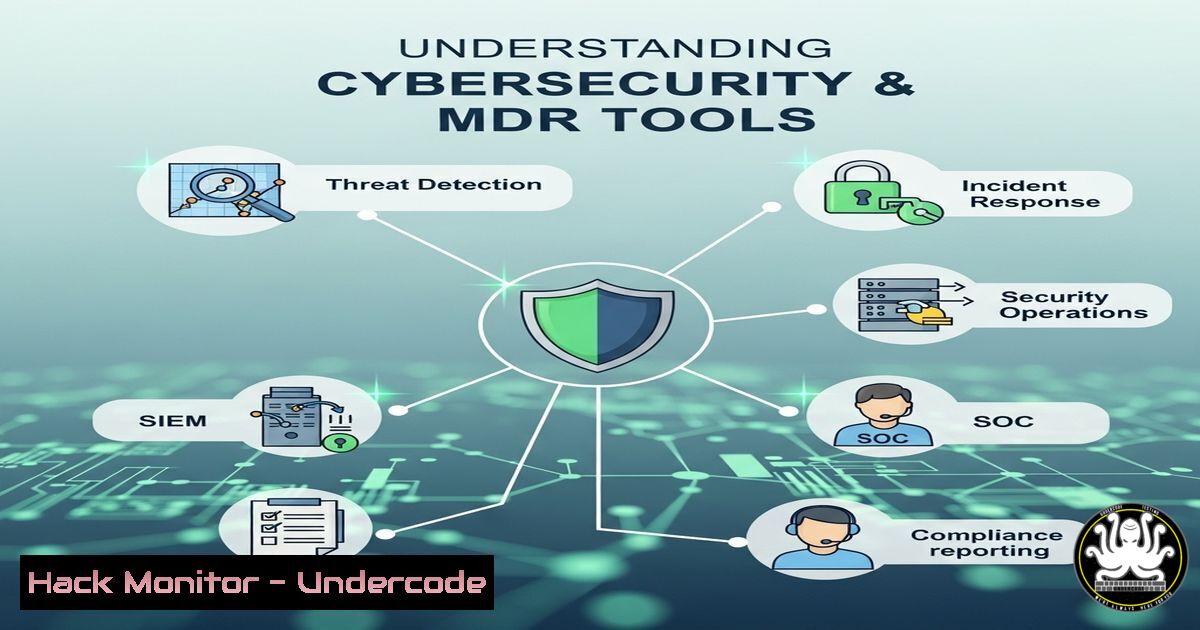
Managed Detection and Response (MDR) has emerged as a critical service for organizations seeking to augment their security operations with expert monitoring and threat hunting. By leveraging a combination of advanced tools and human expertise, MDR providers deliver 24/7 protection against sophisticated threats, filling the gaps that in-house teams often cannot cover.
Learning Objectives:
- Identify the core functionalities and components of a modern MDR service.
- Understand the key open-source and commercial tools that power effective MDR.
- Learn practical commands and configurations to simulate MDR capabilities in your own environment.
You Should Know:
1. Endpoint Visibility with OSQuery
OSQuery exposes operating system data as a high-performance relational database, allowing you to write SQL queries to explore insights on Windows, Linux, and macOS endpoints.
-- Query all running processes on a Linux system:
SELECT pid, name, cmdline FROM processes;

-- List all authorized SSH keys on a system:
SELECT  FROM authorized_keys;

-- Check for listening network ports:
SELECT port, protocol, address, pid FROM listening_ports;
Step-by-step guide:
- Install OSQuery on a target system via package manager (e.g., `sudo apt-get install osquery` on Ubuntu).
- Launch the interactive OSQuery shell by executing
osqueryi. - Run the SQL queries above directly in the shell to gain immediate visibility into endpoint activity. This data is crucial for baselining normal behavior and identifying anomalies.
2. Network Security Monitoring with Zeek (formerly Bro)
Zeek is a powerful network analysis framework that transforms raw network traffic into structured logs and real-time notifications, ideal for threat detection.
 Basic command to run Zeek on a network interface and output logs to current directory
zeek -i eth0

Run a specific Zeek script to detect SSL certificate expiration
zeek -i eth0 policy/misc/detect-ssl-cert-expiration.zeek

Monitor for HTTP-based anomalies and log details
zeek -i eth0 -f 'tcp port 80' http
Step-by-step guide:
- Install Zeek from your distribution’s repositories or source.
- Identify the network interface you wish to monitor (e.g.,
eth0,ens33). - Execute the first command to start a basic capture. Zeek will generate several `.log` files (e.g.,
conn.log,http.log) containing detailed, parsed network activity. -
Centralized Logging and Analysis with the Elastic Stack
The Elastic Stack (ELK – Elasticsearch, Logstash, Kibana) is the backbone for aggregating, processing, and visualizing security data from across an enterprise.
 In a Logstash config file, a filter to parse a common log format:
filter {
grok {
match => { "message" => "%{COMBINEDAPACHELOG}" }
}
date {
match => [ "timestamp", "dd/MMM/yyyy:HH:mm:ss Z" ]
}
}

A KQL (Kibana Query Language) query to find failed login attempts:
event.action: "failure" and winlog.event_data.LogonType: "3"
Step-by-step guide:
- Deploy Elasticsearch, Logstash, and Kibana on a server with sufficient resources.
- Configure Logstash with input plugins (to receive logs from Zeek, OSQuery, firewalls) and output plugins (to send data to Elasticsearch).
- Use Kibana to create dashboards visualizing security events, such as a histogram of events over time and a table of top source IPs causing authentication failures.
4. Threat Intelligence Integration with MISP
The MISP Threat Sharing platform allows organizations to share, correlate, and ingest indicators of compromise (IOCs) to enhance detection capabilities.
 Using the MISP API to search for events related to a specific hash:
import requests
import json

url = 'https://<your-misp-instance>/events/restSearch'
headers = {'Authorization': '<your-api-key>', 'Content-Type': 'application/json'}
body = {'value': 'd4f5a4c7b898103c9a886d4f6c8c6c6c8e9a8b7c'}  Example MD5

response = requests.post(url, headers=headers, data=json.dumps(body))
print(response.json())
Step-by-step guide:
- Set up a MISP instance or connect to a community server.
- Generate an API key for automated access from your user profile.
- Use the provided Python script to programmatically check if a file hash you discovered on your network is known to be malicious within the MISP community.
5. Automated Incident Response with TheHive and Cortex
TheHive is a scalable security incident response platform, and Cortex allows you to analyze observables (IPs, domains, hashes) with automated analyzers.
 Example Cortex analyzer configuration for VirusTotal (config.yml):
- name: VirusTotal_GetReport
dataType: hash
configuration:
 ... API key and other settings
Step-by-step guide:
- Deploy TheHive and Cortex, ensuring they are correctly linked.
- Configure Cortex analyzers by providing API keys for services like VirusTotal, AbuseIPDB, and Shodan.
- When a new alert is created in TheHive from a SIEM integration, you can automatically enrich contained observables (like file hashes) with data from these analyzers to speed up triage.
6. Cloud Security Posture Management (CSPM) with Prowler
Prowler is an open-source security tool for AWS, Azure, and GCP that performs CSPM assessments against best practices frameworks like CIS.
 Run a Prowler check for CIS AWS Foundations Benchmark Level 1:
prowler aws -c cis_level1_aws

Check for S3 buckets with public read access:
prowler aws -c s3_bucket_public_read

Output findings in JSON format for integration with other tools:
prowler aws -c check31 -M json
Step-by-step guide:
1. Install Prowler via pip: `pip install prowler`.
- Configure AWS CLI with credentials that have appropriate read-only permissions.
- Execute the CIS benchmark command to receive a comprehensive report of security misconfigurations in your AWS environment that need remediation.
7. Container Security with Trivy
Trivy is a simple and comprehensive vulnerability scanner for containers and other artifacts, seamlessly integrating into CI/CD pipelines.
 Scan a local Docker image for vulnerabilities:
trivy image your-application:latest

Scan a container image for misconfigurations using built-in policies:
trivy conf --policy /path/to/policies /path/to/config/files

Scan a Kubernetes cluster for vulnerabilities:
trivy k8s --report summary cluster
Step-by-step guide:
- Install Trivy from its GitHub releases or via package manager.
2. Build a Docker image for your application.
- Before pushing the image to a registry, scan it with
trivy image. The tool will output a list of CVEs, their severity, and the affected package, allowing developers to fix issues early in the development lifecycle.
What Undercode Say:
- MDR is Not a Silver Bullet, It’s a Force Multiplier. The most sophisticated tooling is ineffective without the expert security analysts to interpret its output and guide response. MDR’s true value lies in the fusion of technology and human-led hunting and incident response.
- The Line Between In-House SOC and MDR is Blurring. The tools listed are increasingly accessible and are being used to empower internal teams. The future differentiator for MDR providers will be the depth of their expertise and the scale of their threat intelligence, not just tool ownership.
The evolution of MDR is a direct response to the overwhelming volume of alerts and the global shortage of skilled analysts. The core MDR toolkit, as highlighted, is heavily reliant on open-source technologies that are now enterprise-ready. This democratization of advanced tooling means organizations can, and should, adopt many of these practices internally. However, the 24/7 operational burden and the need for specialized expertise mean that partnering with an MDR provider remains a compelling strategy for most. The future of MDR will be defined by deeper AI integration for alert triage and predictive threat hunting, moving from a managed service to a truly augmented intelligence partner.
Prediction:
The convergence of AI-powered automation and the commoditization of advanced security tools will force a strategic shift in the MDR market. Providers will no longer compete on their access to technology but on the quality of their algorithms and the expertise of their human analysts. We will see the rise of “AI-Augmented MDR,” where machine learning models continuously learn from analyst decisions, automating entire playbooks for common attacks and freeing up human experts to focus on novel, sophisticated threats. This will simultaneously lower costs and increase the effectiveness of security operations, making enterprise-grade protection accessible to mid-market companies and fundamentally altering the cybersecurity landscape.
🎯Let’s Practice For Free:
IT/Security Reporter URL:
Reported By: Marcelvelica Top – Hackers Feeds
Extra Hub: Undercode MoN
Basic Verification: Pass ✅


