
Listen to this Post
Introduction:
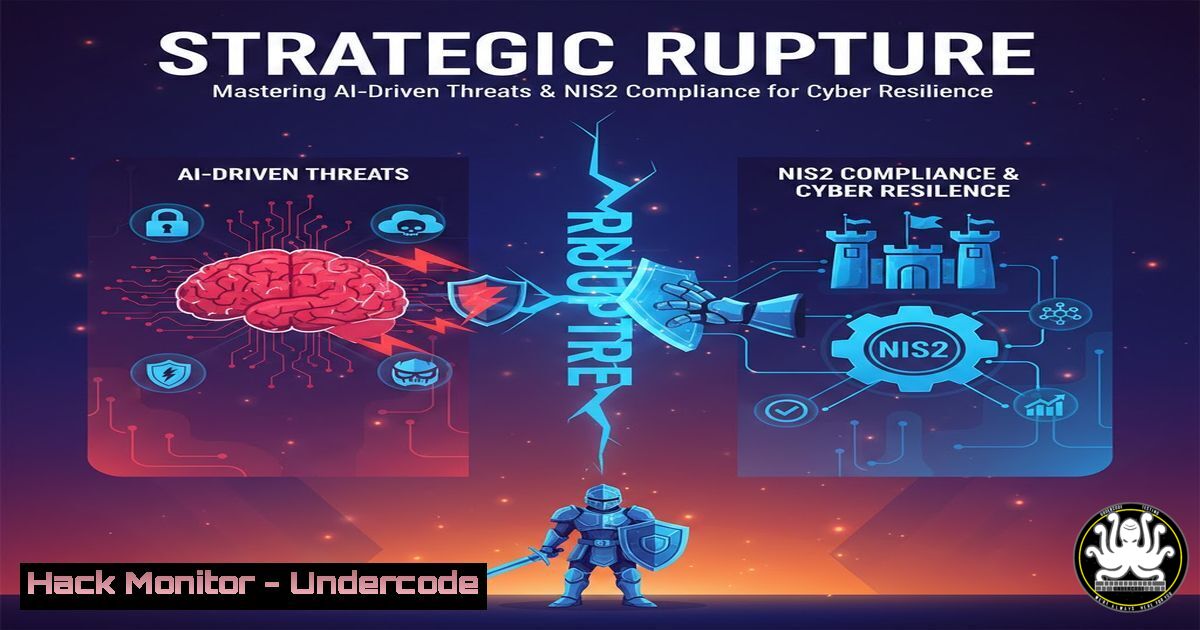
The cybersecurity landscape is no longer experiencing a simple evolution—it is undergoing a strategic rupture. With the explosion of AI-assisted attacks and the tightening of regulations like the EU’s NIS2 directive, organizations must shift their mindset from “if we will be targeted” to “when and how we will survive.” This article dissects the three pillars of modern cyber resilience: trusted AI integration, Zero Trust culture, and compliance as a competitive advantage, providing actionable steps to transform your IT infrastructure from a repair‑oriented model to a resilient, future‑ready asset.
Learning Objectives:
- Understand how AI can be leveraged for both automated defense and threat detection.
- Implement Zero Trust principles, including microsegmentation and biometric authentication, to reduce human risk.
- Use regulatory frameworks like NIS2 to build robust data governance that reassures clients and investors.
You Should Know:
- AI-Powered Defense: Automating Threat Detection with Machine Learning
AI is not just an attacker’s tool—it can supercharge your defenses. One practical approach is to deploy an open‑source intrusion detection system (IDS) enhanced with machine learning models.
Step‑by‑step guide (Linux):
- Install Zeek (formerly Bro) as your network sensor:
`sudo apt update && sudo apt install zeek` (or `zeekctl` for management). - Configure Zeek to monitor your primary interface by editing
/etc/zeek/node.cfg. - Use RITA (Real Intelligence Threat Analytics) to analyze Zeek logs with heuristics:
wget https://github.com/activecm/rita/releases/download/vX.X.X/rita--linux-amd64.deb
sudo dpkg -i rita-.deb
sudo rita import -i /path/to/zeek/logs
- For ML‑based anomaly detection, integrate with the `deeplearning4j` or `scikit-learn` models by exporting Zeek logs as CSV and running a simple Python script with Isolation Forest:
from sklearn.ensemble import IsolationForest
import pandas as pd
data = pd.read_csv('zeek_conn.log.csv')
model = IsolationForest(contamination=0.01)
model.fit(data[['duration', 'orig_bytes', 'resp_bytes']])
anomalies = model.predict(...)
This setup helps you detect zero‑day patterns that signature‑based tools miss.
2. Zero Trust Architecture: Microsegmentation and Biometric MFA
The human element remains the primary attack vector. Zero Trust assumes breach and verifies every request.
Step‑by‑step guide:
- Microsegmentation with Linux firewalld:
sudo firewall-cmd --permanent --new-zone=webzone
sudo firewall-cmd --permanent --zone=webzone --add-service=http
sudo firewall-cmd --permanent --zone=webzone --add-source=192.168.1.0/24
sudo firewall-cmd --reload
This restricts web server access to a specific subnet.
- Biometric authentication on Linux (using pam_fprintd):
sudo apt install fprintd libpam-fprintd
sudo pam-auth-update --enable fprintd
Enroll a fingerprint with `fprintd-enroll`.
- For Windows, enable Windows Hello for Business via Group Policy or Intune.
Combining microsegmentation with biometric MFA ensures that even if credentials are stolen, the attacker cannot move laterally.
3. Combating Shadow AI: Detecting Unauthorized AI Tools
Employees may use unsanctioned AI services (e.g., ChatGPT, Copilot) that leak sensitive data.
Step‑by‑step guide:
- Monitor network traffic for known AI API endpoints using `tcpdump` and
ngrep:sudo tcpdump -i eth0 -A -s 0 | grep -E "api.openai.com|api.anthropic.com"
- Create DLP rules with `iptables` to block or log connections to these domains:
sudo iptables -A OUTPUT -d api.openai.com -j LOG --log-prefix "SHADOW_AI: "
sudo iptables -A OUTPUT -d api.openai.com -j DROP
- For enterprise environments, use a cloud access security broker (CASB) or configure your proxy to enforce policies.
Regularly audit DNS logs to identify unauthorized AI usage and educate employees on approved tools.
4. NIS2 Compliance: Building a Data Governance Framework
The NIS2 directive mandates strict incident reporting, risk management, and supply chain security.
Step‑by‑step guide:
- Perform a gap analysis against NIS2 articles (e.g., 21 on cybersecurity risk‑management measures).
- Implement centralized logging with `rsyslog` and a SIEM like Wazuh:
On client: forward logs to SIEM
echo ". @your-siem-ip:514" >> /etc/rsyslog.conf
systemctl restart rsyslog
- Develop an incident response plan (IRP) with clear roles, communication channels, and post‑incident reporting timelines (e.g., 24 hours for initial notification).
- Document data flows, classify data, and enforce encryption at rest and in transit using tools like `LUKS` for disk encryption and `OpenSSL` for TLS.
Compliance becomes a competitive advantage when you can present a certified, transparent governance structure to partners and auditors.
5. Vulnerability Exploitation and Mitigation: AI‑Assisted Penetration Testing
Attackers use AI to automate reconnaissance and exploit discovery. Defenders must do the same.
Step‑by‑step guide:
- Use automated scanners like OpenVAS (now Greenbone) to identify known vulnerabilities:
sudo apt install greenbone-security-assistant
sudo gvm-setup
sudo gvm-start
- For AI‑enhanced testing, experiment with open‑source tools like `DeepExploit` (which uses machine learning to prioritize attack paths) or
AutoSploit. - Mitigation: Regularly patch systems. On Linux:
sudo apt update && sudo apt upgrade -y. On Windows: use `wuauclt /detectnow` or WSUS. - Harden configurations: Disable unused services, enforce strong passwords, and apply the principle of least privilege using `sudoers` or Windows Local Security Policy.
6. Cloud Hardening for AI Workloads
As AI models are deployed in the cloud, securing the infrastructure is critical.
Step‑by‑step guide (AWS example):
- Use AWS CLI to create a restrictive security group:
aws ec2 create-security-group --group-name AI-SG --description "AI workload security"
aws ec2 authorize-security-group-ingress --group-name AI-SG --protocol tcp --port 443 --source 10.0.0.0/8
- Enable encryption on S3 buckets for training data:
aws s3api put-bucket-encryption --bucket ai-training-data --server-side-encryption-configuration '{"Rules":[{"ApplyServerSideEncryptionByDefault":{"SSEAlgorithm":"AES256"}}]}' - Implement IAM roles with fine‑grained permissions, avoiding wildcards.
- Use AWS GuardDuty for threat detection and AWS Config for compliance monitoring.
This ensures that AI assets remain confidential and integral.
- Building a Resilient IT Infrastructure: From Repair to Resilience
Resilience means recovering quickly and learning from incidents.
Step‑by‑step guide:
- Automate backups with `rsync` and cron:
rsync -av --delete /important/data/ /backup/location/
- For disaster recovery, use infrastructure as code (Terraform) to rebuild environments:
resource "aws_instance" "web" { ami = "ami-0c55b159cbfafe1f0" instance_type = "t2.micro" tags = { Name = "resilient-web" } } - Conduct regular tabletop exercises and red‑team/blue‑team drills.
- Implement immutable infrastructure: replace servers instead of patching in place.
This transforms IT from a cost center to a strategic enabler that ensures business continuity.
What Undercode Say:
- Key Takeaway 1: AI is a double‑edged sword—defenders must embrace it to counter AI‑driven attacks. Automating detection and response with machine learning is no longer optional.
- Key Takeaway 2: Zero Trust and compliance are not burdens but catalysts for modern security. By integrating biometrics, microsegmentation, and data governance, organizations build trust with customers and investors.
- Analysis: The cybersecurity industry is shifting from reactive “repair” to proactive “resilience.” This requires breaking down silos between technical teams and executive leadership. The CISO of tomorrow must be a translator, bridging cost control, business continuity, and technical realities. Companies that view NIS2 as a checklist will struggle; those that embed its principles into their culture will thrive. The convergence of AI, Zero Trust, and compliance into a unified resilience framework will define the winners in the coming years.
Prediction:
Over the next three years, we will see a consolidation of security platforms that integrate AI‑driven defense, Zero Trust enforcement, and automated compliance reporting into a single fabric. The regulatory landscape (NIS2, DORA, etc.) will force even small enterprises to adopt enterprise‑grade resilience measures. Organizations that fail to adapt will face existential threats—not just from cyberattacks but from regulatory fines and loss of customer confidence. The winners will be those who transform cybersecurity from a technical necessity into a strategic advantage.
▶️ Related Video (84% Match):
🎯Let’s Practice For Free:
IT/Security Reporter URL:
Reported By: Alain Graf – Hackers Feeds
Extra Hub: Undercode MoN
Basic Verification: Pass ✅


