Listen to this Post
Introduction:
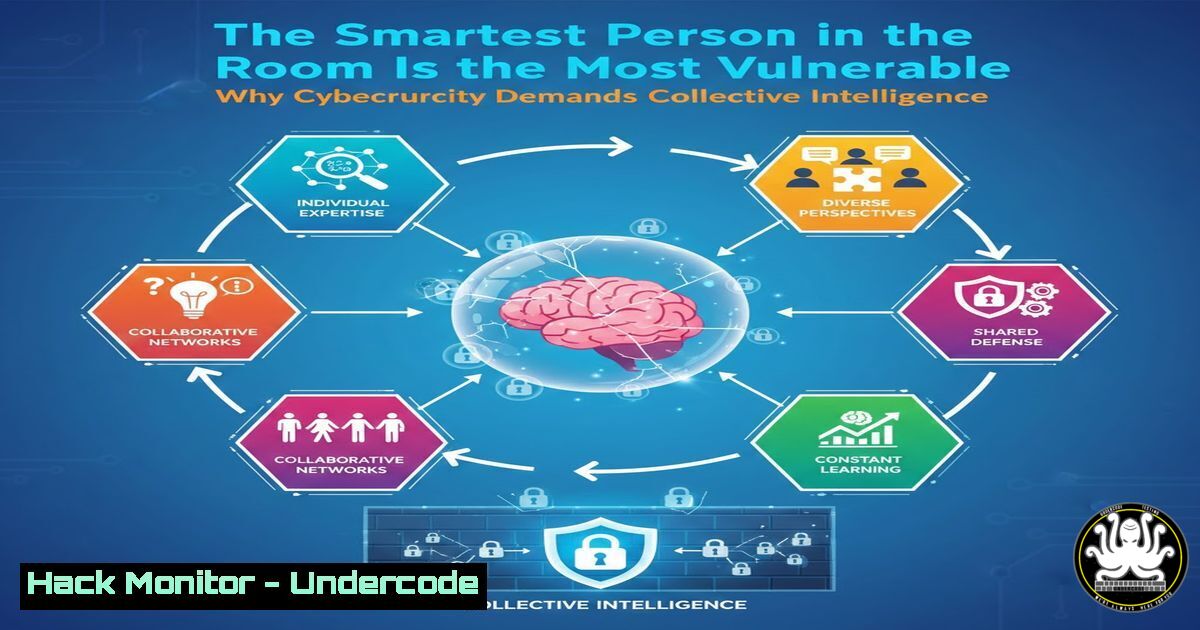
In cybersecurity, the myth of the lone genius hacker or the solitary security guru is not only outdated but dangerously fragile. The original post’s core philosophy—that intelligence is a collective asset to be learned from, not a threat to compete with—is the foundational principle of a robust security posture. In an era of sophisticated AI-driven attacks and hyper-converged IT environments, no single individual can possess all the necessary knowledge to defend an organization. This article translates that leadership mindset into a actionable cybersecurity doctrine, where building and engaging with a “smart room” of tools, intelligence, and peers is your primary defense mechanism.
Learning Objectives:
- Understand how to operationalize threat intelligence sharing beyond your internal team.
- Learn key commands and practices for leveraging collective knowledge in incident response.
- Build a proactive strategy for continuous learning from external security communities and tools.
You Should Know:
1. Threat Intelligence Feeds: Your External “Smarter” Network
A foundational step is to stop relying solely on internal telemetry. Integrating external threat intelligence feeds provides perspectives “who see farther,” alerting you to exploits and campaigns before they hit your perimeter.
Step-by-step guide:
- Select Reputable Feeds: Start with open-source intelligence (OSINT) feeds. For example, the `alienvault` OTX pulse list or `abuse.ch` IOC lists.
- Automate Ingestion: Use tools to integrate this data. A simple Linux command-line method using `curl` and cron demonstrates the principle:
Fetch the latest indicators of compromise (IOCs) from abuse.ch Zeus tracker daily
0 2    curl -s https://feodotracker.abuse.ch/downloads/ipblocklist.txt >> /opt/threat_intel/feodo_ips.txt
- Integrate & Action: Import these IOCs into your SIEM (like Splunk or Elastic), firewall, or intrusion detection system (IDS) like Suricata. This automatically blocks or alerts on traffic matching known malicious entities.
2. Collaborative Incident Response with Shared Playbooks
When a security incident occurs, ego must end and structured collaboration begins. Shared, documented playbooks ensure the collective response is greater than the sum of its parts.
Step-by-step guide:
- Template Your Response: Use frameworks like MITRE ATT&CK to document procedures. For a ransomware containment playbook, step one is always isolation.
- Execute Collaborative Commands: Use shared, audited commands. On a compromised Windows endpoint, instead of ad-hoc actions, teams should follow predefined steps:
Isolate host from network (Windows Command Prompt as Admin) netsh advfirewall firewall add rule name="BLOCK_ALL" dir=in action=block remoteip=any netsh advfirewall firewall add rule name="BLOCK_ALL" dir=out action=block remoteip=any Capture process list for collective analysis Get-Process | Export-Csv -Path C:\Forensics\process_snapshot_$((Get-Date).ToString('yyyyMMdd_hhmm')).csv - Post-Incident Retrospective: Hold a blameless lessons-learned session, documenting findings to improve the shared playbook.
3. Leveraging Community-Driven Security Tools
The open-source security community epitomizes “shared wisdom into collective success.” Using and contributing to these tools taps into global expertise.
Step-by-step guide:
- Deploy a Collaborative Tool: Implement `TheHive` or `Cortex` for case management and analysis. These platforms allow shared analysis.
- Run Community Scripts Safely: Before running any script from GitHub (e.g., a PowerShell exploit checker), inspect the code, test in a sandbox, and understand its function.
Example: Safely fetching and examining a popular security script
git clone https://github.com/redcanaryco/atomic-red-team.git
cd atomic-red-team
REVIEW the atomic tests before execution in a lab environment
cat atomics/T1562.001/T1562.001.md
- Contribute Back: If you improve a script or write a decoder for a new malware family, submit a pull request. This strengthens the entire “room.”
4. API Security: Trusting External Intelligence Programmatically
Modern cloud security relies on APIs that query external “brains,” such as virus total or URL reputation services.
Step-by-step guide:
- Acquire API Keys: Register for services like VirusTotal, AbuseIPDB, or AlienVault OTX.
- Integrate Automated Checks: Write a simple Python script to query these services for automated ticket analysis.
import requests
import hashlib</li>
</ol>

def check_hash_virustotal(api_key, file_hash):
url = f"https://www.virustotal.com/api/v3/files/{file_hash}"
headers = {"x-apikey": api_key}
response = requests.get(url, headers=headers)
if response.status_code == 200:
result = response.json()
return result['data']['attributes']['last_analysis_stats']
else:
return {"error": "Hash not found or API issue"}
 Use the function and share the results in your team's Slack channel.
3. Hardening: Always store API keys in a secure vault (e.g., HashiCorp Vault, AWS Secrets Manager) and never hardcode them.
5. Creating a Culture of Security Champions
Translate the post’s “choose people who stretch your thinking” into a formal Security Champion program across IT, development, and operations teams.
Step-by-step guide:
- Identify Champions: Recruit curious individuals from different departments.
- Provide Shared Training: Enroll them in a shared platform like TryHackMe or provide a corporate Pluralsight account. Encourage them to form study groups.
- Empower with Scanners: Give them lightweight tools to contribute, like allowing developers to run `npm audit` or `snyk test` in their CI/CD pipelines and report findings to central security.
What Undercode Say:
- Key Takeaway 1: The greatest security vulnerability is an isolated expert. Resilience is built through diversifying knowledge sources—external feeds, community tools, and cross-functional teams.
- Key Takeaway 2: Operationalizing this philosophy requires technical implementation: automation for intelligence ingestion, standardized playbooks for response, and APIs for real-time collective analysis.
Analysis:
The LinkedIn post correctly identifies ego as the enemy of growth. In cybersecurity, ego manifests as siloed knowledge, unshared indicators of compromise, and a “not invented here” attitude towards external tools. This creates single points of failure. The technical practices outlined here—from cron jobs fetching threat feeds to shared incident response playbooks—are the direct engineering counterpart to the leadership mindset. They institutionalize curiosity and collaboration. The security professional who feels threatened by a colleague’s deeper knowledge of, say, container escape techniques, is choosing insecurity over improved container hardening. The organization that fails to build bridges to the wider security community is willfully blinding itself to emerging threats that others are already fighting.
Prediction:
The future of effective cybersecurity will be dominated by decentralized, collective defense networks. As AI-powered offensive tools become commoditized, the defensive advantage will shift entirely to those with the strongest collaborative ecosystems. We will see the rise of automated, real-time threat intelligence sharing consortia powered by blockchain-like verification and privacy-preserving computation. Organizations that fail to architect their people, processes, and tools for outward-looking collaboration will experience disproportionately higher mean time to detect (MTTD) and mean time to respond (MTTR), leading to more severe breaches. The “smartest room” will no longer be a company’s internal SOC, but the global, interconnected collective of defenders, AIs, and automated systems it actively participates in.
▶️ Related Video (78% Match):
🎯Let’s Practice For Free:
IT/Security Reporter URL:
Reported By: Pranil Ashok – Hackers Feeds
Extra Hub: Undercode MoN
Basic Verification: Pass ✅🔐JOIN OUR CYBER WORLD [ CVE News • HackMonitor • UndercodeNews ]
📢 Follow UndercodeTesting & Stay Tuned:


