Listen to this Post
Introduction:
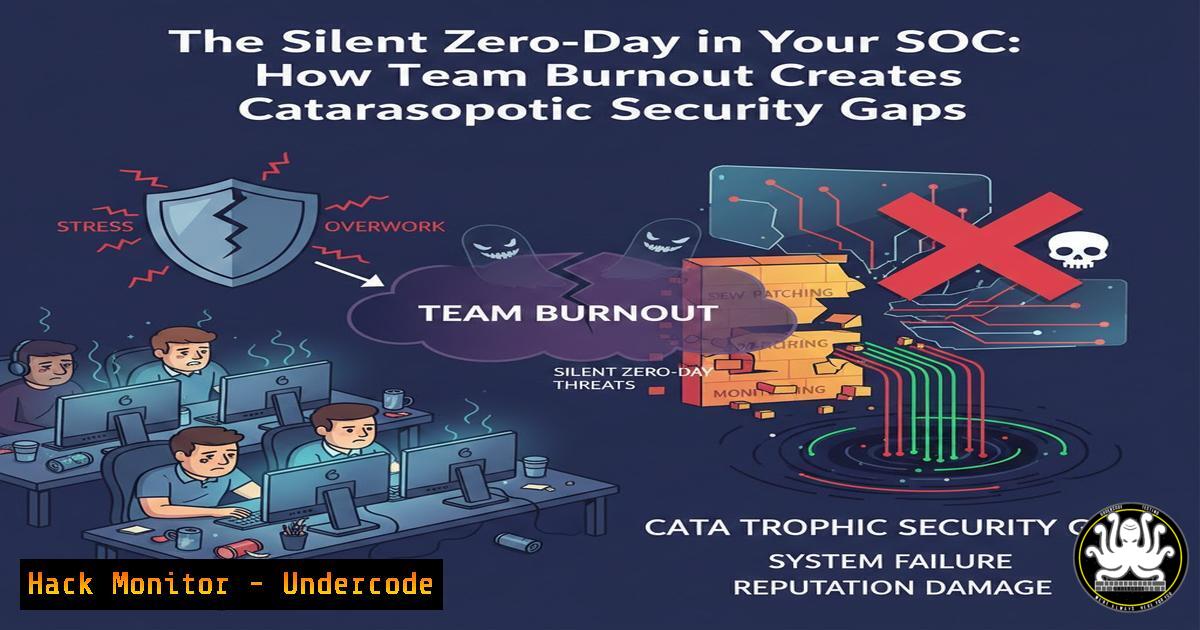
While organizations invest millions in firewalls and threat intelligence, a critical vulnerability often goes unpatched: human burnout within security teams. In high-pressure IT and cybersecurity roles, chronic stress leads to missed alerts, rushed configurations, and eroded security postures. This article explores the technical and managerial interventions required to harden your human layer—the most critical asset in your defense strategy.
Learning Objectives:
- Identify the technical symptoms and security risks caused by operator burnout.
- Implement monitoring and automation tools to reduce cognitive load and alert fatigue.
- Build a leadership framework that fosters sustainable, resilient security operations.
You Should Know:
- Monitoring the Metrics of Burnout: Logs and Load Averages
The first sign of burnout is often hidden in system metrics and ticket logs. A sudden drop in resolved ticket quality, an increase in simple misconfigurations, or longer mean-time-to-respond (MTTR) can be precursors.
Step-by-Step Guide:
Track Cognitive Load: Use SIEM or productivity tools to correlate alert volume with analyst action. A simple Elasticsearch query can highlight periods of overwhelming noise:
`index:security_alerts | stats count by analyst_id, date | where count > 100`
Monitor System Health & Human Health: On Linux servers, a sustained high load average can mirror team overload. Use `uptime` and `top` to check. Automate dashboards (e.g., Grafana) to visualize team capacity versus incident volume.
Action: Establish baselines for “normal” operational tempo. Flag deviations for managerial review, not punitive action, to identify teams needing reinforcement or tooling adjustments.
2. Automating the Tedium: Scripting Away Repetitive Stress
Repetitive, low-value tasks are a primary burnout driver. Automating these frees mental bandwidth for complex threat hunting.
Step-by-Step Guide:
Windows: Use PowerShell to automate user account reviews, a tedious but critical task. A script can parse event logs for anomalies and generate reports:
`Get-EventLog -LogName Security -InstanceId 4720,4722 -After (Get-Date).AddDays(-1) | Export-Csv -Path “C:\Audit\AccountChanges.csv”`
Linux: Automate compliance checks with Bash. A simple cron job can check for unauthorized SUID/SGID files nightly:
`find / -type f \( -perm -4000 -o -perm -2000 \) 2>/dev/null > /tmp/suid_report.txt && diff /tmp/suid_report.txt /baseline/suid_baseline.txt`
Action: Dedicate 20% of sprint cycles to “toil automation.” Maintain a shared repository of these scripts as force multipliers.
3. Hardening the Human Firewall: Training That Empowers
Burnout thrives in stagnation. Counter it with continuous, hands-on learning that builds competence and confidence.
Step-by-Step Guide:
Implement CTF & Sandbox Environments: Use platforms like Hack The Box or deploy internal VulnHub machines. Encourage participation with dedicated “learning hours.”
Cloud Security Drills: In AWS, intentionally create a vulnerable S3 bucket in a sandbox account. Task teams with finding it using ScoutSuite or custom CloudTrail alerts, then remediate.
Command: Simulate incident response with `curl` attacks against a test web server. Have analysts trace the logs: `tail -f /var/log/apache2/access.log | grep –color “POST /wp-admin”`
4. Configuring for Resilience: API Rate Limits and Safe Defaults
Just as APIs need rate limiting to prevent abuse, teams need protection from unsustainable request volumes.
Step-by-Step Guide:
Tooling: Configure alert thresholds in your monitoring tools (e.g., Nagios, Zabbix) to suppress “noise” and prioritize criticality. Implement canary deployments to reduce the stress of major system changes.
Process: Enforce mandatory ticket “swim lanes” and severity classifications. Use Jira or ServiceNow to automatically route low-severity tickets away from critical incident responders.
Code: Implement feature flags in security tools to roll out new detections to a subset of analysts first, reducing the blast radius of false positives.
- Patching the Management Layer: Leadership Commits for Secure Operations
Leadership’s role is to set secure operational policies, just as they set security policies.
Step-by-Step Guide:
Implement “Blameless Post-Mortems”: Structure these sessions like a root-cause analysis for a system failure. Focus on process gaps, not individual error. Document findings in a knowledge base.
Enforce “Quiet Time” with Tooling: Use scheduled downtimes in collaboration tools (e.g., Slack Do Not Disturb, offline hours in Microsoft Teams). For on-call, ensure robust handover procedures are as documented as a server backup routine.
Action: Leaders must visibly use and champion these systems. Measure leadership effectiveness partly by team retention and Net Promoter Score (NPS).
What Undercode Say:
- Burnout is a Critical Vulnerability. An overworked, disengaged security operator is akin to a misconfigured firewall. The risk they introduce—through missed alerts, poor code, or sluggish response—is quantifiable and must be mitigated with the same rigor as a software flaw.
- The Fix is Technical and Cultural. Automation and monitoring are essential technical controls, but they must be deployed within a culture of psychological safety and continuous learning. The most advanced SIEM cannot compensate for a team that fears reporting a mistake.
Analysis: The cybersecurity skills gap exacerbates burnout, creating a vicious cycle. Treating burnout purely as an HR issue ignores its direct, measurable impact on security posture. Forward-thinking CISOs are now tracking “wellness metrics” alongside SLAs and threat detections. The next frontier of SecOps isn’t a new EDR platform; it’s the sustainable integration of human cognitive limits into the architecture of security operations centers. Investing in automation, sensible alerting, and empathetic leadership isn’t just good for people—it’s a direct investment in reducing mean time to detect (MTTD) and mean time to respond (MTTR).
Prediction:
Within two years, “Human Operational Resilience” will become a standard category in security frameworks like NIST CSF and ISO 27001. We will see the rise of AI-driven “burnout prediction” tools that analyze communication patterns, ticket work, and system interactions to flag teams at risk before a breach occurs. Furthermore, security tool vendors will compete not just on detection efficacy, but on “analyst experience” scores, boasting features designed explicitly to reduce cognitive load and decision fatigue. The organizations that win the talent war will be those that engineer their SecOps for human sustainability as deliberately as they engineer it for technical performance.
🎯Let’s Practice For Free:
IT/Security Reporter URL:
Reported By: Jameycummings Burnout – Hackers Feeds
Extra Hub: Undercode MoN
Basic Verification: Pass ✅


