
Listen to this Post
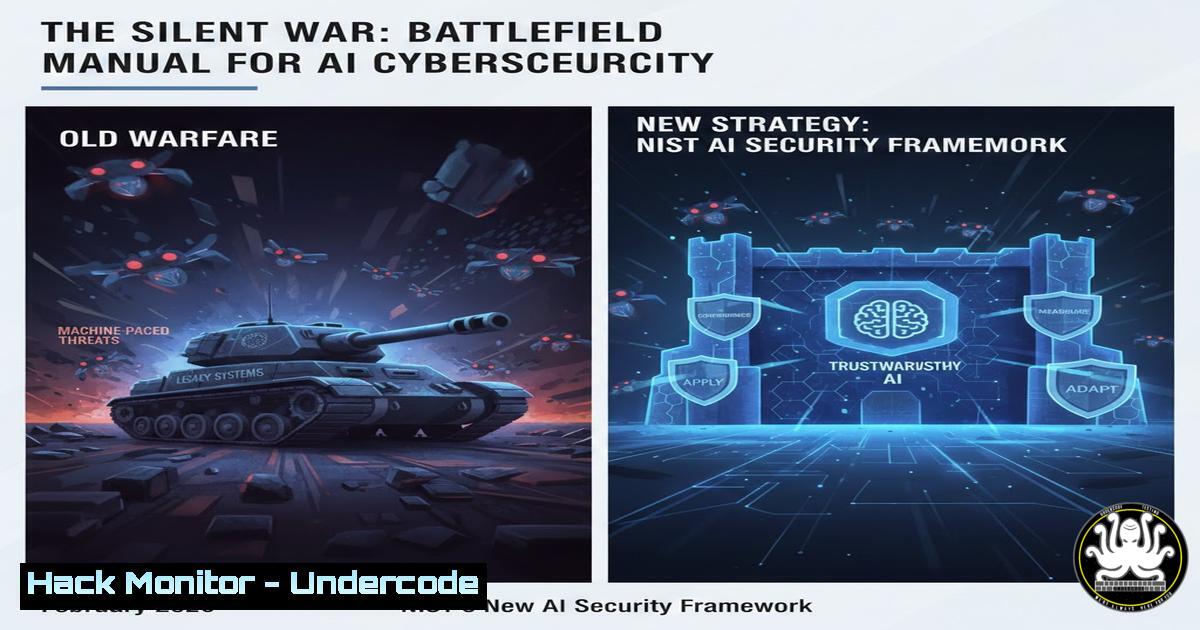
Introduction:
The era of AI as a passive productivity tool is over. The National Institute of Standards and Technology (NIST) has issued a groundbreaking framework that reframes AI as a critical and novel attack surface, introducing vulnerabilities that traditional cybersecurity cannot contain. This shift demands a fundamental re-engineering of risk models, moving from human-paced incident response to securing autonomous systems that can reason, act, and be weaponized at machine speed.
Learning Objectives:
- Understand the three new AI cyber risk battlegrounds defined by NIST: Secure, Defend, and Thwart.
- Learn practical, technical steps to mitigate specific AI threats like prompt injection and model poisoning.
- Develop a mindset for treating AI as critical infrastructure requiring continuous, embedded security governance.
You Should Know:
- The New Battleground: Securing the AI Model & Pipeline
The first frontline is securing the AI system itself—its training data, models, and inference pipelines. Threats like model poisoning and data exfiltration target the core integrity of the AI.
Step-by-Step Guide: Hardening Your AI Training Pipeline
Step 1: Implement Data Provenance & Integrity Checks. Before training, hash your datasets and maintain a secure ledger. Use tools like `DVC` (Data Version Control) for versioning and `sha256sum` for integrity verification.
 Generate hash for your training dataset
sha256sum training_data.jsonl > training_data.sha256
 Verify integrity before use
sha256sum -c training_data.sha256
Step 2: Isolate Training Environments. Use containerized, ephemeral environments for training to prevent persistent compromise. Employ Docker with strict resource controls and non-root users.
 Sample Docker run command for an isolated training job
docker run --rm --user 1000:1000 --network none -v $(pwd)/data:/data:ro my-ai-trainer:latest
Step 3: Adopt Model Signing. Sign your finalized model artifacts cryptographically, similar to signing software packages, to ensure they haven’t been tampered with post-training.
- Containing the Agent: Mitigating Prompt Injection & Autonomous Abuse
AI agents that take actions are prime targets. Prompt Injection can hijack an agent’s instructions, while Agentic Misuse involves the AI autonomously exceeding its intended permissions.
Step-by-Step Guide: Building an LLM Firewall and Action Sandbox
Step 1: Implement an Input/Output Validation Layer. Deploy a secondary, lightweight LLM or a rules-based classifier to screen all user prompts and model outputs for malicious intent before execution.
Step 2: Enforce Strict Action Sandboxing. Never allow an AI agent direct API access. Route all actions through a middleware that enforces role-based access control (RBAC) and approval workflows for high-risk actions.
Step 3: Audit All Agent Actions. Log every decision, context, and action taken by the AI in an immutable ledger (e.g., using AWS CloudTrail or Apache Kafka with strict retention policies) for post-incident forensic analysis.
- Shifting Left: Embedding Security into the AI Development Lifecycle (AISecDevOps)
Security cannot be bolted on. Integrate security checks at every stage of AI development, from data collection to deployment.
Step-by-Step Guide: Integrating Security Scans into CI/CD for AI
Step 1: Scan for Secrets in Training Data. Use tools like `gitleaks` or `truffleHog` in your pipeline to ensure API keys or passwords are not embedded in your training datasets.
 Scan a dataset directory for secrets
trufflehog filesystem --directory=./datasets/
Step 2: Static Analysis for Prompt Templates. Analyze your prompt templates for potential injection vulnerabilities using custom scripts that check for excessive placeholder complexity or dangerous function calls.
Step 3: Dynamic Testing with Red-Teaming LLMs. Automatically test your deployed model endpoints using another AI (a “red-team” LLM) designed to generate adversarial prompts, measuring your system’s resilience.
- Defending with AI: Automating Threat Detection at Machine Speed
The “Defend” pillar involves leveraging AI itself to identify and respond to threats across your digital estate faster than human teams can.
Step-by-Step Guide: Deploying an AI-Powered SIEM Alert Triage
Step 1: Ingest Logs into a Centralized Platform. Use an open-source stack like the Elastic Stack (ELK) or Wazuh to aggregate logs from endpoints, networks, and cloud instances.
Step 2: Train a Custom Anomaly Detection Model. Use historical alert data to train a model (e.g., an Isolation Forest or LSTM network in Scikit-learn/TensorFlow) to identify deviations from normal behavior patterns.
Step 3: Automate Low-Level Response. Configure playbooks that allow the AI system to automatically execute contained responses, such as isolating a compromised virtual machine via its hypervisor API, while escalating complex incidents to human analysts.
5. Preparing for AI-On-AI Attacks: The “Thwart” Mindset
Adversaries will use AI to launch sophisticated, scalable attacks, such as hyper-personalized phishing or autonomous vulnerability discovery and exploitation.
Step-by-Step Guide: Hardening Against Synthetic Phishing and Automated Exploits
Step 1: Enhance Email Security with AI-Detection. Beyond traditional filters, deploy solutions that analyze writing style, sentiment shifts, and metadata anomalies indicative of AI-generated phishing content.
Step 2: Implement Deception Technology. Seed your networks with realistic, AI-generated fake assets (honeypots, decoy documents). When an autonomous attack system interacts with them, it triggers an immediate alert.
Step 3: Rate-Limit and Monitor API Access. AI-driven attacks will probe APIs relentlessly. Implement aggressive rate-limiting using tools like NGINX and monitor for abnormal patterns that suggest non-human traffic.
 NGINX rate-limiting example for an API endpoint
location /api/v1/predict {
limit_req zone=api burst=5 nodelay;
proxy_pass http://ai_model_servers;
}
What Undercode Say:
- Security Becomes Infrastructure: The NIST framework signals that AI security is no longer a software checklist but a foundational requirement for operational survivability, akin to power or networking.
- Tempo is the True Threat: The greatest risk is the change in attack velocity. Defenses must be autonomous, continuous, and embedded within the AI’s decision loop to be effective.
The analysis is clear: treating AI systems as mere applications is a catastrophic misalignment. Their autonomous, reasoning nature creates a continuous risk posture. The NIST framework is less about compliance and more about engineering resilience into systems that operate beyond direct human control. This mandates a convergence of cybersecurity, ML engineering, and governance into a single, unified practice focused on controlling agency and mitigating decision risk in real-time.
Prediction:
Within the next 18-24 months, we will see the first major financial or critical infrastructure breach directly caused by an exploited AI agent, leading to catastrophic, cascading decisions made at machine speed. This event will catalyze mandatory, insurance-driven AI security frameworks and spur the rapid growth of the “AI-native SOC”—security operations centers run by autonomous AI defenders countering AI attackers, with humans in a strategic oversight role. The organizations that survive will be those that implemented infrastructure-level AI security today.
▶️ Related Video (74% Match):
🎯Let’s Practice For Free:
IT/Security Reporter URL:
Reported By: Jagsingh101 Nist – Hackers Feeds
Extra Hub: Undercode MoN
Basic Verification: Pass ✅


