Listen to this Post
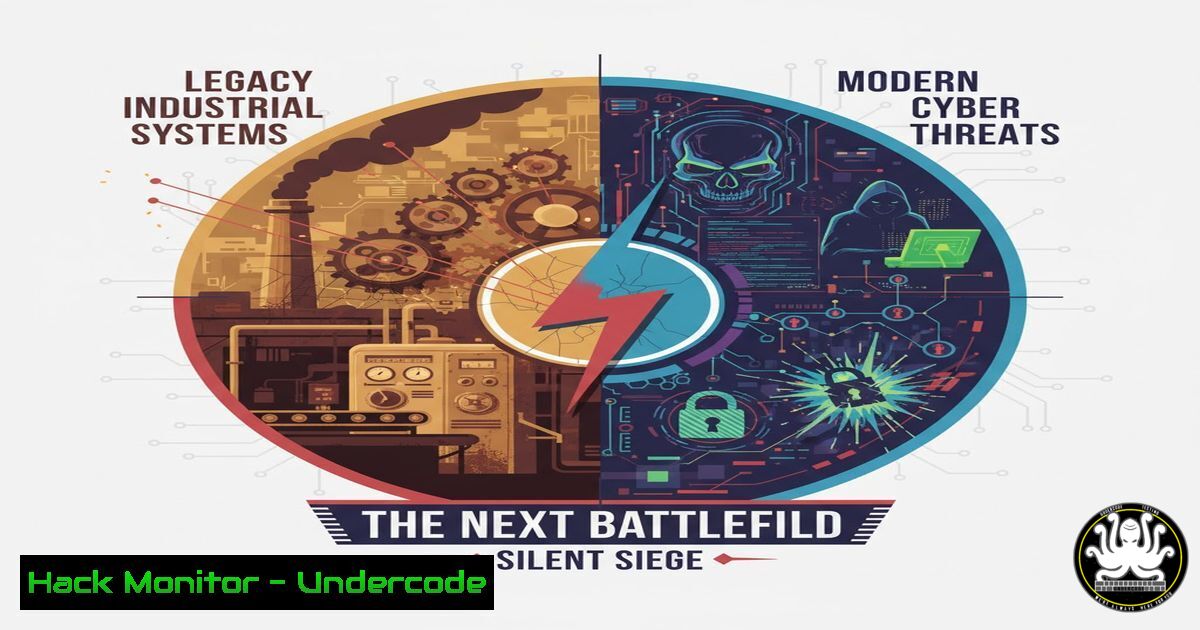
Introduction:
The convergence of Information Technology (IT) and Operational Technology (OT) has irrevocably broken down the digital walls that once protected critical industrial infrastructure. Where air-gapped networks were once the norm, now connectivity for efficiency and data analytics has opened a new front for cyberattacks. This article dissects the modern threats to Industrial Control Systems (ICS) and provides a actionable roadmap for security professionals to defend against them.
Learning Objectives:
- Understand the critical vulnerabilities inherent in legacy SCADA and PLC systems.
- Implement practical network segmentation and hardening techniques for industrial environments.
- Learn to conduct threat detection and incident response within an OT context.
You Should Know:
1. The Architecture of Vulnerability: Legacy ICS/SCADA Systems
The backbone of critical infrastructure—power grids, water treatment plants, manufacturing—often runs on decades-old systems. These Operational Technology (OT) networks, built on proprietary protocols like Modbus, DNP3, and PROFINET, were designed for reliability and longevity, not security. They lack fundamental security features such as authentication, encryption, and logging. The primary vulnerability lies in their “insecure by design” nature; a single crafted packet sent to a Programmable Logic Controller (PLC) can often halt a production line or, more dangerously, alter physical processes.
Step‑by‑step guide explaining what this does and how to use it.
Step 1: Asset Discovery and Inventory. You cannot protect what you don’t know. Use passive network monitoring tools to identify all devices on the OT network without disrupting operations.
Command (Using `nmap` for initial IT network scoping):
 Basic ping sweep to identify live hosts on the corporate network segment
nmap -sn 192.168.1.0/24

Service and OS detection (Use with extreme caution on OT networks)
 This is for the DMZ or IT side, NOT the sensitive OT zone.
nmap -A -T4 192.168.1.1-50
Step 2: Protocol Analysis. Understand the communication. Use a tool like Wireshark with dissectors for industrial protocols to map traffic.
Tutorial: In Wireshark, apply a filter for `modbus` or dnp3. Analyze the packets to identify Master (control) and Slave (field device) relationships. Look for cleartext commands that could be easily replicated or manipulated by an attacker.
2. Building the Digital Moat: Network Segmentation
An air-gap is no longer a viable strategy. The modern defense is robust network segmentation, creating a “Purdue Model” enforced by firewalls. This involves creating distinct levels (e.g., Level 5-Enterprise, Level 3-Supervisory, Level 1-Basic Control, Level 0-Process) and strictly controlling traffic between them. The goal is to prevent an attacker who compromises the corporate IT network from pivoting directly into the industrial control zone.
Step‑by‑step guide explaining what this does and how to use it.
Step 1: Design the Zones. Map your assets to the Purdue Model. Define conduits (controlled paths) between zones.
Step 2: Configure a Next-Generation Firewall (NGFW). Deploy a firewall at the conduit between the IT and OT networks (the DMZ). Create rules that are specific and restrictive.
Example Rule (Conceptual): “Allow ONLY host `10.10.3.10` (Historian) to communicate with PLC `192.168.1.50` on TCP port `502` (Modbus), and deny all other traffic.”
Windows Command (to check local firewall status from IT side):
 Check if Windows Firewall is enabled
netsh advfirewall show allprofiles state
Step 3: Implement Unidirectional Gateways. For the most critical levels (e.g., Level 1 to Level 0), use data diodes that allow data to flow out for monitoring but block all traffic from coming in.
3. Hardening Industrial Assets: From Default to Defended
Out-of-the-box configurations for HMIs, PLCs, and engineering workstations are notoriously insecure. Hardening involves changing defaults, removing unnecessary services, and applying principle of least privilege.
Step‑by‑step guide explaining what this does and how to use it.
Step 1: Change Default Credentials. This is the most basic yet most overlooked step. Change all default passwords on HMIs, network devices, and any device with a web interface.
Step 2: Disable Unused Services. Many devices run superfluous services like FTP, Telnet, or HTTP. Disable them.
Linux Command (on an engineering workstation):
 Check for listening services
netstat -tulnp

Disable and mask the telnet service (if found)
sudo systemctl stop telnet.socket
sudo systemctl disable telnet.socket
sudo systemctl mask telnet.socket
Step 3: Application Whitelisting. On HMIs and engineering workstations, use tools like Windows AppLocker to prevent the execution of unauthorized software, effectively blocking many malware payloads.
4. The Watchful Guardian: OT-Centric Threat Detection
Traditional IT antivirus is often incompatible with OT systems. Detection requires a focus on network anomalies and operational irregularities.
Step‑by‑step guide explaining what this does and how to use it.
Step 1: Deploy a Network Intrusion Detection System (NIDS). Use a tool like Security Onion or a commercial OT-IDS. Configure it with rules specific to industrial protocols.
Step 2: Monitor for Anomalous Behavior. Create baselines for normal operations (e.g., “PLC-A normally receives a ‘write’ command only from HMI-B”). Alert on deviations.
Example Snort Rule (for detecting unauthorized Modbus commands):
alert tcp any any -> $OT_NETWORK 502 (msg:"Unauthorized Modbus Write Command"; content:"|00 00 00 00 00 06 01 06|"; sid:1000001; rev:1;)
Step 3: Integrate with a SIEM. Correlate OT network alerts with IT security events to get a full picture of an attack campaign.
5. Preparing for the Inevitable: ICS Incident Response
When an incident occurs in an OT environment, the response must balance containment with operational safety. Shutting down a system abruptly could be more dangerous than the attack itself.
Step‑by‑step guide explaining what this does and how to use it.
Step 1: Develop an OT-Specific IR Plan. This plan must include roles for both IT security and plant operations personnel. Define clear thresholds for when to shut down processes.
Step 2: Isolate with Precision. Instead of pulling the plug, use network segmentation to logically isolate the compromised system while allowing safe operations to continue.
Command (on a network switch to quarantine a port):
 Place a switch port in a quarantine VLAN
configure terminal
interface gigabitethernet 1/0/10
switchport access vlan 999
end
Step 3: Forensic Acquisition. Work with vendors to acquire forensic images from HMIs and workstations. Never run untrusted IT forensic tools on live OT systems.
What Undercode Say:
- The Air Gap is a Fantasy. The quest for operational data and remote maintenance has rendered the air-gap obsolete. Security must be built on the assumption that networks are connected and vulnerable.
- Safety is the Ultimate KPI. In OT cybersecurity, the primary goal is not just protecting data, but ensuring human safety and preventing environmental catastrophe. Every security control must be evaluated against its impact on operational safety and resilience.
The analysis from industrial security conferences indicates a paradigm shift. Attackers are no longer just script kiddies; they are nation-states and sophisticated cybercriminals who understand both IT and OT. The recent rise in ransomware attacks against manufacturing is a testament to this. Defenders must move beyond checklist compliance and adopt a mindset of continuous monitoring and adaptive defense. The tools and protocols are available; the greatest vulnerability remains organizational inertia and the false comfort of “this is how we’ve always done it.”
Prediction:
The next five years will see the weaponization of AI in industrial attacks. We will move beyond human-speed exploits to AI-driven attacks that can learn a system’s normal operations and execute subtle, multi-stage attacks designed to cause maximum physical damage or prolonged disruption while evading detection. The defense will equally rely on AI-powered anomaly detection systems that can predict and neutralize these threats in real-time, leading to an automated cyber-physical arms race centered on the world’s most critical infrastructure.
🎯Let’s Practice For Free:
IT/Security Reporter URL:
Reported By: Saltanat Mashirova – Hackers Feeds
Extra Hub: Undercode MoN
Basic Verification: Pass ✅


