Listen to this Post
Introduction:
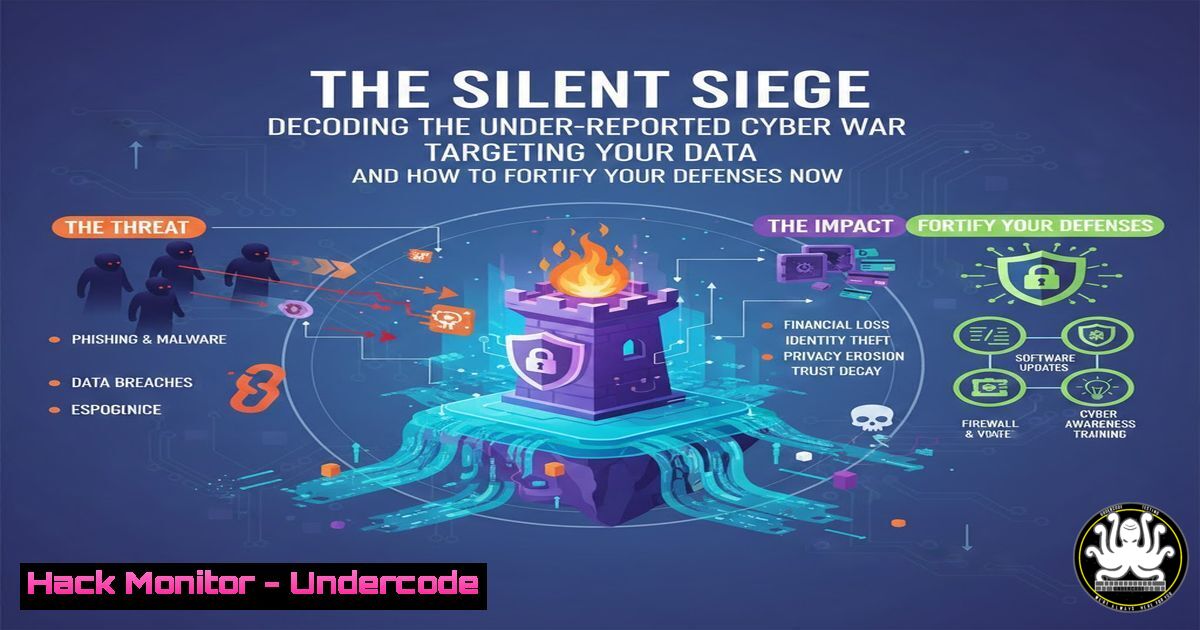
The recent Manage My Health breach is not an isolated incident but a stark symptom of a rapidly escalating, under‑reported cyber war. While high‑profile attacks make headlines, experts estimate that 90% of breaches never reach public awareness, creating a dangerous false sense of security. This silent siege exploits systemic vulnerabilities in healthcare, IT infrastructure, and human complacency, with stolen personal and medical data becoming a prime currency for extortion and fraud.
Learning Objectives:
- Understand the tactical reasons behind the under‑reporting of cyber attacks and the real‑world impact of data breaches like Manage My Health.
- Learn immediate, actionable steps to harden systems against common initial access vectors used in such attacks.
- Implement robust personal and organizational security postures to mitigate risk from exposed personal data.
You Should Know:
- The Attack Surface: Why Healthcare Data is a Prime Target
Medical records are a goldmine for attackers, containing immutable personal identifiers, financial data, and sensitive health information perfect for spear‑phishing and identity fraud. The Manage My Health hack likely began with a compromised credential, a vulnerable internet‑facing system, or a successful phishing campaign.
Step‑by‑step guide explaining what this does and how to use it.
Step 1: Asset Inventory & Attack Surface Mapping.
You cannot protect what you don’t know. Use tools to discover all internet‑facing assets.
Command (Linux/Mac): Use `nmap` for a basic network sweep: `nmap -sV -O 192.168.1.0/24` (replace with your network range). For external mapping, services like Shodan (shodan.io) can be used ethically to see what attackers see.
Action: Catalog all web applications, APIs, remote access points (RDP, VPN), and databases. This is the first step in reducing your “attack surface.”
- Initial Access: Fortifying the Gates Against Credential Theft
Phishing and weak passwords remain the top vectors. Attackers use stolen credentials from other breaches (credential stuffing) or craft targeted lures.
Step‑by‑step guide explaining what this does and how to use it.
Step 2: Enforce Multi‑Factor Authentication (MFA) & Password Policies.
MFA is the single most effective control against credential theft.
Action (Organization): Enforce MFA for all remote access and privileged accounts. Use conditional access policies (in Azure AD/Entra ID or similar) to block logins from unusual locations.
Action (Individual): Enable MFA on every account that offers it, especially email and health portals. Use a password manager (e.g., Bitwarden, 1Password) to generate and store unique, complex passwords.
3. Vulnerability Management: Patching the “Holes” Hackers Exploit
Unpatched software is a low‑effort, high‑reward entry point. The “holes” mentioned in the post are often known vulnerabilities with public exploits.
Step‑by‑step guide explaining what this does and how to use it.
Step 3: Implement a Rigorous Patching Schedule.
Command (Linux – Ubuntu/Debian): Check for and apply security updates: `sudo apt update && sudo apt list –upgradable` followed by sudo apt upgrade.
Command (Windows – PowerShell): Check for available updates: Get-WindowsUpdate. Install all updates: Install-WindowsUpdate -AcceptAll.
Action: Prioritize “Critical” and “Exploited” (CISA KEV) patches. Automate patching where possible, but test in a staging environment first.
4. API Security: The Overlooked Backdoor
Modern platforms like Manage My Health rely heavily on APIs, which are often poorly configured, exposing sensitive data without proper authentication.
Step‑by‑step guide explaining what this does and how to use it.
Step 4: Harden Your API Endpoints.
Action: Implement strict authentication (OAuth 2.0 with scope validation) and authorization for all APIs. Use an API gateway to enforce rate limiting, input validation, and schema compliance. Regularly audit API logs for anomalous access patterns (e.g., a single user querying thousands of records).
5. Detection & Logging: Illuminating the Shadows
If you cannot prevent every breach, you must detect it quickly. Lack of logging and monitoring allows attackers to dwell undetected for months.
Step‑by‑step guide explaining what this does and how to use it.
Step 5: Deploy a SIEM and Create Alert Rules.
Centralize logs from firewalls, servers, endpoints, and applications.
Example (OSS – Wazuh): After deploying the Wazuh agent, create a rule to alert on a user account logging in from two geographically impossible locations within minutes.
Rule Logic: Trigger alert when `event: ssh|rdp|web_auth` and `same username` has `location_diff > 500 km` and time_diff < 300 seconds.
- Incident Response: Having a Plan Before the Breach
Panic costs time and money. A documented, tested Incident Response (IR) plan is crucial.
Step‑by‑step guide explaining what this does and how to use it.
Step 6: Tabletop Exercise – Simulated Phishing Breach.
- Scenario: A user clicks a phishing link, credentials are stolen.
- Action 1 (Contain): Isolate the affected workstation from the network. Reset the compromised password and revoke all active sessions.
- Action 2 (Investigate): Query your SIEM for logins from the user’s account post‑breach, lateral movement attempts, and unusual data transfers.
- Action 3 (Eradicate & Recover): Scan for malware, restore the system from a clean backup, and provide user training.
-
Personal Post‑Breach Hygiene: If Your Data is Exposed
Assume your data from services like Manage My Health is already on the dark web. Act defensively.
Step‑by‑step guide explaining what this does and how to use it.
Step 7: Lock Down Your Identity.
- Freeze Your Credit: Contact major credit bureaus to freeze your credit, blocking new account openings.
- Monitor for Fraud: Use services like `haveibeenpwned.com` to check for your email in breaches. Consider a credit monitoring service.
- Hyper‑Vigilant Communications: Treat all unsolicited calls, texts, or emails referencing your health or personal details as highly suspicious. Verify directly with the institution using a known, public phone number.
What Undercode Say:
The Illusion of Silence is the Greatest Vulnerability. The fact that only 10% of breaches are reported lulls organizations and individuals into a false sense of safety, directly enabling attackers who operate in the shadows.
Modern Defense is Asymmetrical. You must defend all points, while an attacker needs only one weakness. A layered defense (MFA, patching, logging, IR) is non‑negotiable.
The Manage My Health breach is a canonical case study in modern cyber risk: high‑value data, likely preventable initial access, and severe real‑world consequences for individuals. The commentary highlights a critical cultural failure—”it won’t happen to us” thinking—that is more dangerous than any single software flaw. Security is not a product but a continuous process of assessment, hardening, and vigilance. The “thicker and faster” attacks demand proportional automation in defense, shifting from purely preventive measures to assuming breach and excelling at detection and response.
Prediction:
The under‑reporting gap will temporarily widen as ransomware groups shift to more subtle, extortion‑only attacks to avoid scrutiny, but will eventually collapse due to stringent regulatory disclosure laws (like updated SEC rules and GDPR). This will cause a short‑term shock to the public and markets as the true scale of the cyber war is revealed, ultimately forcing a systemic overhaul of cybersecurity investment, moving it from a technical IT cost to a foundational business imperative. AI will be dual‑use: attackers will use it to craft hyper‑personalized phishing and discover novel vulnerabilities, while defenders will increasingly rely on AI‑driven SIEMs and automated patching to keep pace.
▶️ Related Video (72% Match):
🎯Let’s Practice For Free:
IT/Security Reporter URL:
Reported By: Kevin Norquay – Hackers Feeds
Extra Hub: Undercode MoN
Basic Verification: Pass ✅


