Listen to this Post
Introduction:
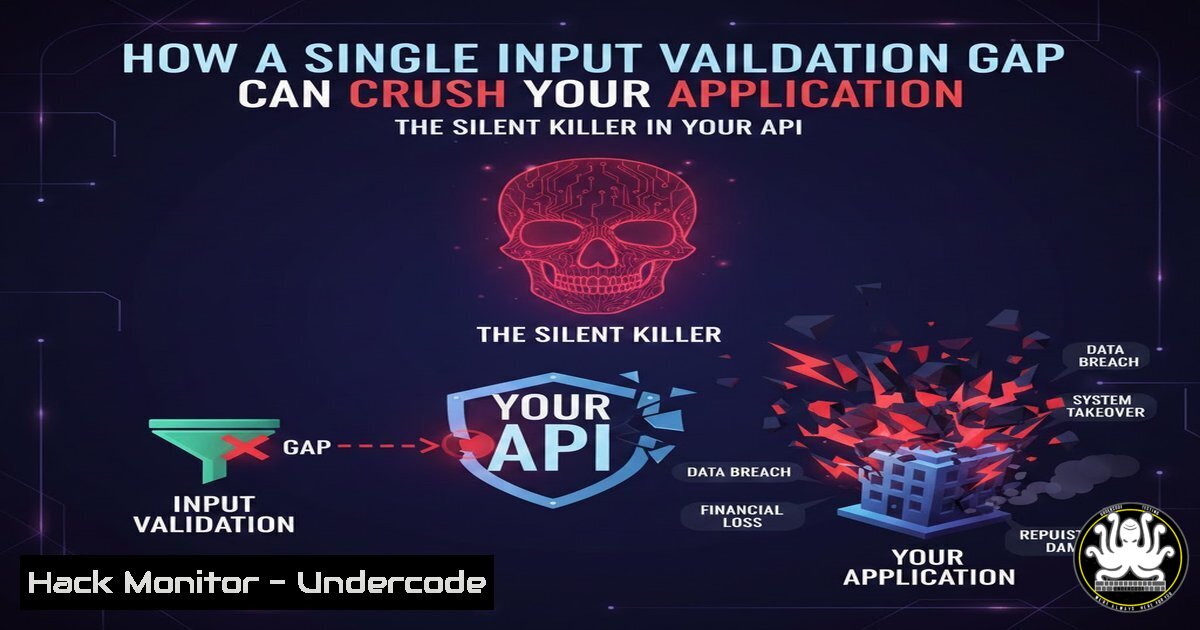
In the evolving landscape of cybersecurity, Application-Level Denial of Service (DoS) attacks represent a sophisticated threat that bypasses traditional network-level protections. As demonstrated by a recent successful bug bounty report, these vulnerabilities often lurk in API input handling, where a lack of robust validation can allow a single malicious request to trigger resource exhaustion, crippling application availability. This incident underscores a critical shift in offensive security, where understanding application logic is as valuable as exploiting buffer overflows.
Learning Objectives:
- Understand the mechanics of Application-Level DoS attacks, specifically those targeting input validation.
- Learn the methodology for identifying and testing input handling gaps in APIs and web applications.
- Master the process of responsible disclosure and crafting effective bug bounty reports.
You Should Know:
1. Anatomy of an Application-Level DoS Vulnerability
This vulnerability occurs when an application fails to properly validate, sanitize, or limit the size/complexity of user-supplied input before processing it. Unlike volumetric DDoS attacks, this attack abuses legitimate application functions (like file uploads, complex calculations, or database queries) to consume excessive CPU, memory, or disk I/O. The recent bounty case likely involved an API parameter that accepted an unexpectedly large array, string, or nested JSON object, causing the backend to enter a costly computational loop or allocate massive memory.
Step‑by‑step guide explaining what this does and how to use it.
Step 1: Target Scoping. Identify API endpoints that accept array, string, or object inputs (e.g., POST /api/v1/processData, GET /api/search?query=).
Step 2: Parameter Analysis. Use Burp Suite or OWASP ZAP to intercept requests. Note parameters like ids[], json_payload, xml_data, or file.
Step 3: Craft Malicious Payload.
For Arrays: Send an array with 10,000+ elements. `{“user_ids”: [1,2,3,…1000000]}`
For Strings: Send an extremely long string (1M+ characters) in a field expecting a username.
For Object Nesting: Create deeply nested JSON. `{“a”: {“b”: {“c”: {…}}}}` nested 1000 levels deep.
Step 4: Send & Monitor. Transmit the payload and monitor the server’s response time and error messages. Use tools like `htop` or `docker stats` on your lab server to observe CPU/Memory spikes.
2. Privilege Path Testing: The Hacker’s Leverage
The bounty hunter emphasized testing “different privilege paths.” This means the impact of an input validation flaw can differ between user roles. An endpoint that is resource-intensive for an admin might be rate-limited for a regular user. The attack surface often expands with privilege.
Step‑by‑step guide explaining what this does and how to use it.
Step 1: Map User Roles. Enumerate all roles (e.g., anonymous, user, editor, admin) in the application.
Step 2: Authenticate as Each Role. Use separate browser sessions or tools like `curl` with different authentication tokens.
 Example for Admin
curl -H "Authorization: Bearer ADMIN_JWT_TOKEN" -X POST https://target.com/api/admin/export -d '{"data": "LARGE_PAYLOAD"}'
 Example for User
curl -H "Authorization: Bearer USER_JWT_TOKEN" -X POST https://target.com/api/user/export -d '{"data": "LARGE_PAYLOAD"}'
Step 3: Test High-Value Endpoints. Focus on endpoints for data export, bulk actions, report generation, or file processing across all privilege levels.
3. Building Your Security Testing Lab
To practice ethically, you must configure a local lab. This allows you to safely exploit and understand vulnerabilities without legal repercussions.
Step‑by‑step guide explaining what this does and how to use it.
Step 1: Set Up a Virtual Machine. Use VirtualBox or VMware. Install a vulnerable practice application like OWASP Juice Shop or Damn Vulnerable Web Application (DVWA).
Step 2: Configure Monitoring. Install monitoring tools inside your VM to see the impact of your tests.
 On Linux Lab VM
sudo apt install htop iotop -y
 Run htop in one terminal to monitor CPU/Memory in real-time
htop
Step 3: Proxy Your Traffic. Configure your browser and tools to route traffic through Burp Suite to analyze and manipulate all requests.
4. Crafting the Perfect Proof-of-Concept (PoC)
A valid bug report requires a clear, reproducible PoC. This demonstrates the issue’s impact to the security team.
Step‑by‑step guide explaining what this does and how to use it.
Step 1: Document the Baseline. Record normal server response time for a legitimate request (e.g., time curl -s
 > /dev/null</code>).
 Step 2: Execute the Attack. Send your malicious payload and record the degraded response time or error.
 Step 3: Show Impact. Create a simple script that simulates the attack, showing how availability is lost.
[bash]
import requests
import time

target_url = "https://vulnerable-api.com/process"
malicious_payload = {"array": list(range(1, 1000000))}  Large array
headers = {"Content-Type": "application/json"}

start = time.time()
response = requests.post(target_url, json=malicious_payload, headers=headers)
end = time.time()

print(f"Request took {end - start:.2f} seconds")
print(f"Response Code: {response.status_code}")
 A successful DoS might result in a 503, 504, or a timeout.
5. The Art of Responsible Disclosure
The report was submitted via Bugcrowd, a coordinated vulnerability disclosure platform. Following a structured process is non-negotiable.
Step‑by‑step guide explaining what this does and how to use it.
Step 1: Verify the Scope. Ensure the target and vulnerability type are within the program's rules. Never test out-of-scope assets.
Step 2: Write the Report.
Clear and concise (e.g., "Application-Level DoS via Unbounded Array Parameter in /api/export").
Vulnerability Details: Describe the flaw, its location (endpoint, parameter), and the impact (availability loss).
Steps to Reproduce: Numbered, simple steps the triager can follow.
PoC Code/Requests: Include raw HTTP request/response or your script.
Remediation Advice: Suggest fixes (e.g., input size limits, rate limiting, query timeouts).
Step 3: Submit and Wait. Submit via the platform's portal. Practice patience during triage and avoid public disclosure until the bug is fixed.
What Undercode Say:
- The DevSecOps Gap is Real: This bounty highlights a persistent failure in the "Sec" part of DevSecOps. Input validation, especially for availability, is often an afterthought in API development, creating low-hanging fruit for ethical hackers and malicious actors alike.
- Quality Over Quantity in Bug Hunting: The hunter's focus on "different privilege paths" and "clear reports" is a masterclass in methodology. Success in modern bug bounty programs relies on deep, logical analysis more than automated scanner spam.
Analysis:
The reported bug is a canonical example of a class of vulnerabilities that are trivial to prevent yet devastating in effect. It points to a systemic issue in development lifecycles where unit and integration tests often check for "correct" input but fail to stress-test for "pathological" input. The hunter's approach was methodological: identify a functional endpoint, hypothesize a weakness (lack of bounds checking), test across privilege levels to maximize impact, and document it clearly. This process is replicable and is the cornerstone of effective application security testing. It also shows that the most critical vulnerabilities are not always complex zero-days but logical flaws in business processes.
Prediction:
In the next 2-3 years, as APIs continue to be the backbone of digital business, Application-Level DoS attacks will become a preferred vector for hacktivists and ransomware groups. We will see a rise in automated tools designed specifically to find these logical resource exhaustion flaws at scale. Consequently, the implementation of sophisticated rate limiting (using algorithms like token buckets), mandatory input schemas with strict constraints, and runtime application self-protection (RASP) that monitors for abnormal resource consumption will transition from "best practices" to default requirements in cloud-native applications. Bug bounty platforms will see a significant increase in payouts for this vulnerability class, incentivizing more hunters and ultimately forcing a long-overdue maturation of input validation frameworks.
▶️ Related Video (76% Match):
🎯Let’s Practice For Free:
IT/Security Reporter URL:
Reported By: Irshad Ansari - Hackers Feeds
Extra Hub: Undercode MoN
Basic Verification: Pass ✅


