Listen to this Post
Introduction:
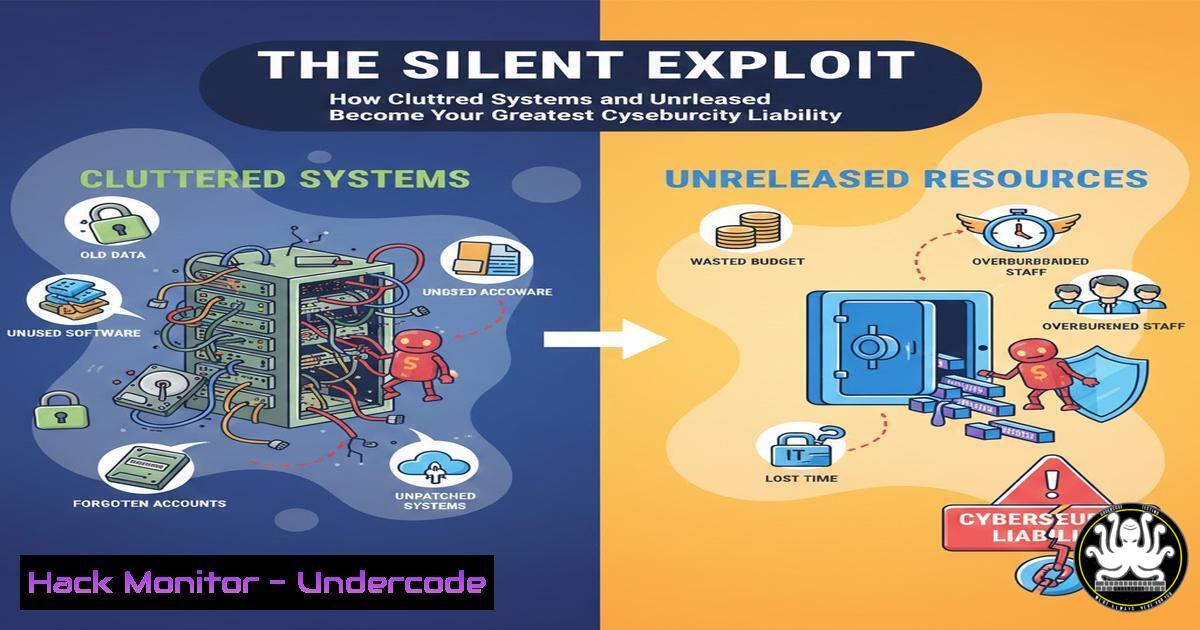
In cybersecurity, the most dangerous threats are often the ones you already own. Just as Jeremy Prasetyo’s post highlights how holding onto draining emotional baggage hinders growth, IT and security teams are crippled by clinging to outdated systems, stale credentials, and unpatched services. This clutter creates the attack surface that adversaries exploit. Proactive release isn’t just personal development—it’s the cornerstone of a robust security posture.
Learning Objectives:
- Understand how unmaintained assets and credentials create critical vulnerabilities.
- Learn to identify “stuck” patterns in your IT environment that signal risk.
- Implement technical processes to systematically “let go” of dangerous digital baggage.
You Should Know:
1. The Attack Surface of Unreleased Resources
Holding onto outdated software, deprecated user accounts, and forgotten cloud instances is the digital equivalent of refusing to change. Each is a potential entry point. The 2023 Verizon DBIR reported that over 80% of breaches involved exploiting known vulnerabilities in legacy assets or stolen credentials from stale accounts.
Step-by-Step Guide:
What this does: This process identifies old user accounts and system artifacts that should be decommissioned.
How to use it:
- Audit User Accounts: On a Linux system, review `/etc/passwd` for old user accounts. Check last login times:
lastlog. On Windows Active Directory, use PowerShell:Get-ADUser -Filter -Properties LastLogonDate | Where-Object {$_.LastLogonDate -lt (Get-Date).AddDays(-90)} | Select-Object Name, LastLogonDate. - Find Unused Software: On Linux, list explicitly installed packages: `apt list –installed | grep -v automatic` (Debian/Ubuntu) or `yum list installed` (RHEL/CentOS). Correlate with running processes:
ps aux. - Tag Cloud Resources: Use cloud provider CLI tools to tag resources with a “review-date.” For AWS:
aws ec2 create-tags --resources i-1234567890abcdef0 --tags Key=ReviewDate,Value=2024-12-01. Schedule automated alerts for untagged or past-review-date resources.
2. Breaking the Pattern of Vulnerability Recurrence
Repeating patterns, like consistently delayed patching cycles, is a sign of being “stuck.” This resistance to change directly enables threat actors who rely on predictable security gaps.
Step-by-Step Guide:
What this does: Implements an automated, auditable patching workflow to break the cycle of manual, delayed updates.
How to use it:
- Inventory & Prioritize: Use a vulnerability scanner (like OpenVAS) or your cloud security posture management (CSPM) tool to generate a prioritized list of CVEs.
- Automate Patching (Linux Example): Configure unattended-upgrades on Debian/Ubuntu:
sudo dpkg-reconfigure -plow unattended-upgrades. For critical servers, use a controlled orchestration tool like Ansible:ansible-patch-playbook.yml</li> </ol> - hosts: webservers become: yes tasks: - name: Update apt cache apt: update_cache: yes - name: Apply security updates only apt: upgrade: 'yes' autoremove: yes cache_valid_time: 3600
3. Verify & Log: Ensure a reporting mechanism (e.g., sending `apt-history` logs or Windows Update logs to a SIEM) exists to verify compliance and break the pattern of neglect.
3. Cutting the Cord: Secure Decommissioning and Hardening
“Maturity is knowing what no longer fits.” In tech, this is the secure decommissioning (sunsetting) of services and the hardening of active ones by removing unnecessary components.
Step-by-Step Guide:
What this does: Securely removes a retired Linux server from the network and its authentication pathways, preventing “ghost” access.
How to use it:
- Remove from Configuration Management: Delete the node from your Ansible inventory, Puppet master, or Chef server.
- Revoke Authentication Keys: On all connected systems (especially jump hosts), remove the server’s SSH public key from `~/.ssh/known_hosts` and any authorized_keys entries. You can search for it:
grep -r "old-server-hostname" ~/.ssh/. - Decommission in Infrastructure as Code (IaC): Remove the resource definition (e.g., Terraform `aws_instance` block, Kubernetes Deployment YAML) from version control and apply the destruction plan: `terraform plan -destroy` followed by
terraform apply -destroy. - Terminate & Snapshot: In the cloud console, terminate the instance. Take a final disk snapshot for forensic backup before permanent deletion.
4. Clearing Space for Security Monitoring
“If your mind is cluttered, your life will be too.” If your SIEM and log files are cluttered with irrelevant noise, you will miss critical alerts. Gaining clarity requires filtering out the unimportant.
Step-by-Step Guide:
What this does: Configures Linux auditd rules and log filtering to focus only on high-value security events, reducing alert fatigue.
How to use it:
- Targeted Audit Rules: Instead of logging everything, craft specific rules in
/etc/audit/audit.rules. For example, to monitor changes to the SSH configuration:
`-w /etc/ssh/sshd_config -p wa -k sshd_config`
To monitor sudo usage:
-a always,exit -F arch=b64 -S execve -C uid!=euid -F euid=0 -k sudo_privilege_esc.
2. Use Log Aggregation Filters: In your log shipper (e.g., Filebeat), use processors to drop noisy logs before they reach the SIEM:filebeat.yml snippet processors: - drop_event: when: equals: message: "CRON[bash]: (root) CMD (cd / && run-parts --report /etc/cron.hourly)"
3. Create Whitelists: In your SIEM, establish baselines for normal network traffic (e.g., internal NTP requests) to filter out known-good noise.
- Breathe, Then Break Free: Implementing Immutable, Rebuildable Infrastructure
“Don’t wait for a breakdown to rebuild.” The security practice of treating servers as disposable, immutable assets allows you to “let go” of a compromised system instantly and rebuild a clean, hardened version.
Step-by-Step Guide:
What this does: Uses Packer to create a pre-hardened, golden image, enabling the rapid replacement of any system.
How to use it:
- Create a Packer Template (packer.json): Define a base image (e.g., Ubuntu 22.04) and a provisioner script that applies all security hardening (disabling root login, installing fail2ban, applying CIS benchmarks).
- Run Packer: Build the image in your cloud environment:
packer build -var 'aws_access_key=YOUR_KEY' packer.json. - Deploy via Terraform: In your Terraform configuration, reference the new AMI ID output by Packer to launch auto-scaling groups or individual instances. When a vulnerability is detected, increment the AMI ID and Terraform will replace the old, vulnerable instances with new ones from the clean image.
What Undercode Say:
Security is a Continuous Act of Release: The most critical security task is not just adding new controls, but actively and systematically removing outdated ones. Your security improves in direct proportion to your willingness to decommission.
Clarity Over Completeness: A lean, well-understood environment with 100 monitored assets is infinitely more secure than a cluttered, “complete” network of 10,000 unclassified systems. Visibility begins with reduction.Analysis:
The post’s core philosophy maps directly to Zero Trust and the principle of least privilege. Holding onto broad access rights, legacy firewall rules, or unsegmented networks is the “emotional baggage” of IT. The future of cybersecurity is adaptive and ephemeral—environments that continuously shed unnecessary components and rebuild themselves from known-good states. AI will accelerate this, not by adding complexity, but by predicting which assets, permissions, and rules can be safely “let go” before an attacker finds them. The leaders in this space won’t be those with the most advanced AI detection, but those with the most disciplined processes for digital hygiene and release.
Prediction:
Within 3-5 years, “Attack Surface Reduction (ASR) Automation” will be a primary KPI for security teams, driven by AI that identifies redundant, deprecated, and high-risk assets. Security tools will shift from “threat hunting” to “asset sunsetting,” automatically recommending and executing the decommissioning of resources. Major breaches will increasingly be blamed not on a failure to detect, but on a documented failure to act on these automated “let go” recommendations, making proactive release a legal and compliance imperative.
▶️ Related Video (80% Match):
🎯Let’s Practice For Free:
IT/Security Reporter URL:
Reported By: Jeremyprasetyo Let – Hackers Feeds
Extra Hub: Undercode MoN
Basic Verification: Pass ✅🔐JOIN OUR CYBER WORLD [ CVE News • HackMonitor • UndercodeNews ]
📢 Follow UndercodeTesting & Stay Tuned:


