Listen to this Post
Introduction:
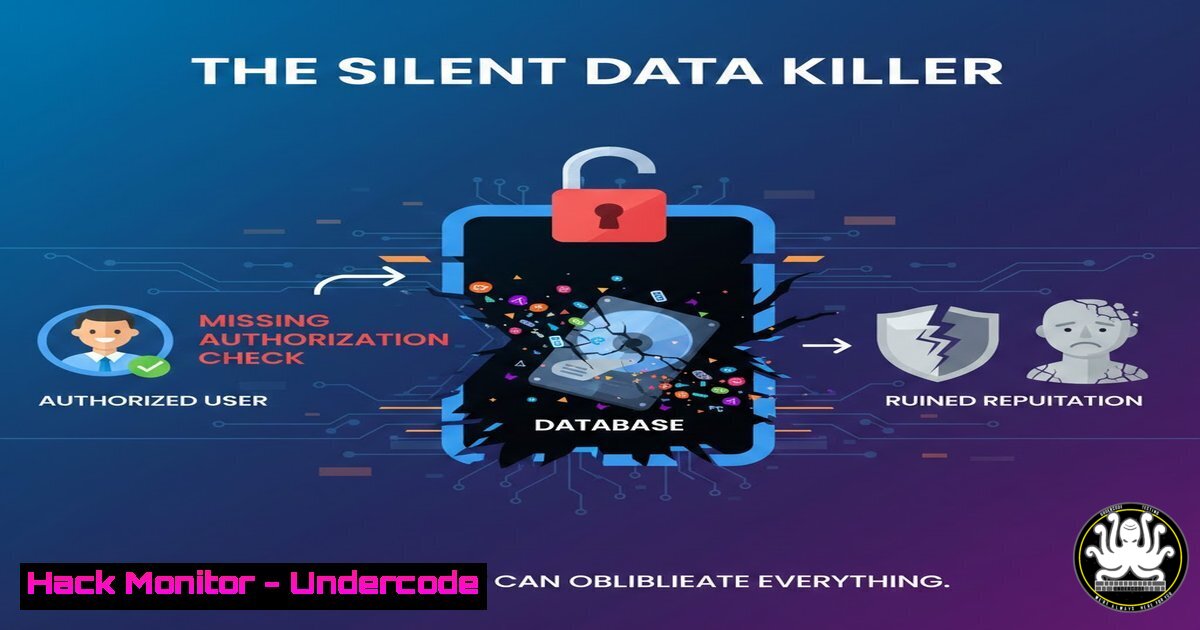
In the digital realm, authentication confirms who you are, while authorization dictates what you are allowed to do. A critical failure to enforce the latter—known as Broken Access Control—consistently tops the OWASP Top 10 as a primary attack vector. This flaw allows authenticated users to perform actions outside their intended permissions, such as deleting another user’s data, by simply manipulating object identifiers in API requests. This article dissects this pervasive vulnerability, providing a technical deep dive into its exploitation, detection, and definitive mitigation.
Learning Objectives:
- Understand the fundamental difference between Authentication and Authorization and how their misalignment creates critical vulnerabilities.
- Learn to identify and exploit Insecure Direct Object References (IDOR) leading to unauthorized data manipulation.
- Implement robust server-side authorization checks and secure coding practices to eliminate this risk.
You Should Know:
- The Anatomy of a Broken Access Control Exploit
At its core, this vulnerability is an Insecure Direct Object Reference (IDOR). The application exposes a direct reference to an internal object (e.g., a database record ID) and fails to verify that the authenticated user has the right to access the target of that reference.
Step‑by‑step guide explaining what this does and how to use it.
- Reconnaissance & Enumeration: As an attacker, first map all API endpoints that handle object identifiers. Common patterns include
/api/user/{user_id}/profile,/api/orders/{order_id}/delete, or/api/documents/{doc_id}. Use browser developer tools (Network tab) or proxy tools like Burp Suite to capture these requests. - Analyze the Request: Identify the parameter holding the object reference. It’s often in the URL path, a `GET` query parameter, or a `POST` body (e.g.,
{"transactionId": 78235}). - Manipulate the Identifier: While logged in as a low-privilege user (e.g.,
user_id=1001), change the identifier to another user’s suspected ID (e.g., `user_id=1000` ororder_id=500). - Send the Modified Request: Forward the manipulated request. If the application returns the target user’s data or performs the action (like deletion) without error, you have successfully exploited Broken Access Control.
Example Exploit Command (cURL):
 Attacker's legitimate request to delete their own post (ID 12345)
curl -X DELETE 'https://vulnerable-app.com/api/posts/12345' -H "Authorization: Bearer <ATTACKER_TOKEN>"

Exploit: Change the object ID to delete another user's post (ID 12344)
curl -X DELETE 'https://vulnerable-app.com/api/posts/12344' -H "Authorization: Bearer <ATTACKER_TOKEN>"
If the second command succeeds, the vulnerability is confirmed.
- Beyond Simple IDs: Exploiting GUIDs and Predictable Sequences
Developers might think using Globally Unique Identifiers (GUIDs/UUIDs) is secure, but if these are enumerable or predictable, the risk remains.
Step‑by‑step guide explaining what this does and how to use it.
- Identify Pattern: If object references are non-sequential (e.g.,
doc_id=afb12d87-cae2-4f3b-9c21-8a5b4e6c7d8a), check if they can be discovered elsewhere. A user’s profile might leak their document IDs, or an API listing endpoint might return a list of IDs accessible to the user. - Harvest References: Use a script to parse responses and collect all object identifiers belonging to other users that are inadvertently exposed through other features (e.g., “public” user profiles, search results, or leaderboards).
- Test Harvested IDs: Use the collected IDs in targeted API calls to test for authorization bypass.
Example Scripting (Python):
import requests
import json

session_cookie = "YOUR_SESSION_COOKIE"
base_url = "https://vulnerable-app.com/api/document/"

List of UUIDs harvested from a public directory
harvested_uuids = ["afb12d87-cae2-4f3b-9c21-8a5b4e6c7d8a", "bde34f98-dab3-4g5c-8d32-9b6c5e7f8a9b"]

for uuid in harvested_uuids:
response = requests.get(base_url + uuid, cookies={"session": session_cookie})
if response.status_code == 200:
print(f"[!] Unauthorized access to document: {uuid}")
print(f" Data: {json.dumps(response.json(), indent=2)}")
3. The Root Cause: Missing Server-Side Authorization Checks
The flaw originates in the application code. The server validates the session but not the user’s permission for the specific requested object.
Step‑by‑step guide explaining what this does and how to use it (Flask/Python Example of Vulnerable Code):
@app.route('/api/delete_post/<int:post_id>', methods=['DELETE'])
def delete_post(post_id):
 VULNERABLE CODE: Checks if user is logged in (Authentication) but NOT if they own the post.
if 'user_id' not in session:
return jsonify({'error': 'Unauthorized'}), 401

Directly deletes the post without an ownership check.
post = Post.query.get(post_id)
db.session.delete(post)
db.session.commit()
return jsonify({'message': 'Post deleted'}), 200
Mitigation: Implement a Server-Side Check
@app.route('/api/delete_post/<int:post_id>', methods=['DELETE'])
def delete_post(post_id):
user_id = session.get('user_id')
if not user_id:
return jsonify({'error': 'Unauthorized'}), 401

FIXED: Query the post AND ensure the post's owner matches the logged-in user.
post = Post.query.filter_by(id=post_id, user_id=user_id).first()
if not post:
 Return 403 Forbidden, not 404 Not Found, to avoid IDOR via timing attacks.
return jsonify({'error': 'Forbidden: Post not found or access denied'}), 403

db.session.delete(post)
db.session.commit()
return jsonify({'message': 'Post deleted'}), 200
- Mitigation Strategy 1: Implement Access Control Lists (ACLs) & Policy-Based Enforcement
Move beyond ad-hoc checks. Centralize authorization logic.
Step‑by‑step guide:
- Define a Policy: Create a clear policy (e.g., “Users can `DELETE` only `Post` resources where
post.owner_id == current_user.id“). - Use a Centralized Middleware/Function: Implement a function that is called before every data-access operation.
Example (Node.js/Express Middleware):
const authorizePostModification = async (req, res, next) => {
const postId = req.params.id;
const userId = req.user.id; // From authentication middleware

const post = await Post.findById(postId);
if (!post) {
return res.status(404).json({ error: 'Post not found' });
}
// ENFORCEMENT POINT
if (post.ownerId.toString() !== userId) {
return res.status(403).json({ error: 'Forbidden' });
}
req.post = post; // Attach authorized object to request
next();
};

// Apply to route
app.delete('/api/posts/:id', authenticateUser, authorizePostModification, (req, res) => {
// Safe to delete req.post here
await req.post.remove();
res.json({ message: 'Deleted' });
});
- Mitigation Strategy 2: Use Indirect Reference Maps & UUIDs with Context
Avoid exposing direct database keys. Use per-user or per-session indirect references.
Step‑by‑step guide:
- Create a Mapping: When generating a resource for a user, create a random, unique reference (e.g.,
user_doc_ref = random_alphanumeric(16)) and map it to the real internal ID (internal_doc_id=5001) in a server-side dictionary or database table scoped to the user’s session or ID. - Use the Reference in APIs: The front-end only ever sees
user_doc_ref. - Server-Side Resolution: The server uses the current user’s context to look up the real internal ID from the reference map, inherently enforcing authorization. If the reference isn’t in the user’s map, access is denied.
What Undercode Say:
- Authentication is NOT Authorization: A valid login token is merely a starting point, not a free pass to all data. Every single request that touches an object must be validated against an authorization policy.
- Never Trust the Client: All object references and permissions must be validated server-side. Client-side checks are trivial to bypass and only for user experience.
- Fail Securely: Denied requests should return generic `403 Forbidden` errors, not
404 Not Found. Revealing whether an ID exists can aid attackers in enumeration.
The post highlights a classic yet devastating oversight. The congratulations on the bounty underscore how frequently this flaw is found and how high its impact is rated. It’s not a complex cryptographic failure; it’s a simple logic flaw with catastrophic consequences—data destruction, privacy breaches, and total system compromise. This vulnerability is a stark reminder that the most significant security risks often lie in the application’s business logic, not in its infrastructure.
Prediction:
As applications shift towards microservices and complex, distributed APIs, the attack surface for Broken Access Control will expand exponentially. Each new service and endpoint is a potential authorization checkpoint that can be missed. Future exploitation will increasingly leverage automated tools to spider API documentation (e.g., OpenAPI specs) and fuzz thousands of endpoints for IDOR vulnerabilities at scale. Conversely, the adoption of standardized, declarative authorization frameworks (like OPA, Cedar, or integrated platform solutions) will become the norm, moving authorization out of business logic code and into centralized, auditable security layers. The “shift-left” movement will mandate authorization logic testing in CI/CD pipelines, making missing checks a build-breaking event rather than a post-production bug bounty payout.
▶️ Related Video (74% Match):
🎯Let’s Practice For Free:
IT/Security Reporter URL:
Reported By: Gilangdwisetyawan Alhamdulillah – Hackers Feeds
Extra Hub: Undercode MoN
Basic Verification: Pass ✅


