Listen to this Post
Introduction:
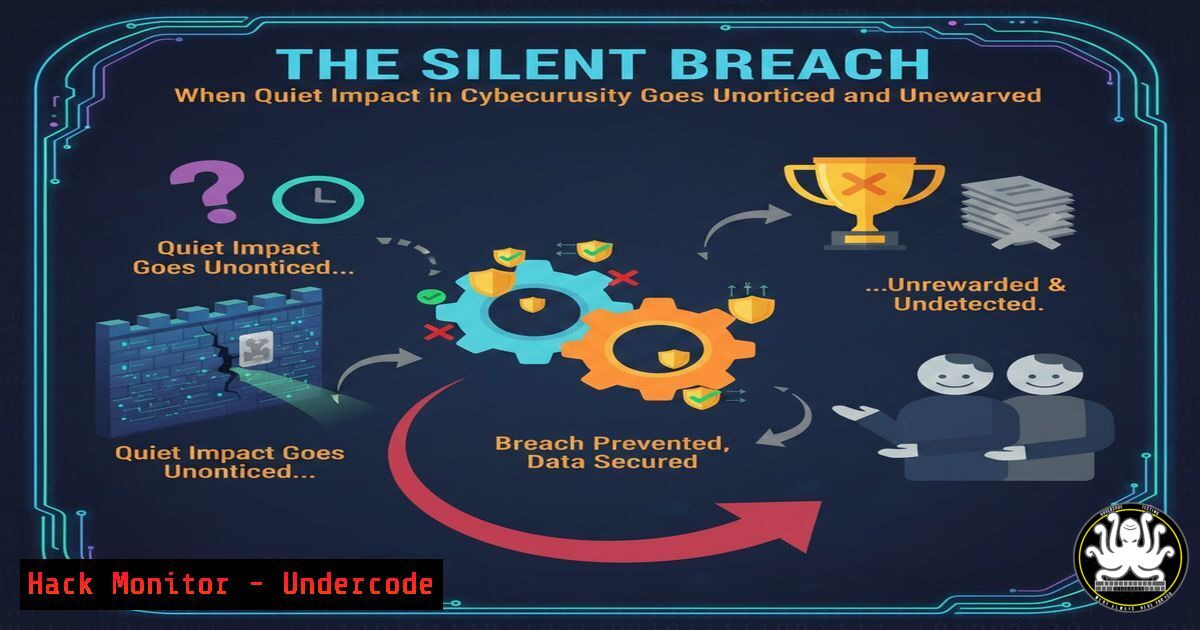
In a digital landscape saturated with the noise of flashy cyberattacks, vendor hype, and influencer bravado, the most critical security work often happens in silence. Just as the post highlights the untold heroism of individuals like Dr. Laxmi Bai, the cybersecurity world relies on unsung experts who patch critical vulnerabilities, architect resilient systems, and monitor logs without fanfare. This article explores the dangerous paradox where “noise gets rewarded more than impact” in IT security, leaving foundational, quiet defense work underfunded and overlooked, thereby creating systemic risk.
Learning Objectives:
- Understand the technical and cultural gap between visible “hacker” activity and foundational security hygiene.
- Learn key, unglamorous hardening steps for Linux, Windows, and cloud APIs that prevent the majority of breaches.
- Develop metrics to quantify and advocate for the “quiet impact” of proactive defense within your organization.
You Should Know:
1. The Vulnerability of Unseen Infrastructure
The most impactful security work is preventive, not reactive. It involves securing the mundane: databases, internal APIs, and legacy systems that never make headlines until they are breached.
Step-by-step guide:
Asset Discovery & Inventory: You cannot defend what you don’t know exists. Use silent, passive discovery tools.
Linux Command (Nmap passive OS detection): `sudo nmap -O -sS –script smb-os-discovery 192.168.1.0/24 > network_inventory.txt`
What it does: This command performs a stealth SYN scan (-sS) with OS detection (-O) and a script to identify SMB services, mapping live hosts and their potential OS on a subnet, outputting to a file for analysis.
Patch Management Automation: The quiet hero of security. Automate for consistency.
Linux (Ubuntu/Debian) Cron Job for Unattended Security Updates: Edit crontab (crontab -e) and add: `0 2 /usr/bin/apt-get update && /usr/bin/apt-get upgrade –security -y`
What it does: Runs daily at 2 AM to update package lists and install only security-related upgrades automatically.
2. Hardening Authentication: The Silent Gatekeeper
Noise often focuses on exotic zero-days, but 80% of breaches involve weak, stolen, or misconfigured credentials. Silent, strong authentication is paramount.
Step-by-step guide:
Enforce Multi-Factor Authentication (MFA) Everywhere: Especially for administrative access and cloud consoles.
AWS CLI Command to Enforce MFA for IAM Users: Create an IAM policy that denies all actions unless MFA is authenticated, then attach it to users/groups.
What it does: This policy ensures that even if credentials are leaked, they are useless without the second factor.
Implement Password Policies via Script: Audit and enforce complexity.
Windows PowerShell Command to Check User Password Age: `Get-ADUser -Filter -Properties PasswordLastSet | Select-Object Name, PasswordLastSet | Export-Csv C:\audit\password_age.csv`
What it does: Exports a list of all AD users and the last time they changed their password, helping identify stale credentials that need forced rotation.
3. Logging & Monitoring: The Unblinking, Quiet Observer
The security operations center (SOC) analyst reviewing logs at 3 AM is the digital equivalent of a quiet hero. Proper logging is their tool.
Step-by-step guide:
Centralize Logs with a SIEM (Open Source): Use the ELK Stack (Elasticsearch, Logstash, Kibana) or Wazuh.
Linux Command to Install & Configure Wazuh Agent (on a CentOS/RHEL client):
sudo rpm --import https://packages.wazuh.com/key/GPG-KEY-WAZUH
sudo echo -e '[bash]\ngpgcheck=1\ngpgkey=https://packages.wazuh.com/key/GPG-KEY-WAZUH\nenabled=1\nname=EL-$releasever - Wazuh\nbaseurl=https://packages.wazuh.com/4.x/yum/\nprotect=1' | sudo tee /etc/yum.repos.d/wazuh.repo
sudo yum install wazuh-agent
sudo systemctl daemon-reload
sudo systemctl enable wazuh-agent
sudo systemctl start wazuh-agent
What it does: This adds the Wazuh repository, installs the agent, and sets it to run on startup, forwarding system logs, authentication attempts, and integrity monitoring data to a central manager for correlation and alerting.
4. API Security: The Invisible Attack Surface
APIs power modern applications but are often “set and forgotten,” creating massive silent risk.
Step-by-step guide:
Implement Rate Limiting and Input Validation: Use API gateways or middleware.
Example NGINX Configuration Snippet for API Rate Limiting:
http {
limit_req_zone $binary_remote_addr zone=api:10m rate=10r/s;

server {
location /api/ {
limit_req zone=api burst=20 nodelay;
proxy_pass http://api_backend;
}
}
}
What it does: Creates a shared memory zone (api) to track client IPs, limiting them to 10 requests per second with a burst of 20, mitigating brute-force and DDoS attacks against your API endpoints.
5. Cloud Configuration Hygiene: The Silent Drift
Misconfigured cloud storage (S3 buckets, Blob containers) is a silent epidemic leading to data breaches.
Step-by-step guide:
Automate Compliance Checks with CSPM Tools: Use open-source tools like ScoutSuite or Prowler.
Prowler AWS Command to Check for Public S3 Buckets: `./prowler -c extra731`
What it does: Prowler is an AWS security assessment tool. The `-c extra731` flag runs a specific check that lists all S3 buckets and identifies any with public read or write permissions, a common misconfiguration.
- The Human Layer: Cultivating a Quiet Security Culture
The most robust technical controls fail if users are not silently, consistently aware. This is the ultimate “quiet impact” area.
Step-by-step guide:
Deploy Regular, Unannounced Phishing Simulations: Use tools like GoPhish.
Process: Craft a realistic but benign phishing email (e.g., a fake internal HR survey). Send it to a segment of employees. Track opens, clicks, and data entries. Provide immediate, constructive training to those who engage.
What it does: Moves security awareness from a yearly compliance checkbox to an integrated, experiential practice that measurably reduces click rates over time.
7. Quantifying the Quiet: Metrics for Proactive Defense
To get resources for quiet work, you must measure its impact in business terms.
Step-by-step guide:
Track and Report Key Proactive Metrics:
Mean Time to Remediate (MTTR) Critical Vulnerabilities: Track how fast your team patches critical CVEs after detection.
Security Hygiene Score: Create a score based on the percentage of systems with: MFA enabled, disks encrypted, outdated software, etc.
Simulation Success Rate: Percentage of employees reporting phishing simulations over time.
What it does: These metrics shift the conversation from “we didn’t get hacked” to “here is the measurable, proactive work we are doing to reduce risk,” justifying investment in silent, foundational security.
What Undercode Say:
- Key Takeaway 1: The cybersecurity industry’s reward system is misaligned, often celebrating the loud (breaches, hackers, product launches) over the quiet, systematic work that actually prevents harm. This creates a perverse incentive structure that undermines long-term resilience.
- Key Takeaway 2: Technical mastery of unglamorous fundamentals—patch management, hardening, logging, and configuration hygiene—provides more real-world defensive value than chasing the latest advanced threat intelligence feed. Impact is measured in outages and breaches that didn’t happen.
The core analysis is that this mirrors the societal issue in the post. Just as true heroes work without cameras, true cybersecurity maturity is built by teams who diligently reduce attack surface area, automate compliance, and foster a vigilant culture, often without formal recognition. The “noise” of a major breach investigation will always garner more budget and attention than the silent, ongoing work that could have prevented it. To close this gap, security leaders must become bilingual: fluent in both the technical details of silent hardening and the business language needed to quantify its ROI, ensuring that “real impact” is seen, funded, and celebrated.
Prediction:
The future of enterprise security will see a slow but critical shift in valuation. As regulations (like SEC rules) increasingly mandate the disclosure of governance and processes, not just incidents, the “quiet work” of cybersecurity will become a auditable corporate asset. Organizations that have silently invested in robust asset management, automated patching, and hardened configurations will see lower insurance premiums, fewer regulatory penalties, and preserved market trust. Conversely, those seduced only by “noisy,” reactive security theater will face existential financial and reputational consequences from a single, preventable breach. The quiet defenders will finally be recognized as the true business enablers they are.
▶️ Related Video (84% Match):
🎯Let’s Practice For Free:
IT/Security Reporter URL:
Reported By: Jyoti Pandey – Hackers Feeds
Extra Hub: Undercode MoN
Basic Verification: Pass ✅


