
Listen to this Post
Introduction:
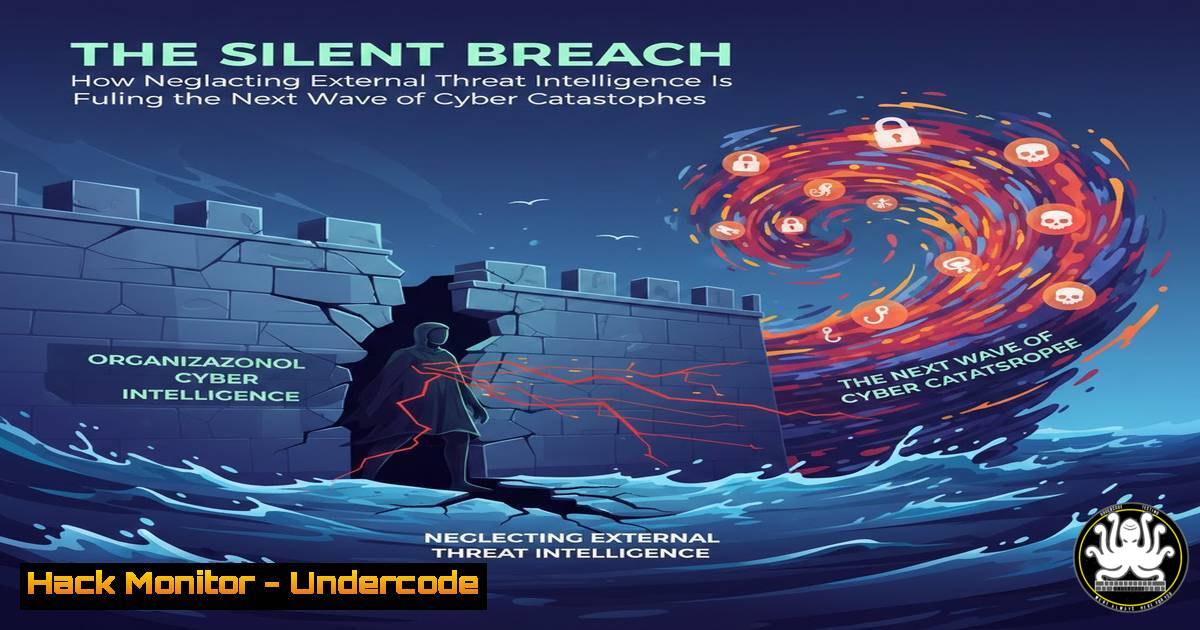
In the high-stakes arena of cybersecurity, an organization’s defense is perilously tied to the competency and honesty of its internal team. This vulnerability is exacerbated by a systemic undervaluation of external, specialized threat intelligence, often dismissed as a non-essential cost rather than a critical investment. This article deconstructs the dangerous culture of internal cover-ups and negligence, providing a technical blueprint for integrating professional threat intelligence and attack surface management (ASM) into a resilient security posture.
Learning Objectives:
- Understand the critical role of external Threat Intelligence and Attack Surface Management (ASM) in identifying blind spots.
- Learn practical steps to discover and monitor external assets and DNS vulnerabilities using open-source intelligence (OSINT) and commercial tools.
- Implement technical controls and auditing processes to mitigate insider risk and validate internal security reporting.
You Should Know:
- Mapping Your Digital Footprint: The First Step to Visibility
Before you can defend what you don’t know about, you must discover it. External Threat Intelligence begins with continuous attack surface discovery. This involves identifying all internet-facing assets—servers, cloud instances, APIs, subdomains, and even forgotten shadow IT—that belong to your organization.
Step-by-step guide:
- Subdomain Enumeration: Use tools like `amass` or `subfinder` to discover subdomains.
Using Amass for passive enumeration
amass enum -passive -d example.com -o subdomains.txt
- Asset Discovery with Shodan: Leverage Shodan CLI to find devices, open ports, and services associated with your IP ranges.
Install Shodan CLI: pip install shodan
shodan init YOUR_API_KEY
shodan search --fields ip_str,port,org,hostname net:192.168.0.0/16
- Certificate Transparency Logs: Scrape logs (via crt.sh) to find domains/subdomains issued SSL certificates.
-- Query crt.sh via PostgreSQL interface (simulated)
SELECT DISTINCT name_value FROM certificate_identity WHERE name_value LIKE '%.example.com';
- Synthesize Data: Correlate findings into an asset inventory. Tools like `spiderfoot` can automate OSINT gathering from dozens of sources.
2. Unearthing DNS Vulnerabilities and Misconfigurations
DNS is a foundational yet often overlooked protocol. Misconfigurations like dangling DNS records (pointing to deprovisioned cloud resources), outdated glue records, or overly permissive zone transfers can be easy entry points for attackers.
Step-by-step guide:
- Check for Zone Transfer (AXFR) Vulnerabilities: Test if your DNS servers allow unauthorized zone transfers.
Using dig on Linux/macOS
dig axfr @ns1.example.com example.com
If this returns a list of all records, the server is misconfigured.
- Detect Dangling Records: Use a script to resolve all discovered DNS records and check for common “dangling” endpoints (e.g., AWS S3 buckets, Azure App Services that no longer exist).
Simple loop to resolve and check HTTP status
for sub in $(cat subdomains.txt); do
ip=$(dig +short $sub);
echo "$sub -> $ip";
curl -s -I http://$sub | head -n 1;
done
- Analyze SPF, DKIM, DMARC (Email Security): Prevent email spoofing.
dig txt example.com | grep -E "spf1|dkim|dmarc"
3. Consuming and Actioning External Threat Intelligence Feeds
Raw data is not intelligence. Intelligence is contextual, timely, and actionable. This involves integrating IoCs (Indicators of Compromise) into your security stack.
Step-by-step guide:
- Select Feeds: Choose feeds relevant to your industry (e.g., financial sector threat feeds, ransomware group IoCs).
- Automate Ingestion with MISP: Use the Malware Information Sharing Platform (MISP) to ingest, correlate, and share threat data.
Example using MISP's API to add a network IoC curl -H "Authorization: YOUR_API_KEY" -H "Accept: application/json" \ -H "Content-Type: application/json" \ -X POST --data '{"Event":{"distribution":"1","threat_level_id":"1","info":"New C2 Server"},"Attribute":[{"type":"ip-dst","value":"94.127.85.71"}]}' \ https://your-misp-instance.com/events/add - Block with Perimeter Controls: Integrate curated IoC lists into firewalls (e.g., Palo Alto Networks Threat Prevention) or intrusion prevention systems (IPS). Use SIEM rules (e.g., Splunk, Sigma rules) to alert on internal traffic to known malicious IPs.
4. Hardening APIs: The Invisible Attack Surface
APIs power modern applications but are frequently poorly documented and weakly protected. They are prime targets for automated attacks.
Step-by-step guide:
- Discover APIs: Use tools like `katana` or `gau` to find API endpoints from JS files and historical data.
gau example.com | grep -E "api|v[0-9]" | sort -u
2. Test for Common Vulnerabilities:
Broken Object Level Authorization (BOLA): Manually test `GET /api/users/{id}` by incrementing the `id` parameter.
Excessive Data Exposure: Inspect API responses for unnecessary sensitive fields.
Use OWASP ZAP or Burp Suite: Automate API security scanning by importing OpenAPI/Swagger specs.
3. Implement Robust Auth: Use short-lived JWT tokens, validate scopes strictly, and apply rate limiting (e.g., via NGINX).
 NGINX rate limiting example for an API zone
http {
limit_req_zone $binary_remote_addr zone=api:10m rate=10r/s;
server {
location /api/ {
limit_req zone=api burst=20 nodelay;
proxy_pass http://api_backend;
}
}
}
5. Mitigating Insider Risk Through Technical Auditing
The post hints at insider risk and obscured negligence. Technical controls must provide immutable logs and detect policy violations.
Step-by-step guide:
- Enable Comprehensive Logging: Ensure all admin actions on critical systems (AD, cloud consoles, firewalls) are logged to a centralized, immutable SIEM.
- Implement Change Control: Use tools like `Tripwire` (Linux) or Windows Security Auditing to detect unauthorized file changes.
Initialize Tripwire policy and database
sudo twadmin --create-polfile /etc/tripwire/twpol.txt
sudo tripwire --init
Later, check for changes
sudo tripwire --check
- Conduct Privileged Access Reviews: Script the audit of AD group memberships (e.g., “Domain Admins”) and cloud IAM roles weekly.
PowerShell to get Domain Admins members
Get-ADGroupMember -Identity "Domain Admins" | Select-Object name, SamAccountName
- Deploy User and Entity Behavior Analytics (UEBA): Use ML-based tools to baseline normal behavior and flag anomalies (e.g., a sysadmin accessing sensitive data at 3 AM from an unusual location).
What Undercode Say:
- Key Takeaway 1: The Cost of “Free” Intelligence is Catastrophic Breach. Treating external, specialized threat intelligence as a discretionary expense is a fundamental strategic error. It is the equivalent of turning off radar because you trust the deck crew’s eyesight in a storm. The ROI is measured in breaches prevented, not dollars saved.
- Key Takeaway 2: Opacity is the Enemy of Security. A culture that obscures mistakes or neglect for fear of blame creates the perfect conditions for attackers to dwell undetected for months. Technical transparency—through automated asset discovery, immutable logs, and external validation—is the only antidote to insider negligence and risk.
Prediction:
The convergence of increasing attack surface complexity (IoT, hybrid cloud, APIs) and the rising sophistication of threat actors will force a market correction. Organizations clinging to an insular, “trust-only-insiders” security model will face increasingly public and devastating breaches. The future belongs to security programs that seamlessly blend internal expertise with automated, continuous external threat intelligence, creating a transparent, auditable, and resilient defense loop. AI will play a pivotal role in correlating internal telemetry with global threat feeds to predict and preempt attacks, making the integration of paid, high-fidelity external intelligence not just valuable, but non-negotiable for survival.
▶️ Related Video (76% Match):
🎯Let’s Practice For Free:
IT/Security Reporter URL:
Reported By: Andy Jenkinson – Hackers Feeds
Extra Hub: Undercode MoN
Basic Verification: Pass ✅


