Listen to this Post
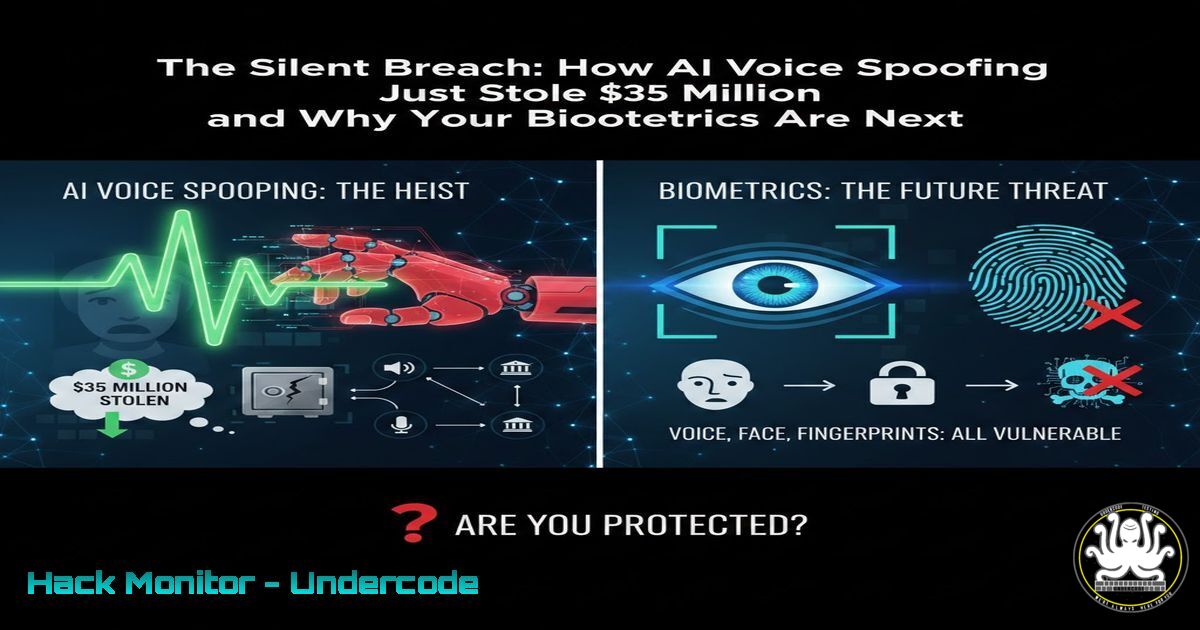
Introduction:
A deepfake audio attack successfully impersonated a corporate executive, tricking a UK-based energy firm into transferring $35 million to fraudulent accounts. This sophisticated social engineering hack bypassed multi-factor authentication by exploiting the inherent trust we place in voice verification, signaling a catastrophic shift in social engineering tactics where artificial intelligence is the primary weapon.
Learning Objectives:
- Understand the technical mechanics of modern AI voice spoofing attacks.
- Implement detection and mitigation strategies against audio deepfakes.
- Develop new corporate policies for verifying financial transactions in the age of generative AI.
You Should Know:
1. How AI Voice Cloning Tools Work
The core of this attack leverages publicly available AI voice generation platforms. Tools like ElevenLabs and others use deep learning models that can create a high-fidelity vocal clone from a short, publicly available audio sample—often sourced from company webinar recordings, YouTube interviews, or social media videos.
Step‑by‑step guide explaining what this does and how to use it.
Step 1: Data Harvesting. Attackers scour the internet for audio of the target executive. A one-minute clip is often sufficient.
Step 2: Model Training. The audio sample is uploaded to a cloning service. The AI model analyzes timbre, pitch, cadence, and speech patterns.
Step 3: Script Generation. The attacker writes a script designed for the social engineering pretext (e.g., “This is an urgent, confidential wire transfer.”).
Step 4: Audio Synthesis. The AI tool generates the spoken script in the cloned voice, producing a file that is indistinguishable from the real person to the human ear.
2. The Anatomy of the Vishing Attack Chain
This was not a simple prank call. It was a multi-vector vishing (voice phishing) operation integrated with other intelligence-gathering techniques.
Step‑by‑step guide explaining what this does and how to use it.
Step 1: Reconnaissance. Identify the target company and key executives (CEO, CFO) using LinkedIn and corporate websites.
Step 2: Voiceprint Harvesting. Locate and download audio/video of the target as described in the previous section.
Step 3: Infrastructure Setup. Create spoofed phone numbers that appear to come from corporate headquarters.
Step 4: The Orchestrated Call. The attacker calls a junior financial officer using the spoofed number and the cloned voice. The pretext involves extreme urgency and confidentiality, pressuring the employee to bypass standard verification protocols.
Step 5: The Fulfillment. Instructions for the wire transfer to a “pre-vetted” (but fraudulent) account are provided and followed.
3. Detecting Audio Deepfakes: A Technical Deep Dive
While convincing to humans, AI-generated audio often contains subtle digital artifacts that can be detected with the right tools.
Step‑by‑step guide explaining what this does and how to use it.
Step 1: Acquire a Sample. Record the suspicious call if possible (ensure local laws permit one-party consent recording).
Step 2: Analyze with Open-Source Tools. Use tools like `deepfake_audio_detector` or audiostamp.
Linux Command Example (using SoX for preliminary analysis):
 Install SoX
sudo apt-get install sox
 Generate a spectrogram of the audio file to visually inspect for inconsistencies
sox suspected_call.wav -n spectrogram -o analysis.png
Analysis: Look for unusual banding, a lack of background noise, or perfectly consistent vocal harmonics, which can be indicators of synthesis.
Step 3: Leverage Enterprise Solutions. Deploy commercial solutions from vendors like Pindrop or Respeecher that use proprietary models to detect AI-generated content.
4. Mitigating the Threat: Hardening Your Verification Protocols
Technology alone cannot solve this problem. A robust, process-oriented defense is required.
Step‑by‑step guide explaining what this does and how to use it.
Step 1: Implement a Multi-Channel Verification Mandate. Any financial or sensitive instruction received via one channel (e.g., phone) must be verified via a separate, pre-established channel (e.g., a secure company messaging app like Signal or a verified internal video call).
Step 2: Establish Code Words. Create dynamic, time-sensitive code words for high-stakes transactions that are communicated separately.
Step 3: Enforce a “Double-Verification” Rule. Require two authorized individuals from different departments to approve any transaction above a certain threshold.
Step 4: Conduct Social Engineering Drills. Regularly test employees with simulated vishing attacks to build resilience.
- The API Security Angle: Securing AI Tools Themselves
The very APIs used to create these deepfakes can become a vulnerability if integrated into your own systems without proper safeguards.
Step‑by‑step guide explaining what this does and how to use it.
Step 1: Audit API Usage. Inventory all third-party AI and machine learning APIs used by your development teams.
Step 2: Implement Robust API Security.
Use an API Gateway to enforce rate limiting, query depth limiting, and payload size restrictions.
Example WAF Rule (Pseudocode):
IF http.request.uri CONTAINS "/v1/speech-synthesis"
AND http.request.body SIZE > 1MB
THEN BLOCK
Mandate strong API key management with rotation policies and never hardcode keys in application source code.
What Undercode Say:
- The End of “Voiceprint” as Secure Authentication. This incident proves that voice biometrics alone are no longer a reliable single factor for authentication. The era of relying on any single biometric modality is over.
- Process Trumps Technology in Social Engineering Defense. The most sophisticated AI detection tool is useless if a human is pressured into bypassing it. Security awareness and immutable processes are the final line of defense.
This $35 million heist is not an isolated event but a blueprint. It demonstrates a commoditization of advanced attack techniques; what was once a nation-state capability is now accessible to well-funded criminal groups. The attack’s success hinges on manipulating human psychology—urgency and authority—proving that the human firewall remains the most critical, and often the most vulnerable, component. Organizations must now operate on a “zero-trust” principle for all verbal communications, especially those initiating transactions.
Prediction:
The success of this audio-only deepfake attack will inevitably lead to the proliferation of real-time video deepfake vishing. We predict that within 18-24 months, attackers will combine cloned voices with real-time simulated video feeds on a standard Zoom or Teams call, making detection nearly impossible without specialized, real-time analysis software. This will force a multi-billion dollar market for live deepfake detection and drive the widespread adoption of blockchain-verifiable digital identities for high-value executive communications and transactions.
🎯Let’s Practice For Free:
IT/Security Reporter URL:
Reported By: Andy Jenkinson – Hackers Feeds
Extra Hub: Undercode MoN
Basic Verification: Pass ✅


