Listen to this Post
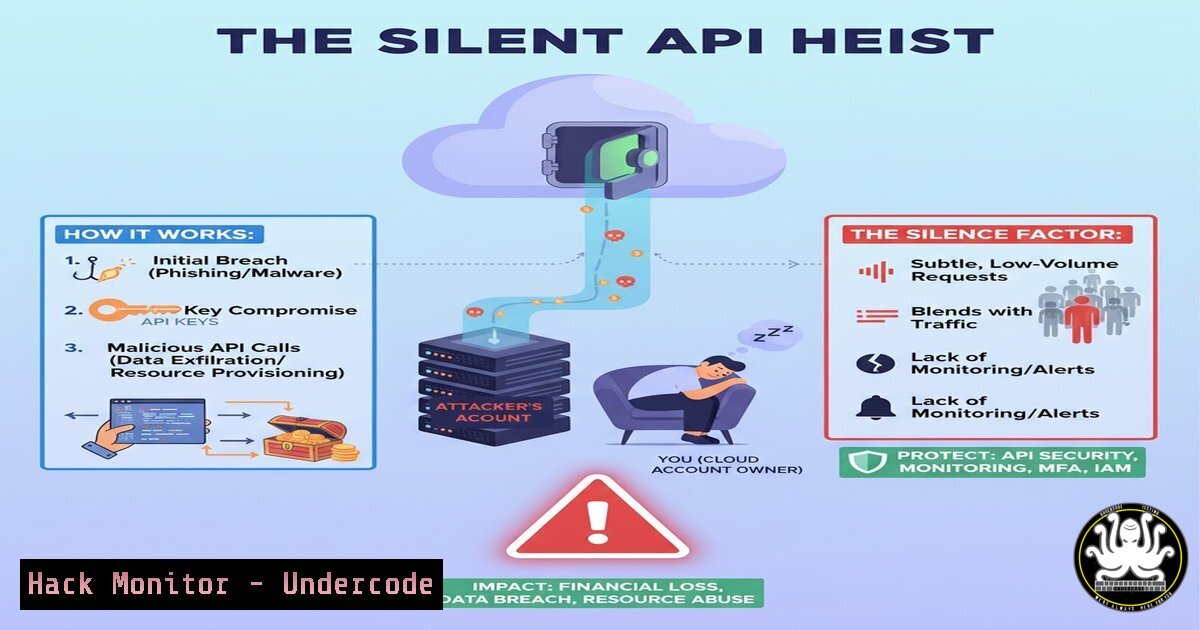
Introduction:
Application Programming Interfaces (APIs) have become the silent backbone of modern cloud infrastructure and applications, but they also represent a massive, often overlooked attack surface. A single misconfigured API endpoint can serve as an open door for attackers to exfiltrate terabytes of sensitive data, mine cryptocurrency at your expense, or even take complete control of your cloud environment. Understanding these vulnerabilities is no longer optional for any organization operating in a digital landscape.
Learning Objectives:
- Identify common API security misconfigurations in cloud environments like AWS and Azure.
- Implement robust authentication and authorization checks for your API endpoints.
- Utilize open-source tools to proactively scan and test your APIs for critical vulnerabilities.
You Should Know:
1. The Dangers of Over-Permissive CORS Policies
A misconfigured Cross-Origin Resource Sharing (CORS) policy is one of the most common ways APIs are compromised. CORS is a mechanism that allows restricted resources on a web page to be requested from another domain outside the domain from which the first resource was served. When configured incorrectly, it can permit any website to make authenticated requests to your API, leading to data theft.
Step-by-step guide explaining what this does and how to use it.
An attacker can create a malicious website that uses JavaScript to send a request to your vulnerable API. If the user visiting the malicious site is authenticated with your service, their browser will automatically include session cookies or tokens in the request to your API. The over-permissive CORS policy will allow the response, containing sensitive data, to be read by the malicious site.
How to Test Your CORS Policy:
You can use a simple `curl` command to test your API’s CORS headers.
 Check for the 'Access-Control-Allow-Origin' header
curl -H "Origin: https://malicious-website.com" -I https://your-api-endpoint.com/data

If the response includes: Access-Control-Allow-Origin: https://malicious-website.com
 Your CORS policy is dangerously permissive.
Mitigation:
Always explicitly define allowed origins in your API configuration. Do not use wildcards (“) for internal or authenticated endpoints.
2. Exploiting Broken Object Level Authorization (BOLA)
Broken Object Level Authorization (BOLA) is the number one API security risk according to OWASP. It occurs when an API endpoint exposes an object identifier without verifying that the authenticated user has permission to access the specific object. Attackers can easily manipulate IDs (e.g., in the URL like /api/users/123) to access another user’s data.
Step-by-step guide explaining what this does and how to use it.
An API endpoint `GET /api/v1/orders/100` returns a user’s order details. An attacker, who is a user of the system, simply changes the ID to GET /api/v1/orders/101. If the API does not check that the currently logged-in user owns order 101, it will return the data, resulting in a massive data breach.
How to Test for BOLA:
Using a tool like Burp Suite or even a browser’s developer tools, you can test for BOLA.
1. Log into an application with a test user account (e.g., userA).
2. Find an API call that fetches specific data, like GET /api/accounts/userA/invoices.
3. Change the identifier in the request from `userA` to `userB` and resend the request.
4. If you receive userB‘s data, the vulnerability is confirmed.
Mitigation:
Implement authorization checks that compare the user ID from the session token or JWT with the owner of the requested object. Never rely on the client to provide their own identity for object access.
3. Server-Side Request Forgery (SSRF) via Webhooks
APIs that allow users to configure webhooks (URLs that the API will call to send event data) are particularly susceptible to Server-Side Request Forgery (SSRF). An attacker can supply an internal URL instead of a legitimate external one, forcing your API server to make requests to internal, private services that were never meant to be exposed.
Step-by-step guide explaining what this does and how to use it.
A cloud metadata service (like AWS’s 169.254.169.254) provides credentials for the cloud instance. An attacker sets a webhook URL to `http://169.254.169.254/latest/meta-data/iam/security-credentials/`. The vulnerable API server, when triggered, makes a request to this internal address and returns the cloud access keys to the attacker.
How to Test for SSRF in Webhooks:
Use a testing tool to intercept the “add webhook” API call.
 Example of a malicious webhook payload
{
"webhook_name": "My Service",
"webhook_url": "http://169.254.169.254/latest/meta-data/"
}
If the API responds with internal data, it is vulnerable.
Mitigation:
Validate and sanitize all user-supplied URLs.
Implement an allowlist of permitted domains for webhooks.
Blocklist internal IP address ranges (e.g., 127.0.0.1, 10.0.0.0/8, 169.254.169.254).
Configure your network to deny egress traffic from application servers to the internal metadata service.
- The Dangers of Excessive Data Exposure in API Responses
Many APIs are designed to return a full data object from the backend database, relying on the frontend application to filter out what the user should see. This is a critical flaw. Attackers can simply bypass the frontend and call the API directly to receive a full data dump, including sensitive fields like passwords (hashed or otherwise), internal IDs, and personal user information.
Step-by-step guide explaining what this does and how to use it.
A mobile app displays a user profile. The frontend calls GET /api/users/me. The backend returns a full JSON user object, but the mobile app only displays the name and email. An attacker intercepting the traffic or directly querying the API sees all the fields.
Example of a Bad Response:
{
"id": 45123,
"username": "johndoe",
"email": "[email protected]",
"password_hash": "$2y$10$...",
"social_security_number": "123-45-6789",
"internal_notes": "This user is a VIP client."
}
Mitigation:
Adhere to the principle of least privilege. Never return all object properties by default. Use Data Transfer Objects (DTOs) or serializers to explicitly define which fields should be exposed in the API response for each endpoint.
5. Hardening Your API Gateway Configuration
The API Gateway is the front door to your microservices and is a critical control point for security. A weak gateway configuration can negate all other security measures implemented downstream.
Step-by-step guide explaining what this does and how to use it.
A properly configured API gateway should enforce rate limiting, validate JWT tokens, and perform request/response transformation. For example, in AWS API Gateway, you can use a Usage Plan to throttle requests and an Authorizer to validate tokens.
Example AWS CLI command to create a usage plan:
aws apigateway create-usage-plan \
--name "MyApiUsagePlan" \
--description "Plan to throttle and quota API requests" \
--api-stages apiId=YOUR_API_ID,stage=prod \
--throttle burstLimit=100,rateLimit=50 \
--quota limit=1000,period=DAY
Key Hardening Steps:
- Enable Rate Limiting: Prevent brute-force and Denial-of-Service (DoS) attacks.
- Validate Schemas: Enforce request body validation against a JSON schema to block malformed inputs.
- Use Authorizers: Offload JWT or API key validation to the gateway itself.
- Log All Traffic: Ensure all requests and responses are logged to a secure, centralized service like CloudWatch or SIEM for audit and incident response.
What Undercode Say:
- The most dangerous vulnerabilities are often the simplest. BOLA and excessive data exposure require no advanced tools to exploit, just a curious mind and a browser’s dev tools.
- Security cannot be delegated to the frontend. The backend API must be the ultimate source of truth and enforcement for authorization and data filtering.
Analysis:
The pervasive nature of these API vulnerabilities stems from a development culture that prioritizes feature velocity over security-by-design. APIs are often built with the assumption that the consumer—the web or mobile app—will behave correctly. This trust-based model is fundamentally broken in a hostile environment like the internet. The shift-left security movement is crucial; developers must be equipped with the knowledge and tools to identify these issues during the design and coding phases, not after a penetration test or, worse, a public breach. Automated security testing integrated into the CI/CD pipeline for APIs is no longer a luxury but a necessity for modern software development.
Prediction:
The frequency and scale of API-related breaches will continue to accelerate, surpassing traditional attack vectors like SQL injection. As organizations deepen their reliance on microservices and inter-application communication, the API attack surface will expand exponentially. The next frontier will be the exploitation of “shadow APIs”—endpoints that are undocumented, deprecated, or forgotten but still accessible. Proactive, continuous API discovery and testing will become a standard line item in cybersecurity budgets, and a failure to do so will result in catastrophic data loss and compliance failures.
🎯Let’s Practice For Free:
IT/Security Reporter URL:
Reported By: Deepak Saini – Hackers Feeds
Extra Hub: Undercode MoN
Basic Verification: Pass ✅


