Listen to this Post
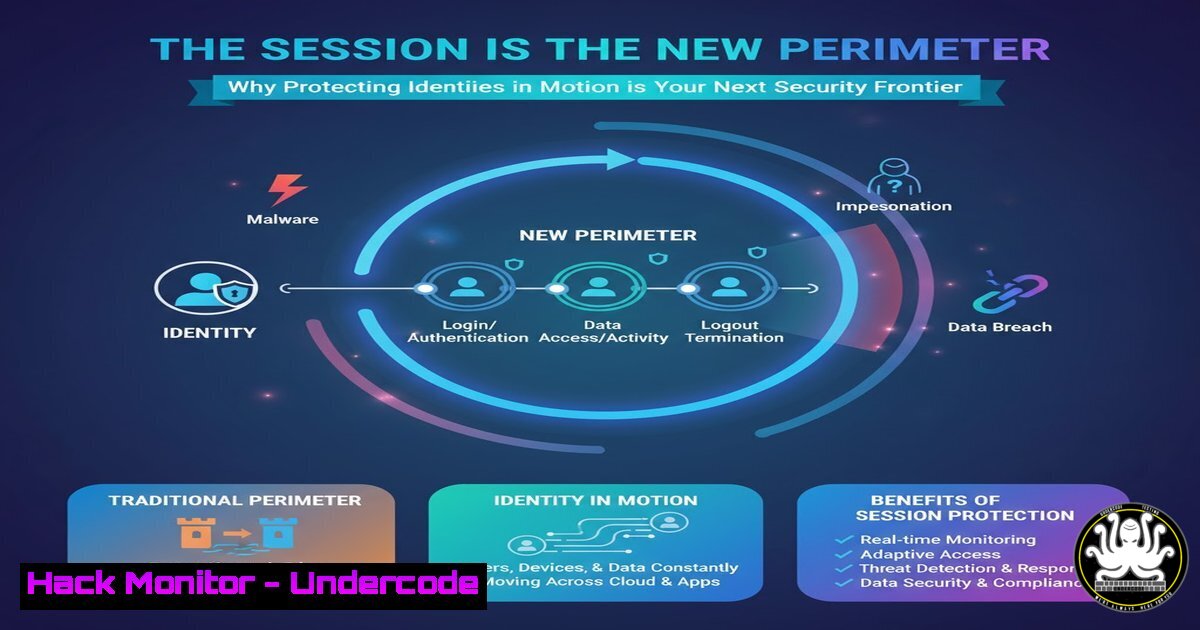
Introduction:
Traditional cybersecurity has focused heavily on protecting data at rest with encryption and data in transit with secure protocols, while overlooking a critical third pillar: identities in motion. Active authentication artifacts like Kerberos tickets, OAuth tokens, and browser cookies represent a fully realized access state, creating a dangerous blind spot. This article deconstructs the identity attack surface, moving beyond static credential protection to the dynamic world of active sessions where attackers operate with impunity.
Learning Objectives:
- Differentiate between the attack surfaces of identities at rest versus identities in motion.
- Identify and analyze common authentication artifacts present in active sessions.
- Implement practical commands and techniques to discover, harden, and monitor session-based identity threats.
You Should Know:
1. The Anatomy of an Identity Session
The core distinction lies between potential and realized access. Identities at rest—such as stored password hashes, SSH keys, or cloud role policies—represent potential access that still requires bypassing protections like MFA. Identities in motion are the living proof of successful authentication, the session tokens that systems accept as valid access. An attacker who compromises a machine with an active administrative session inherits that entire trust relationship, rendering all at-rest protections moot.
Step‑by‑step guide explaining what this does and how to use it.
Step 1: Understand Session Persistence. Sessions persist in memory, browser caches, and dedicated credential stores (like the Windows LSASS process or the macOS Keychain). They can remain valid for hours, days, or even weeks.
Step 2: Conceptualize Trust Inheritance. When an application runs under a user’s context, it inherits the user’s sessions and tokens. A compromised low-privilege process can sometimes be used to “borrow” a high-privilege session token from the same machine.
2. Kerberos: The Double-Edged Sword of Enterprise Auth
Kerberos is the primary authentication protocol in Windows Active Directory environments. While robust, its tickets are a prime target. A Ticket-Granting-Ticket (TGT) is a golden session artifact; possessing it allows an attacker to request access to any service the user is authorized for, without needing their password.
Step‑by‑step guide explaining what this does and how to use it.
Step 1: Enumerate Kerberos Tickets on a Host.
On a Linux system joined to AD (via SSSD or similar), or using tools on Windows, you can list tickets.
 On a Linux system with Kerberos tools
klist
This command lists the Kerberos tickets currently cached for the user. On Windows, the built-in `klist` command serves the same purpose.
Step 2: Extract and Abuse Kerberos Tickets (Red Team).
Tools like Mimikatz on Windows or `ticketer` from Impacket can be used to export tickets from memory. This is a classic “pass-the-ticket” attack.
 Using Impacket's ticketer to create a silver ticket (requires prior compromise)
ticketer.py -nthash <target_service_hash> -domain-sid <domain_sid> -spn cifs/target-server.domain.com -domain domain.com -user-id 500 fakeuser
Step 3: Mitigate Kerberos Attacks (Blue Team).
Implement strong controls like Kerberos Armoring (FAST), monitor for anomalous ticket requests (e.g., a user requesting tickets for every service in a short period), and enforce Windows Defender Credential Guard to isolate and protect tickets in a hypervisor-based container.
3. OAuth Tokens and Cloud Session Hijacking
In modern cloud and SaaS environments, OAuth access tokens and refresh tokens are the new Kerberos. These tokens grant applications access to user data without sharing passwords. A stolen refresh token can be used to generate new access tokens indefinitely, maintaining persistence.
Step‑by‑step guide explaining what this does and how to use it.
Step 1: Locate Browser and Application Tokens.
Tokens are stored in browser local storage, databases, and configuration files. For example, the Azure CLI stores its refresh tokens in an `msal_token_cache.json` file under the user’s home directory.
Step 2: Analyze Token Scope and Permissions.
Use cloud provider CLIs to see what access a token grants.
 Using Azure CLI to get the signed-in user (validates the token)
az ad signed-in-user show
This command uses the active session token to display information about the authenticated identity, revealing its effective permissions.
Step 3: Harden OAuth Session Security.
Enforce Conditional Access Policies that require compliant devices and trusted locations. Shorten token lifetimes and mandate frequent re-authentication for high-privilege actions. Continuously monitor cloud audit logs for token usage from unexpected IPs or unfamiliar user agents.
- The Primary Refresh Token (PRT): Your Modern Windows Identity
In Azure Active Directory and hybrid environments, the PRT is a special refresh token used for Single Sign-On (SSO) on Windows 10/11 devices. It’s bound to the device and user, but if an attacker gains code execution on the device, they can leverage the PRT to access cloud resources.
Step‑by‑step guide explaining what this does and how to use it.
Step 1: Understand PRT Storage.
The PRT is stored securely and is bound to the device’s Trusted Platform Module (TPM). It is not a file that can be simply copied.
Step 2: Abuse the PRT (Attack Perspective).
Tools like `ROADtoken` or Mimikatz can be used on a compromised machine to request new access tokens for cloud applications (like Microsoft Graph) using the existing PRT, without needing the user’s password or MFA.
Step 3: Defend the PRT.
Enable and enforce device compliance (Hybrid Azure AD Join or Azure AD Join) as a prerequisite for access. Utilize Microsoft Defender for Identity to detect anomalous token issuance requests. The most effective control is ensuring endpoints are hardened to prevent initial compromise.
5. Browser Cookies: The Web’s Session Workhorse
Browser cookies, especially persistent authentication cookies, are identities in motion for web applications. A stolen session cookie can often be plopped into another browser, granting immediate access to the application as the victim, bypassing login and MFA entirely.
Step‑by‑step guide explaining what this does and how to use it.
Step 1: Extract Cookies (For Penetration Testing).
Using browser developer tools (F12), an attacker with physical or remote access can copy session cookies. Extensions or malware can also be used to harvest these automatically.
Step 2: Replay a Stolen Cookie.
Use a tool like `curl` to impersonate the user.
 Replay a stolen cookie to access a protected resource
curl -H "Cookie: session=<stolen_cookie_value>" https://target-app.com/dashboard
Step 3: Protect Browser Sessions.
Implement strict `SameSite` cookie attributes (SameSite=Lax or SameSite=Strict) to mitigate Cross-Site Request Forgery (CSRF) and some cross-site leakage. Use short session timeouts and monitor for concurrent logins from geographically impossible locations. Educate users to close browsers when not in use.
6. Mapping Reachability: The Lateral Movement Kill Chain
“Mapping reachability” means understanding which systems and services an active identity session can access from its current location. This is the attacker’s roadmap for lateral movement. An identity with an active session on a jump server might have reachability to critical domain controllers or cloud metadata endpoints.
Step‑by‑step guide explaining what this does and how to use it.
Step 1: Enumerate Network Reachability from a Compromised Host.
From a command line, an attacker maps the network.
 Basic port scan to find live hosts and services (Linux/Windows with nmap)
nmap -sn 10.0.1.0/24  Ping sweep
nmap -sS -sV 10.0.1.100-200  TCP SYN scan with service versioning
Step 2: Check for Cloud Metadata API Access.
On a compromised cloud instance, attackers query the internal metadata service to steal credentials for the attached instance role.
 Query the AWS IMDSv2 (Interaction requires a token first)
TOKEN=<code>curl -X PUT "http://169.254.169.254/latest/api/token" -H "X-aws-ec2-metadata-token-ttl-seconds: 21600"</code>
curl -H "X-aws-ec2-metadata-token: $TOKEN" http://169.254.169.254/latest/meta-data/iam/security-credentials/
Step 3: Implement Micro-Segmentation.
Defend against this by deploying micro-segmentation. Use host-based firewalls (e.g., iptables, `ufw` on Linux; Windows Firewall with Advanced Security) and network security groups (NSGs) in the cloud to enforce least privilege, ensuring that a session on one host cannot arbitrarily connect to services on another unless explicitly required.
What Undercode Say:
- Session Artifacts are Crown Jewels. Treat active session tokens with the same level of protection as you do cleartext passwords. Their compromise is often more devastating.
- Identity State is the New Network Perimeter. The boundary of your defense is no longer the network firewall; it is the dynamic collection of active identity sessions across your hybrid estate. Security monitoring must evolve to track trust inheritance and session behavior, not just login events.
The analysis presented by Atkinson highlights a fundamental architectural gap. Security investments have been disproportionately focused on the initial gate (login) while leaving the palace walls unguarded. This creates a scenario where a single endpoint compromise can lead to catastrophic domain or cloud takeover, as attackers freely ride on legitimate, authenticated sessions. The entire industry’s pivot towards Zero Trust is a direct response to this exact problem, emphasizing continuous verification of sessions rather than one-time authentication.
Prediction:
The next five years will see a massive convergence of Identity Threat Detection and Response (ITDR) and Extended Detection and Response (XDR). Security platforms will increasingly focus on correlating endpoint process execution with cloud token usage and network traffic from authenticated identities to build a real-time “identity graph.” This graph will be used to automatically detect and terminate suspicious sessions, moving from static Access Control Lists (ACLs) to dynamic, behavior-aware session management. Furthermore, we will see the rise of hardware-backed, continuously rotating session tokens that are intrinsically tied to a device’s secure enclave, making theft and replay exponentially more difficult for attackers.
🎯Let’s Practice For Free:
IT/Security Reporter URL:
Reported By: Jaredcatkinson We – Hackers Feeds
Extra Hub: Undercode MoN
Basic Verification: Pass ✅


