Listen to this Post
Introduction:
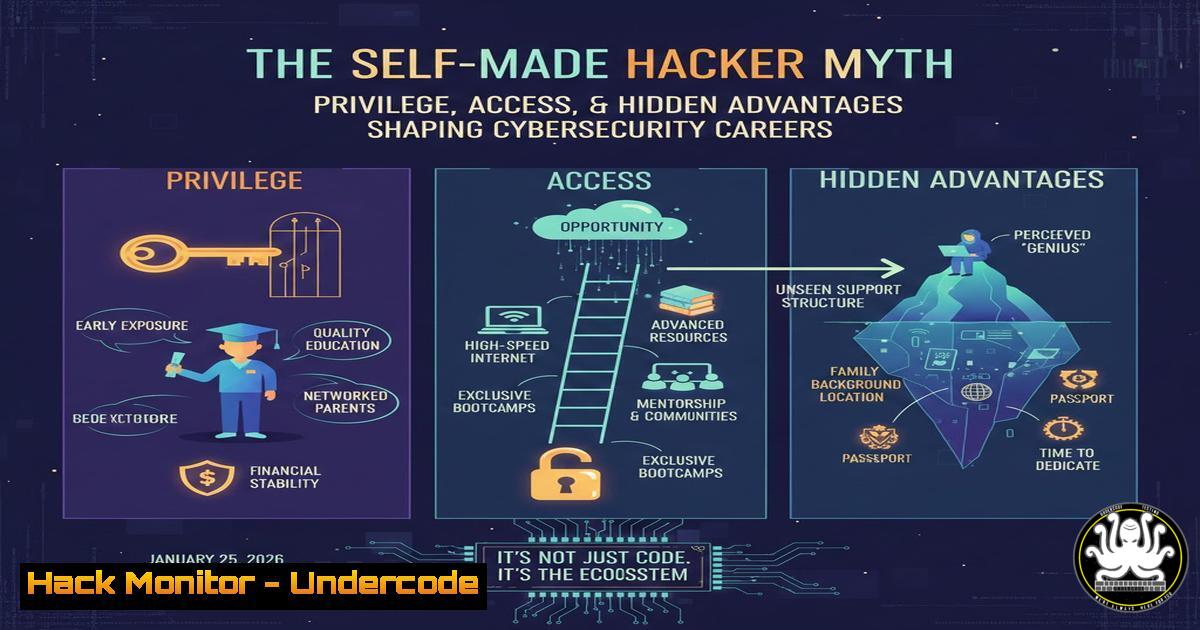
The romanticized notion of the “self-made” expert is pervasive in cybersecurity, often painting a picture of a lone genius hacking in a basement. This narrative obscures the critical roles of privileged access to tools, elite training, mentorship networks, and financial safety nets that disproportionately enable success. Recognizing these structural factors is not about diminishing hard work but about creating a more equitable and effective security landscape by demystifying the pathways to expertise.
Learning Objectives:
- Deconstruct the “self-taught” myth by identifying the tangible resources, from expensive software to lab environments, that accelerate skill acquisition.
- Implement practical, accessible methods to simulate advanced security setups using open-source tools and controlled environments.
- Develop a career roadmap that acknowledges systemic barriers while leveraging community-driven, low-cost upskilling opportunities.
You Should Know:
- The Illusion of the Self-Taught Pentester: Access to Tools is Privilege
The narrative often ignores that professional-grade penetration testing requires access to expensive suites like Burp Suite Professional, Cobalt Strike, or proprietary OSINT platforms. This creates an uneven playing field.
Step‑by‑step guide: Building a Professional Testing Lab with Free Tools
Objective: Create a fully functional, isolated penetration testing lab at zero cost.
Step 1: Hypervisor Setup. Install a free Type 2 hypervisor. For Windows, use VMware Workstation Player. For Linux, use VirtualBox.
`sudo apt update && sudo apt install virtualbox virtualbox-ext-pack` Ubuntu/Debian
Step 2: Target Environment. Download deliberately vulnerable machines from VulnHub or the OWASP Broken Web Applications Project. Import the `.ova` files into your hypervisor.
Step 3: Attacker Machine. Install Kali Linux or Parrot OS as a virtual machine. This provides hundreds of free security tools.
`sudo apt install kali-linux-default` To add all default Kali tools on a Debian-based system
Step 4: Network Configuration. Set your hypervisor network to “Host-Only” or “NAT Network.” This isolates your lab from your production network while allowing the attacker VM to see the targets.
Step 5: Practice. Use the free OWASP ZAP proxy instead of Burp Pro. For Cobalt Strike alternatives, explore the Metasploit Framework (msfconsole) for exploitation and Covenant or Sliver for command and control simulations.
- The Hidden Curriculum: Elite Education and Mentorship Pipelines
Formal computer science degrees from top-tier institutions or internal mentorship at major tech companies provide insider knowledge on secure architecture and vulnerability research that is rarely documented in public forums.
Step‑by‑step guide: Accessing “Elite” Knowledge Through Open Source
Objective: Leverage publicly available resources to understand advanced offensive and defensive concepts.
Step 1: Follow Core Security Protocols. Study the source code and documentation of major open-source projects to understand security implementation.
`git clone https://github.com/openssl/openssl.git` Study cryptographic implementations
`git clone https://github.com/torvalds/linux.git` Explore kernel security modules
Step 2: Engage with Academic Research. Websites like arXiv.org (Category: Cryptography and Security) publish cutting-edge papers. Implement findings in your lab.
Step 3: Reverse Engineer Patches. Learn why vulnerabilities mattered by analyzing fixes.
`git log -p –grep=”CVE-2023-xxxx”` Search git history for a specific CVE patch in a repository
Step 4: Find a Mentor in Communities. Engage substantively in Discord servers for projects like BloodHound AD, Security Blue Team, or Hack The Box forums. Ask specific, researched questions.
- The Capital Advantage: Safety Nets and Resource Allocation
The ability to take unpaid internships, afford certification exams (e.g., OSCP, GIAC), or dedicate time to capture-the-flag (CTF) competitions often hinges on financial security—a hidden advantage in career progression.
Step‑by‑step guide: Systematically Earning Recognized Credentials on a Budget
Objective: Gain respected certifications and experience without upfront financial investment.
Step 1: Use Free Tier Cloud Credits. AWS, Google Cloud, and Azure offer free tiers or credits for students. Use these to deploy and attack cloud infrastructure legally.
`gcloud config set project [YOUR-FREE-PROJECT]` Set your Google Cloud project
`terraform init` Learn Infrastructure as Code (IaC) security by deploying test environments
Step 2: Pursue Free Certifications. Complete the free Fundamentals certifications from providers like Microsoft (SC-900) or AWS (Cloud Practitioner). Then, tackle performance-based labs from platforms like TryHackMe (free paths) or Hack The Box (starting at ~$10/month).
Step 3: Document Everything. Create a public GitHub portfolio. Write detailed write-ups for every CTF challenge or lab machine you solve. This builds a tangible record of skill for employers.
- Network Effects: The Power of “Who You Know” in Security
Referrals from within a trusted network often bypass competitive hiring processes for sensitive security roles. Breach disclosure groups, private Discord channels, and conference circles act as modern guilds.
Step‑by‑step guide: Building a Professional Security Network from Zero
Objective: Develop a genuine network that provides opportunities and knowledge sharing.
Step 1: Contribute to Open Source. Fix a typo in documentation, submit a bug report, or attempt to fix a minor bug in a security tool. Contribution is the best introduction.
Step 2: Engage on Professional Platforms. Follow and intelligently comment on threads from security researchers on Twitter (X) and LinkedIn. Share your own lab findings or analysis.
Step 3: Present Your Work. Start a technical blog. Give a talk at a local OWASP or B-Sides chapter meeting (often free). Your demonstrable expertise will attract your network.
5. The Reality Check: Simulating Real-World Adversary Techniques
Moving beyond theoretical knowledge requires simulating advanced persistent threat (APT) behaviors, which is resource-intensive. Here’s how to approximate it.
Step‑by‑step guide: Mimicking APT Tradecraft in a Home Lab
Objective: Understand and emulate the post-exploitation kill chain used by sophisticated actors.
Step 1: Establish Persistence. On a compromised Windows VM, create a scheduled task.
`schtasks /create /tn “Backdoor” /tr “C:\shell.exe” /sc minute /mo 1` Windows command
`(crontab -l 2>/dev/null; echo ” /tmp/.backdoor”) | crontab -` Linux cron persistence
Step 2: Lateral Movement. Use Mimikatz (in your isolated lab) to dump credentials and attempt Pass-the-Hash attacks between Windows VMs.
Step 3: Defense Evasion. Practice modifying file timestamps (timestomping) and using living-off-the-land binaries (LOLBAS) like `certutil.exe` or `bitsadmin.exe` for downloads.
`copy /b shell.exe +,,` Windows – alters file timestamp
`touch -r /etc/passwd /tmp/.hidden_shell` Linux – matches timestamps
What Undercode Say:
- Key Takeaway 1: True expertise in cybersecurity is built on a foundation of accessible practice, not innate genius. The barrier is often resource access, not intellectual capacity. By methodically leveraging open-source software, free cloud tiers, and community knowledge, individuals can replicate 80% of a “privileged” learning environment.
- Key Takeaway 2: The industry’s focus on “self-made” stories perpetuates a talent shortage by making the field seem inaccessible. Honest conversations about the structural advantages (tools, networks, capital) that enable success are necessary to diversify and strengthen the global security workforce. The goal is to replace a culture of gatekeeping with one of guided, equitable access.
Analysis: The original post’s critique of the “self-made” narrative translates directly to tech. The infosec community’s ethos of “open sharing” clashes with the reality that high-impact knowledge and opportunities are often gated. This creates systemic inefficiencies, leaving critical systems vulnerable because talented individuals lacking traditional access points never enter the field. Acknowledging this isn’t about assigning blame but about pragmatically removing friction from skill development. The future of security depends on democratizing access to realistic attack simulation environments and mentorship, moving from a culture of mystique to one of transparent, documented craftsmanship.
Prediction:
Within the next five years, the escalating cyber threat landscape will force a systemic shift in how security talent is cultivated. We will see a decline in the fetishization of the “self-taught hacker” in favor of structured, corporate-sponsored apprenticeship programs and government-funded national cyber academies. The proliferation of high-fidelity, low-cost cloud-based cyber ranges will level the technical access playing field. Consequently, hiring will increasingly prioritize demonstrable skills from open-source contributions or performance-based assessments over pedigree, leading to a more diverse, practical, and resilient global defense network.
▶️ Related Video (82% Match):
🎯Let’s Practice For Free:
IT/Security Reporter URL:
Reported By: Anjalirani2 Swipe – Hackers Feeds
Extra Hub: Undercode MoN
Basic Verification: Pass ✅


