
Listen to this Post
Introduction:
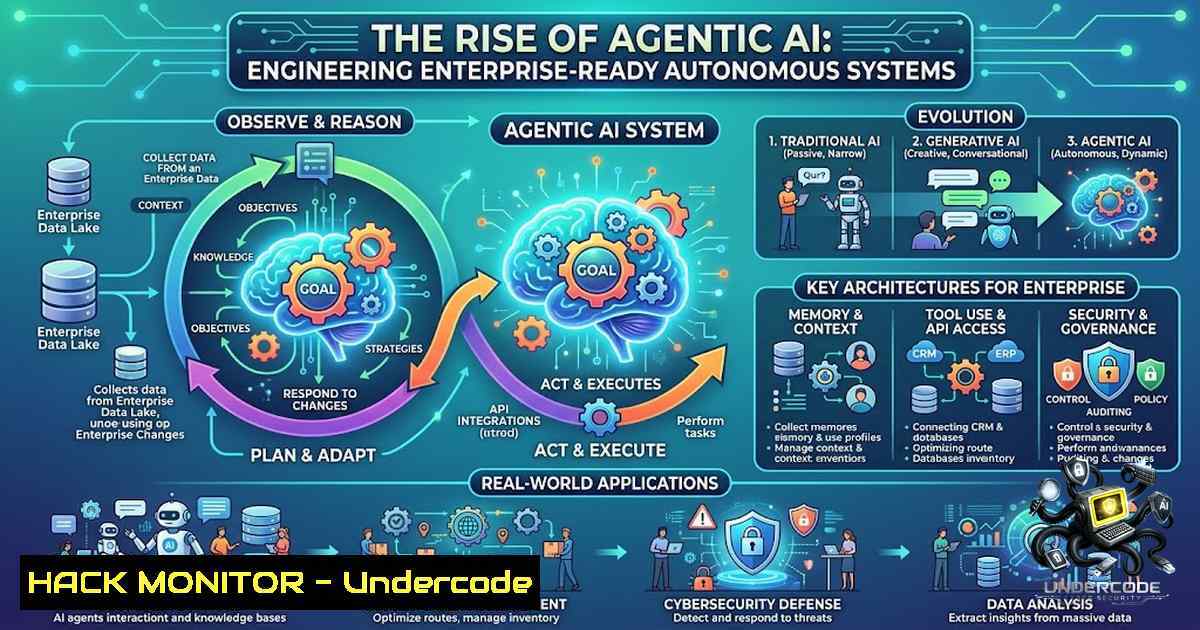
The 2026 PwC ETIC GenAI Hackathon showcased a pivotal shift from experimental AI prototypes to production-grade, autonomous multi-agent architectures. This evolution demands a new cybersecurity and IT paradigm where agentic workflows, dynamic tool routing, and cross-tower collaboration must be secured from the ground up. The event highlighted that the future of enterprise AI lies not just in algorithmic innovation, but in the robust, secure, and scalable engineering of systems that can operate with minimal human intervention.
Learning Objectives & Secrets:
- Objective 1: Master Multi-Agent Orchestration. Understand how to design and deploy autonomous agents that communicate, delegate tasks, and execute complex workflows securely. The secret is implementing robust API gateways and service meshes to control inter-agent communication and prevent unauthorized lateral movement.
- Objective 2 Secret Tips: Secure Dynamic Tool Routing. Learn to implement dynamic tool selection for agents with a Zero-Trust approach. The secret is to use attribute-based access control (ABAC) to dynamically grant permissions based on the agent’s identity, task context, and data sensitivity, rather than static roles.
- Objective 3 Secret Tips: Build for Failure and Observability. The secret to enterprise-grade systems is designing for graceful degradation. Implement comprehensive logging and monitoring at the agent level, using SIEM tools to detect anomalous behavior patterns that could indicate a compromised agent or a data exfiltration attempt.
You Should Know:
1. Hardening the Multi-Agent Communication Layer
The core of any agentic system is the communication between agents, orchestrators, and external APIs. This communication channel is a prime attack vector. To secure it, you must enforce strict authentication and encryption for all inter-service calls.
Step‑by‑step guide explaining what this does and how to use it:
– Step 1: Implement mTLS. Enforce mutual TLS (mTLS) for all agent-to-agent and agent-to-orchestrator communication. This ensures that both the client and server are authenticated, preventing man-in-the-middle attacks.
– Step 2: Deploy a Service Mesh. Use a service mesh like Istio or Linkerd to manage traffic policies, retries, and timeouts. This provides a centralized control plane for security policies.
– Step 3: API Gateway Configuration. Configure an API gateway (e.g., Kong, AWS API Gateway) to act as a single entry point for all external agent interactions.
– Linux Command (using `curl` to test a secured endpoint):
curl -X POST https://your-api-gateway.com/v1/agents/task \
-H "Authorization: Bearer <YOUR_JWT_TOKEN>" \
-H "Content-Type: application/json" \
-d '{"agent_id": "analytics_agent", "task": "generate_report"}'
– Windows Command (using PowerShell):
Invoke-RestMethod -Uri "https://your-api-gateway.com/v1/agents/task" `
-Method Post `
-Headers @{Authorization="Bearer <YOUR_JWT_TOKEN>"; "Content-Type"="application/json"} `
-Body '{"agent_id": "analytics_agent", "task": "generate_report"}'
2. Securing the Agentic AI Supply Chain
Just like software supply chains, AI models and their dependencies can be compromised. A poisoned model or a malicious library in an agent’s environment can lead to catastrophic failures.
Step‑by‑step guide explaining what this does and how to use it:
– Step 1: Implement Model Provenance. Use tools like `snyk` or `trivy` to scan your AI model files and Python dependencies for known vulnerabilities.
– Linux Command (Scanning a Docker image for vulnerabilities):
trivy image your-ai-agent-image:latest --severity HIGH,CRITICAL
– Step 2: Container Image Hardening. Build minimal container images for your agents. Use a non-root user to run the agent process to limit the impact of a potential breach.
– Dockerfile Snippet:
FROM python:3.11-slim-buster
RUN adduser --disabled-password --gecos '' agentuser
USER agentuser
COPY --chown=agentuser:agentuser . /app
WORKDIR /app
CMD ["python", "agent.py"]
– Step 3: Private Model Registry. Store and serve your AI models from a private, secured registry (e.g., Amazon SageMaker Model Registry, Hugging Face Hub with private repos) to prevent unauthorized access and tampering.
3. Auditing and Monitoring Agent Behavior
The “black box” nature of AI agents requires a shift from traditional monitoring to behavioral analytics. You must be able to answer: “What is my agent doing, and is that normal?”
Step‑by‑step guide explaining what this does and how to use it:
– Step 1: Centralized Logging. Aggregate all agent logs (including thought processes, tool calls, and outputs) into a centralized SIEM or logging platform (e.g., ELK Stack, Splunk).
– Step 2: Define Behavioral Baselines. Use AI-based anomaly detection tools to establish baselines for normal agent behavior, such as API call frequency, data volume processed, and decision paths taken.
– Step 3: Alerting on Anomalies. Configure alerts for deviations from the baseline.
– Example Alert Rule (e.g., in Prometheus): Alert if the rate of `agent_task_execution` for a specific agent increases by 300% over 5 minutes, which could indicate a replay attack or a compromised agent.
4. Data Privacy and Confidentiality in Agentic Workflows
Agents will handle sensitive data. Ensuring data privacy is paramount, especially in regulated industries. Techniques like data masking, differential privacy, and secure enclaves are critical.
Step‑by‑step guide explaining what this does and how to use it:
– Step 1: Implement Data Masking. Use SQL-level or application-level masking to redact Personally Identifiable Information (PII) before it is passed to an agent.
– SQL Command Example (Dynamic Data Masking in SQL Server):
ALTER TABLE employees ALTER COLUMN email ADD MASKED WITH (FUNCTION = 'email()');
– Step 2: Encrypt Data at Rest and in Transit. Ensure all data used by agents is encrypted using strong encryption standards (AES-256 for at rest, TLS 1.3 for in transit).
– Step 3: Access Control Lists (ACLs). Define fine-grained ACLs for each agent, specifying exactly which datasets and databases it has permission to query. The principle of least privilege is non-1egotiable.
5. Disaster Recovery and Resilience for AI Agents
An enterprise-ready system must be resilient. A failure in the core orchestrator or a critical agent should not bring down the entire workflow.
Step‑by‑step guide explaining what this does and how to use it:
– Step 1: Implement Circuit Breakers. Use the circuit breaker pattern (e.g., with Resilience4j or Hystrix) to prevent cascading failures. If an agent fails repeatedly, the orchestrator stops sending it tasks.
– Step 2: Agent Redundancy. Deploy multiple instances of critical agents. Use a load balancer to distribute requests and automatically route traffic away from failing instances.
– Step 3: State Management and Checkpointing. Ensure agents can save their state (e.g., session context, task progress) to a persistent, durable storage (like Redis or a database). In case of a failure, the agent can resume from the last checkpoint, minimizing data loss and downtime.
What Undercode Say:
- Key Takeaway 1: The hackathon’s focus on “Enterprise-Ready Execution” highlights a critical industry shift: AI is no longer just about proof-of-concepts. The real challenge lies in productionizing these systems with robust security, observability, and resilience. The “cool factor” of AI must be matched by its operational maturity.
- Key Takeaway 2: The “Cross-Tower Collaboration” is not just a buzzword; it’s a practical necessity. Modern AI systems are a confluence of data, cloud, and development. Siloed teams create siloed security. A unified approach where security is a shared responsibility across towers (DevSecOps for AI) is the only way to build truly secure systems.
Prediction:
- -1: As Agentic AI becomes more prevalent, we will see a surge in “agent-jacking” attacks, where malicious actors compromise less secure agents to gain a foothold in the enterprise network. This will create a new, high-stakes frontier for cybersecurity professionals.
- -1: The lack of standardized regulations for autonomous AI decision-making will lead to complex legal disputes and reputational damage for enterprises that fail to implement robust auditing and explainability features in their agents. Trust will become a key competitive differentiator.
- +1: The demand for “AI Security Engineers” will skyrocket, creating lucrative and essential roles that blend AI/ML knowledge with traditional security engineering. This will lead to the development of specialized security tools and frameworks for agentic systems, making them inherently safer.
- +1: The successful demonstration of secure, multi-agent systems at events like the PwC ETIC Hackathon will accelerate enterprise adoption. This will drive a new wave of efficiency and innovation, as companies automate complex, multi-step business processes that were previously too risky or complex to automate.
- -1: We can expect an increase in sophisticated data poisoning attacks targeting the training and fine-tuning data of enterprise agents. This will require organizations to invest heavily in data provenance and integrity verification pipelines. The battle for secure AI will be fought as much in the data lake as it is in the code repository.
▶️ Related Video (90% Match):
🎯Let’s Practice For Free:
🎓 Live Courses & Certifications:
Join Undercode Academy for Verified Certifications
🚀 Request a Custom Project:
Secure, high-velocity infrastructure and disruptive technological engineering. Contact our engineering team for high-tier development and proprietary systems:
[email protected]
💎 Smart Architecture | 🛡️ Secure by Design | ⭐ Trusted by Thousands
IT/Security Reporter URL:
Reported By: https://lnkd.in/p/eGFNNwzZ – Hackers Feeds
Extra Hub: Undercode MoN
Basic Verification: Pass ✅


