Listen to this Post
Introduction:
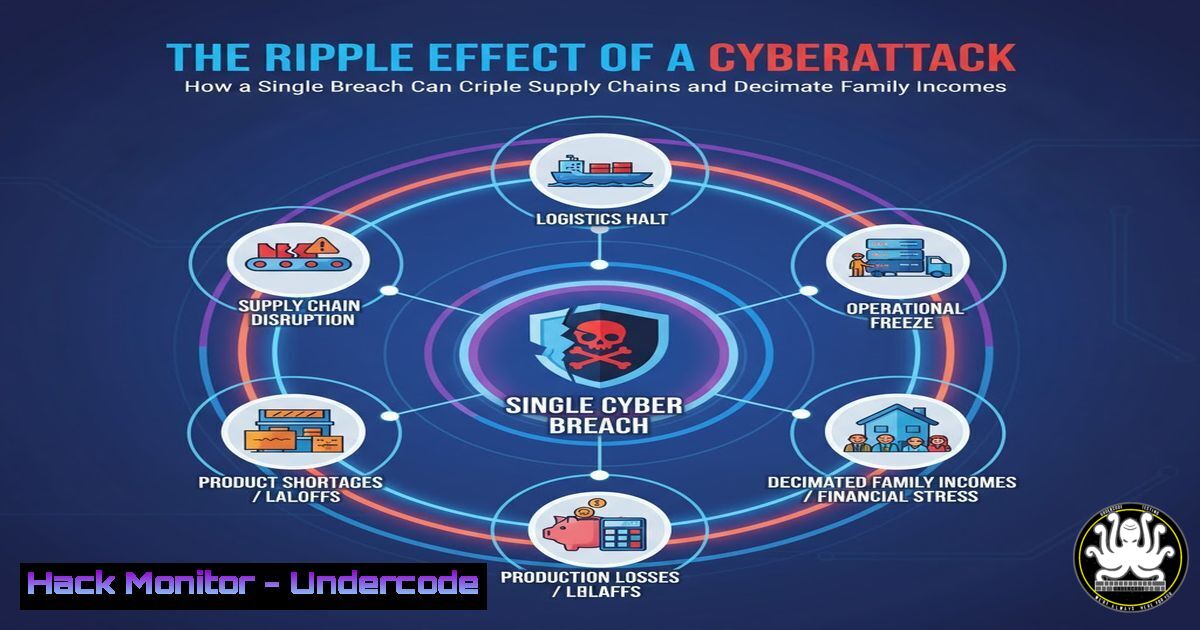
The recent cyberattack on Jaguar Land Rover (JLR) starkly illustrates that modern digital threats are no longer confined to IT departments. When critical systems fail, the disruption cascades through supply chains, halts production lines, and directly impacts payroll, threatening the financial stability of employees and their families. This incident underscores that cybersecurity is now a foundational element of operational resilience, economic stability, and community welfare.
Learning Objectives:
- Understand the technical vulnerabilities in supply chains that attackers exploit.
- Learn critical hardening techniques for Windows and Linux systems within industrial environments.
- Master network defense and monitoring commands to detect and mitigate lateral movement.
You Should Know:
1. Securing the Perimeter: Hardening Critical Internet-Facing Assets
The comment from Andy Jenkinson highlights a critical gap: organizations often lack fundamental knowledge in securing Internet assets, DNS, and PKI. Attackers frequently target these exposed services as an initial entry point.
Verified Linux/Windows/Cybersecurity command list or code snippet or tutorials related to article
Nmap Scan to Identify Open Ports: `nmap -sS -sV -O
Nessus Vulnerability Scan: `nessuscli scan –policy “Basic Network Scan” –target
Windows: Disable SMBv1 (a common attack vector):
`PowerShell
Disable-WindowsOptionalFeature -Online -FeatureName SMB1Protocol
<h2 style="color: yellow;"> Linux: Harden SSH Configuration (/etc/ssh/sshd_config):</h2>
`
Protocol 2
PermitRootLogin no
PasswordAuthentication no
AllowUsers
`
Step-by-step guide explaining what this does and how to use it.
A perimeter defense starts with knowing what is exposed. Use `nmap` to perform a SYN scan (-sS), service version detection (-sV), and OS fingerprinting (-O`) on your external IP range. This identifies unnecessary open ports. Follow up with a credentialed vulnerability scan using a tool like Nessus to find missing patches and misconfigurations. The provided commands harden two common services: disabling the outdated and insecure SMBv1 on Windows servers and configuring SSH on Linux to use only key-based authentication, disallowing root login, and restricting user access.
2. Preventing Lateral Movement: Segmenting the Factory Network
Once inside, attackers move laterally from IT networks to Operational Technology (OT) systems on the factory floor. Proper network segmentation is the primary defense.
Verified Linux/Windows/Cybersecurity command list or code snippet or tutorials related to article
Windows: Create a Windows Firewall Rule to Block Unauthorized Subnets:
`PowerShell
New-NetFirewallRule -DisplayName “Block OT Network” -Direction Outbound -LocalAddress Any -RemoteAddress 192.168.55.0/24 -Action Block
Linux: Configure iptables to Isolate a Network Segment:bash
<h2 style="color: yellow;">
iptables -A FORWARD -s 10.0.1.0/24 -d 192.168.55.0/24 -j DROP
iptables -A FORWARD -d 10.0.1.0/24 -s 192.168.55.0/24 -j DROP
<h2 style="color: yellow;"> Cisco IOS: Basic ACL to Restrict Access:</h2>bash
<h2 style="color: yellow;">
access-list 110 deny ip 10.0.1.0 0.0.0.255 192.168.55.0 0.0.0.255
access-list 110 permit ip any any
interface gigabitethernet0/1
ip access-group 110 in
`
Step-by-step guide explaining what this does and how to use it.
These commands enforce network segmentation. The Windows Firewall rule prevents a compromised IT host (10.0.1.0/24) from initiating connections to the factory OT network (192.168.55.0/24). On a Linux gateway, `iptables` rules are used to block all traffic between the two subnets in both directions. For network hardware, an Access Control List (ACL) on a Cisco router achieves the same goal, explicitly denying traffic between the networks before permitting all other necessary communication.
3. Detecting the Adversary: Hunting for Anomalous Activity
Monitoring for unusual logins and process executions is key to detecting an active breach before it causes widespread damage.
Verified Linux/Windows/Cybersecurity command list or code snippet or tutorials related to article
Windows: Query Security Logs for Failed Logins:
`PowerShell
Get-EventLog -LogName Security -InstanceId 4625 -After (Get-Date).AddHours(-24) | Select-Object TimeGenerated, Message
<h2 style="color: yellow;"> Linux: Search for SSH Failed Login Attempts:</h2>bash
<h2 style="color: yellow;">
grep “Failed password” /var/log/auth.log
`
YARA Rule to Detect Common Malware:
`rule Cobalt_Strike_Beacon {
meta:
description = “Detects Cobalt Strike Beacon payload”
strings:
$a = {FF 15 ?? ?? ?? ?? 59 3D ?? ?? ?? ?? 0F 85}
$b = “beacon.dll” wide ascii
condition:
any of them
}`
Step-by-step guide explaining what this does and how to use it.
The PowerShell command parses the Windows Security log for Event ID 4625 (failed logon) from the last 24 hours, which can indicate brute-force attacks. On Linux, grepping the auth log for “Failed password” provides similar intelligence. For deeper hunting, a YARA rule like the one shown can be deployed with a tool like Thor Lite or Loki to scan memory and disks for the specific byte patterns and strings associated with prevalent post-exploitation tools like Cobalt Strike.
- Hardening Identity and Access: The Role of PKI and DNS Security
As highlighted in the expert comment, DNS and PKI are often overlooked. Compromising these allows an attacker to impersonate legitimate services and steal credentials.
Verified Linux/Windows/Cybersecurity command list or code snippet or tutorials related to article
Windows: Check for Weak Domain Password Policies:
`PowerShell
Get-ADDefaultDomainPasswordPolicy
<h2 style="color: yellow;"> Linux: Check DNSSEC Validation is Active:</h2>bash
<h2 style="color: yellow;">
dig sigfail.verteiltesysteme.net +dnssec
dig sigok.verteiltesysteme.net +dnssec
<h2 style="color: yellow;"> OpenSSL: Verify a Server's SSL/TLS Certificate:</h2>bash
<h2 style="color: yellow;">
openssl s_client -connect example.com:443 -servername example.com | openssl x509 -noout -subject -issuer -dates
`
Step-by-step guide explaining what this does and how to use it.
Use the `Get-ADDefaultDomainPasswordPolicy` cmdlet to ensure password complexity and length are sufficient. The `dig` commands test if your DNS resolver correctly validates DNSSEC signatures; the first should fail and the second should succeed. The `openssl` command connects to a server and displays its certificate details, allowing you to verify the issuer is trusted and the certificate is valid. These steps help prevent credential stuffing and man-in-the-middle attacks.
5. Incident Response: Containing a Payroll System Compromise
When a critical system like payroll is hit, immediate action is required to prevent data theft and service disruption.
Verified Linux/Windows/Cybersecurity command list or code snippet or tutorials related to article
Windows: Isolate a Host by Blocking it at the Firewall:
`PowerShell
New-NetFirewallRule -DisplayName “Quarantine Host” -Direction Inbound -InterfaceAlias Any -Profile Any -Action Block -RemoteAddress 10.0.1.55
Linux: Create a Backup of Critical Logs Before Analysis:bash
<h2 style="color: yellow;">
tar -czvf /opt/backups/evidence-$(date +%Y%m%d).tar.gz /var/log/
Volatility 3: Check for Malicious Processes on a Memory Dump:bash
<h2 style="color: yellow;">
vol -f /path/to/memory.dmp windows.pslist
`
Step-by-step guide explaining what this does and how to use it.
If a payroll server is compromised, the first step is containment. The Windows Firewall rule blocks all inbound traffic to the specific infected host (10.0.1.55), isolating it from the network. Immediately back up all relevant logs from associated systems using the `tar` command for later forensic analysis. Then, use a memory analysis framework like Volatility 3 to dump the system’s memory and run the `pslist` plugin to identify rogue processes that don’t match the known baseline.
- Building a Human Firewall: Phishing Simulation and Training
Technical controls can be bypassed by tricking a user. Regular training and simulated attacks are essential.
Verified Linux/Windows/Cybersecurity command list or code snippet or tutorials related to article
GoPhish API Call to Start a Phishing Campaign:
`bash
curl -X POST -H “Content-Type: application/json” -d ‘{“name”:”Q4 Security Awareness Campaign”}’ http://gophish-server:3333/api/campaigns/?api_key=your_key
Microsoft 365: Query for Suspicious Email Forwarding Rules:PowerShell
<h2 style="color: yellow;">
Get-Mailbox | Get-InboxRule | Where-Object {$_.RedirectTo -ne $null} | Select-Object MailboxOwnerId, Name, RedirectTo
`
Step-by-step guide explaining what this does and how to use it.
Use an open-source phishing framework like GoPhish. The `curl` command demonstrates how to use its API to launch a controlled, simulated phishing campaign against your employees to measure susceptibility. Couple this with proactive monitoring in your email environment; the Exchange Online PowerShell command checks all mailboxes for inbox rules that automatically forward emails to external addresses, a common tactic used by attackers who have gained access to a user’s account.
What Undercode Say:
- The Weakest Link is a Strategic, Not Just Technical, Problem. The JLR attack proves that cybersecurity investment is worthless if your third-party suppliers are vulnerable. Procurement contracts must now include enforceable, audited security baselines.
- Economic Damage is Immediate and Human-Centric. The focus has shifted from data confidentiality to system availability. When production and payroll systems go offline, the impact is measured in lost wages and community instability, not just megabytes of exfiltrated data.
The analysis suggests that the “skills gap” mentioned is a symptom of a deeper systemic failure. For decades, the most critical internet infrastructure skills (DNS, PKI, BGP) were siloed within intelligence communities and not integrated into mainstream IT education. This has created a generation of security professionals who are experts in defending endpoints and networks but lack the foundational knowledge to secure the very protocols the internet runs on. Until corporate boards and academia prioritize these core competencies, attacks on critical infrastructure will continue to succeed.
Prediction:
The JLR incident is a precursor to a new wave of disruptive cyberattacks. We predict that within the next 18-24 months, a major attack will not just delay payroll but will successfully manipulate or erase financial and inventory data, causing permanent financial damage to a corporation and its employees. This will force governments to legislate mandatory, insurance-backed cybersecurity standards for all critical supply chain partners, transforming cybersecurity from a competitive advantage into a regulated, non-negotiable cost of doing business.
🎯Let’s Practice For Free:
IT/Security Reporter URL:
Reported By: Chriswindley This – Hackers Feeds
Extra Hub: Undercode MoN
Basic Verification: Pass ✅


