Listen to this Post
Introduction:
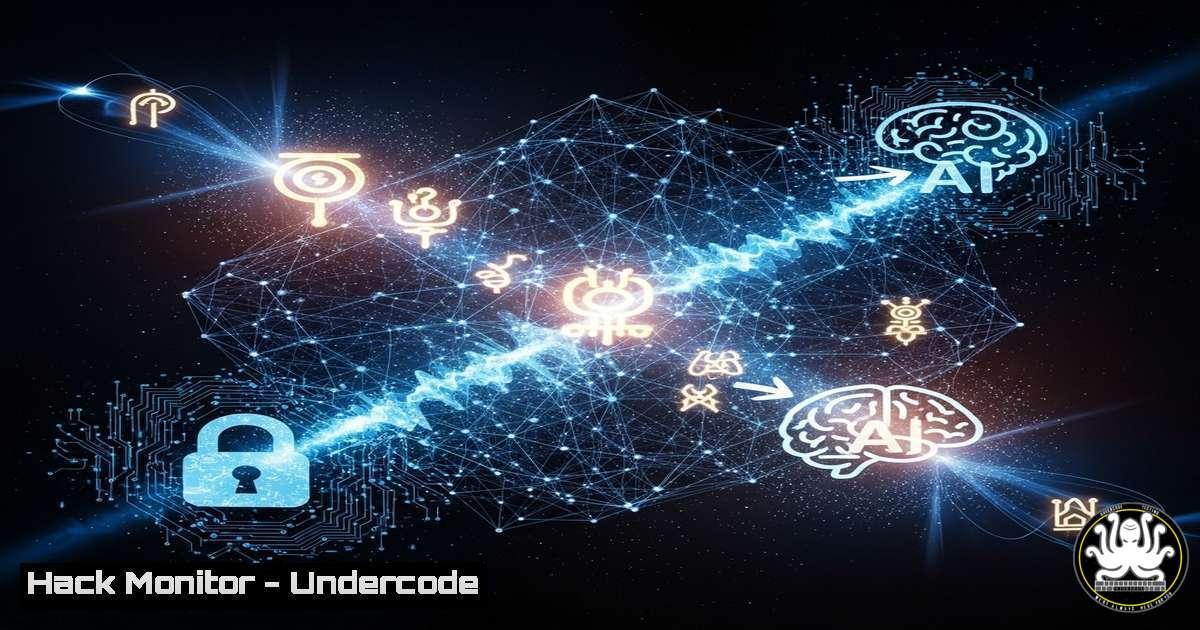
The emerging theory of Primordial Quantum String Theory (PQST) posits that reality is not built on matter but on fundamental frequencies and oscillatory primitives known as glyphs. For cybersecurity and IT professionals, this paradigm shift suggests a future where attacks and defenses operate not in physical hardware or logical code, but in the very frequency-phase substrate of computational systems, demanding entirely new security models.
Learning Objectives:
- Understand the core concepts of PQST and their potential implications for information security.
- Identify how frequency-based attacks could target AI, quantum, and distributed systems.
- Learn foundational commands and techniques to begin hardening systems against a new class of threats.
You Should Know:
1. Mapping System Resonance with Spectral Analysis Tools
Modern systems emit electromagnetic (EM) and power consumption signatures that can be analyzed like a fingerprint. Adversaries can use these for reconnaissance or to induce faults.
 Command to monitor local CPU frequency scaling governors (Linux)
cat /sys/devices/system/cpu/cpu/cpufreq/scaling_governor

Command to install and run a basic EM monitoring tool (e.g., using HackRF)
sudo apt install gqrx-sdr
hackrf_transfer -r capture.cs8 -f 2400000000 -s 20000000 -n 10000000
Step-by-step guide: The first command checks the current power management policy for each CPU core, which influences its processing frequency and potential vulnerability to timing attacks. The second command uses a Software Defined Radio (SDR) like a HackRF to capture raw EM signals around the 2.4 GHz frequency, a common band for Bluetooth and Wi-Fi. Analyzing these captures can reveal information leakage or be used to plan disruptive interference attacks.
2. Hardening Cryptographic Keys Against Frequency-Based Side-Channel Attacks
Cryptographic operations are vulnerable to side-channel attacks that analyze power consumption or EM emissions to extract secrets.
 Command to inspect and manage Intel SGX enclave status (Linux)
sudo apt install sgx-software-enable
sgx-stat

OpenSSL command to generate a key with timing-resistant algorithms (e.g., Ed25519)
openssl genpkey -algorithm ED25519 -out private.key
Step-by-step guide: Intel Software Guard Extensions (SGX) creates secure enclaves in memory that are isolated from the main operating system, helping to protect cryptographic operations from frequency-based side-channel analysis. The `sgx-stat` command checks if SGX is enabled and active on the system. Secondly, using timing-attack resistant algorithms like Ed25519 for asymmetric encryption provides a stronger defense than more vulnerable algorithms like RSA.
3. Securing AI Models from Adversarial Frequency Perturbation
PQST’s focus on frequency-space suggests AI models could be manipulated by injecting specific frequency noise into training data or inputs, not just pixel-level changes.
 Python code snippet using PyTorch to apply Gaussian noise filter as a defensive preprocessing step
import torch
import torchvision.transforms as transforms

def gaussian_noise(input_tensor, mean=0., std=0.1):
noise = torch.randn_like(input_tensor)  std + mean
return input_tensor + noise

Example transform for a vision dataset
transform = transforms.Compose([
transforms.ToTensor(),
transforms.Lambda(lambda x: gaussian_noise(x, std=0.05))
])
Step-by-step guide: This code defines a simple noise-adding transformation that can be applied to input data before it’s fed into an AI model. By adding a small amount of random Gaussian noise, the input’s frequency signature is slightly altered, which can help to disrupt carefully crafted adversarial examples designed to exploit the model’s frequency-based vulnerabilities without significantly altering the input’s meaning to the model.
- Implementing Quantum-Safe Cryptography in Anticipation of PQST-Inspired Attacks
The shift to a frequency-based reality accelerates the need for algorithms resistant to quantum computation, which operates on quantum bits (qubits) that leverage frequency and phase.Command to update OpenSSL and list available providers (including potential quantum-safe ones) sudo apt update && sudo apt upgrade openssl openssl list -providers Example command using OQS-OpenSSL to generate a quantum-resistant key (Falcon-512) openssl genpkey -algorithm falcon512 -out falcon_private.key
Step-by-step guide: The first step is to ensure your system’s OpenSSL package is updated to a version that supports providers, which is the mechanism for integrating new algorithms like post-quantum cryptography (PQC). The OpenSSL-provided project (OQS-OpenSSL) integrates quantum-safe algorithms. The second command demonstrates generating a private key using the Falcon-512 algorithm, a leading candidate for PQC standardization.
5. Auditing Cloud API Security and Resonance Leakage
Cloud APIs are fundamental to distributed systems. In a PQST-informed world, the timing, frequency, and rhythm of API calls could leak sensitive information or be manipulated.
 Command to use Nmap to scan for open API ports and their banners
nmap -sV --script banner -p 443,8080,3000 <target-cloud-ip>

Command to trace HTTP request/response timings with curl for timing analysis
curl -w "@curl-format.txt" -o /dev/null -s "https://api.example.com/v1/data"
 Contents of curl-format.txt:
 time_namelookup: %{time_namelookup}\n
 time_connect: %{time_connect}\n
 time_appconnect: %{time_appconnect}\n
 time_pretransfer: %{time_pretransfer}\n
 time_redirect: %{time_redirect}\n
 time_starttransfer: %{time_starttransfer}\n
 time_total: %{time_total}\n
Step-by-step guide: The Nmap command scans common API ports (-p 443, 8080, 3000) and uses version detection (-sV) and a script (–script banner) to identify the services running and their versions. The `curl` command, with a formatted output file, provides a detailed breakdown of the timing of an HTTP request. Analyzing these timings can reveal performance anomalies or be used to fingerprint services behind load balancers. Consistent rate limiting and obscuring response timings are key mitigations.
- Configuring Hardware to Mitigate Fault Injection via Frequency Manipulation
Attackers can manipulate a CPU’s clock frequency or power supply to induce computational faults and bypass security checks (e.g., Glitch Attack).BIOS/UEFI setting (manual): Disable Intel SpeedStep and C-States These settings are typically found under "Processor Power Management" or similar. Disabling them forces a constant CPU frequency and disables deep sleep states. Linux command to set the CPU governor to 'performance' to lock frequency sudo apt install cpufrequtils for i in /sys/devices/system/cpu/cpu/cpufreq/scaling_governor; do echo "performance" | sudo tee $i; done
Step-by-step guide: Fault injection attacks often rely on dynamically changing CPU power states. Disabling power management features in the BIOS (like SpeedStep) is the most robust defense. Within the OS, the `cpufrequtils` package allows you to control the CPU frequency scaling governor. Setting all cores to ‘performance’ mode locks the CPU at its maximum frequency, eliminating the frequency transitions that glitching attacks exploit, though at a cost of higher power consumption.
-
Building a Frequency-Aware Network Intrusion Detection System (NIDS)
Traditional NIDS looks at packet contents. A frequency-based approach would analyze the timing, rhythm, and periodicity of network flows to detect anomalies.Suricata rule to detect anomalous DNS query rates (frequency of requests) alert dns any any -> any any (msg:"DNS Query Flood Potential"; dns.query; threshold: type both, track by_src, count 100, seconds 10; sid:1000008; rev:1;) Command to monitor live network traffic packet sizes and inter-arrival times with tshark tshark -i eth0 -T fields -e frame.time_delta -e frame.len -Y "ip"
Step-by-step guide: The Suricata rule triggers an alert if a single source IP address generates more than 100 DNS queries within a 10-second window (a high frequency of requests). The `tshark` (command-line Wireshark) command outputs a live stream of the time difference between packets (
frame.time_delta) and their length (frame.len), filtering for IP traffic. Feeding this data into a time-series analysis tool can help baseline normal network “rhythms” and detect deviations caused by beaconing, exfiltration, or DDoS attacks.
What Undercode Say:
- The Attack Surface is Fundamentally Changing. PQST is not just theoretical physics; it is a blueprint for a new class of cyber threats. Security must evolve from protecting logical bits to defending the underlying frequency-phase substrate of computation.
- Interdisciplinary Defense is Now Mandatory. Defending against these threats requires knowledge converging from electrical engineering (EM emanation), cryptography (side-channel resistance), data science (time-series anomaly detection), and quantum computing.
The implications of PQST for cybersecurity are profound and immediate. It moves the battlefield from the application layer down to the physical and quantum layers. Threat actors will inevitably explore ways to weaponize frequency manipulation, from disrupting AI models with adversarial resonance to extracting secrets by analyzing the EM symphony of a device. Proactive defense requires integrating hardware security, quantum-resistant algorithms, and frequency-aware monitoring into existing infosec frameworks. Organizations that dismiss this as mere philosophy will be the first victims of the coming wave of quantum-frequency attacks.
Prediction:
Within the next 5-7 years, we will witness the first documented examples of “Frequency Warfare” in cyber conflicts. Nation-state actors will deploy weapons designed to disrupt critical infrastructure not through software exploits but via targeted EM pulses and precise power glitching. Conversely, defensive technology will mature, leading to the widespread adoption of hardware-enforced cryptographic enclaves, quantum-safe encryption standards by default, and AI-driven NIDS that analyze network flow periodicity with the same rigor as content today. The industry will see a new specialization emerge: Frequency Security Analysts, who blend skills in RF engineering, quantum physics, and traditional penetration testing.
🎯Let’s Practice For Free:
IT/Security Reporter URL:
Reported By: Shayancloud Primordial – Hackers Feeds
Extra Hub: Undercode MoN
Basic Verification: Pass ✅


