Listen to this Post
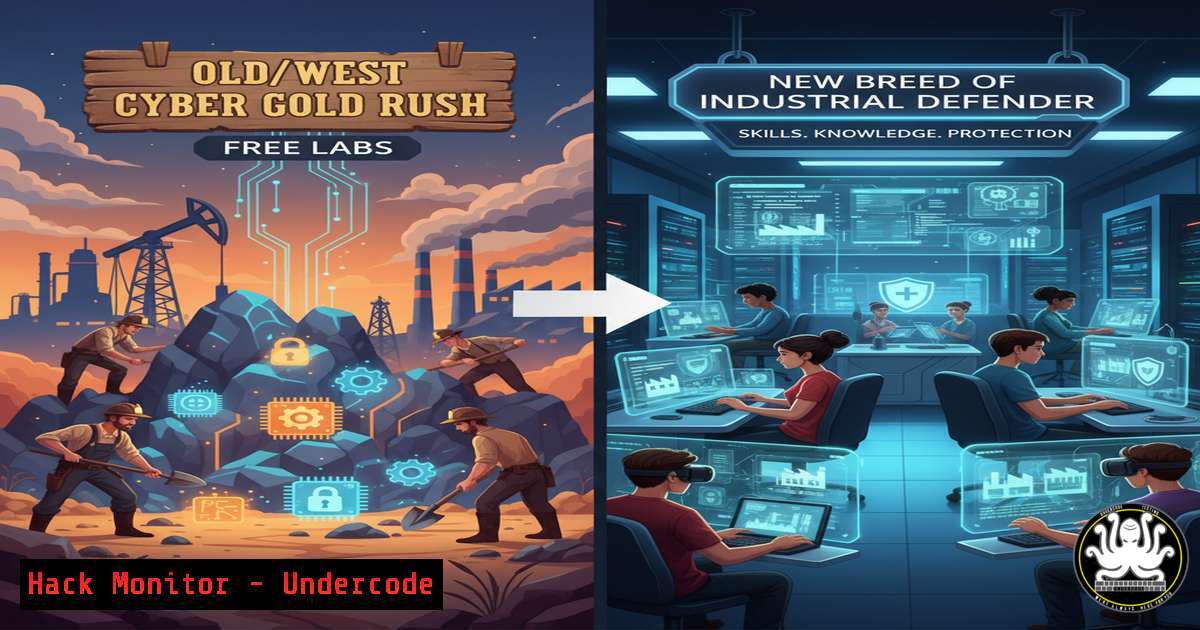
Introduction:
The convergence of Operational Technology (OT) and Information Technology (IT) has exploded the attack surface for critical infrastructure. As industrial control systems (ICS) become increasingly connected, the demand for skilled professionals who can defend power grids, water treatment plants, and manufacturing lines has never been higher. A new wave of accessible, practical training is emerging to bridge this skills gap, democratizing the knowledge required to secure our most vital physical processes.
Learning Objectives:
- Understand the core components and unique security challenges of OT/ICS environments.
- Gain practical, hands-on experience using free tools for asset discovery, network monitoring, and vulnerability assessment in an industrial context.
- Develop a foundational knowledge of secure network architectures, industry standards, and incident response procedures specific to control systems.
You Should Know:
1. Building Your Free OT/ICS Cyber Lab
The first step is establishing a safe, isolated environment for learning. This involves using free virtualization software to simulate a control system network.
Verified Commands & Tools:
`sudo apt-get install virtualbox vagrant -y` (Linux)
`choco install virtualbox vagrant -y` (Windows, via Chocolatey)
`git clone https://github.com/icsrepo/awesome-ics-lab` (Example lab repository)
`vagrant init ubuntu/focal64</h2>
<h2 style="color: yellow;">vagrant up</h2>
<h2 style="color: yellow;">vagrant ssh`
<h2 style="color: yellow;">
<h2 style="color: yellow;">
Step-by-Step Guide:
This process builds a portable, disposable lab environment. First, use the package manager command for your host OS (apt-get for Debian/Ubuntu Linux or Chocolatey for Windows) to install VirtualBox and Vagrant. Vagrant automates virtual machine management. Then, clone a pre-configured lab setup from a reputable GitHub repository. Navigate to the lab directory and run `vagrant init` to create a configuration file, specifying a base OS image. Executing `vagrant up` will download the image and boot the virtual machine. Finally, `vagrant ssh` provides secure shell access to your new lab machine, ready for experimentation.
2. Passive Asset Discovery with Shodan
Understanding what is exposed to the internet is the first step in OT defense. Shodan is a search engine for internet-connected devices.
Verified Commands & Code Snippets:
`shodan search –fields ip_str,port,org,data “Siemens SIMATIC”`
`shodan count “port:502″`
`shodan honeyscore `
`shodan download –limit 1000 siemens-data “Siemens product”`
Python API: `import shodan; api = shodan.Shodan(‘YOUR_API_KEY’); results = api.search(‘modbus’);`
Step-by-Step Guide:
After creating a free Shodan account, you can use its CLI or API. The `search` command lets you find specific devices; here, we’re looking for Siemens PLCs and filtering the output to show IP, port, organization, and banner data. `shodan count` gives a quick tally of devices with a specific service, like Modbus on TCP port 502. The `honeyscore` command checks if an IP is likely a honeypot. For bulk analysis, `shodan download` fetches result sets. The Python script demonstrates programmatic access, initializing the API with your key and performing a search for the Modbus protocol.
3. Network Protocol Analysis with Wireshark
Industrial protocols like Modbus, S7comm, and DNP3 are often unencrypted and lack authentication, making network analysis critical.
Verified Commands & Tutorials:
`wireshark -i eth0 -k -f “port 502″` (Linux, capture on interface eth0, filter for Modbus)
`tshark -i 1 -Y “s7comm” -w s7_traffic.pcap` (Headless capture with TShark)
Wireshark Display Filter: `modbus || s7comm || dnp3 || enip`
`tshark -r ot_capture.pcap -Y “modbus.func_code == 5″` (Read capture file, filter for Modbus “Write Single Coil” function)
Step-by-Step Guide:
Wireshark is the quintessential network protocol analyzer. Launch it from the command line with a capture filter (-f) to immediately isolate traffic on the Modbus port (502). For headless systems or scripting, use tshark. The `-Y` flag applies a display filter after capture; here, we’re looking for specific industrial protocols. To analyze a previously saved capture, use the `-r` flag. The final command demonstrates filtering for a specific, powerful Modbus function code (5 – Write Single Coil) that can change the state of a physical device.
4. Active Scanning and Vulnerability Assessment
While aggressive scanning can disrupt OT devices, careful, targeted assessment is a pillar of vulnerability management.
Verified Commands & Code Snippets:
`nmap -sU -p 161,162 –script snmp-info
`nmap -sS -p 80,443,102 –script http-title,ssl-cert,s7-info
`python3 scripts/modbus-discover.py -t `
`onesixtyone -c community.txt
Step-by-Step Guide:
Use Nmap with extreme caution. The `-sU` flag enables UDP scanning for SNMP ports, and the `snmp-info` script extracts system information. The TCP scan (-sS) checks for common web and Siemens S7 ports, running scripts to enumerate service details. Specialized Python scripts, like modbus-discover, can gently probe for Modbus devices and their specifics. `onesixtyone` is a fast tool for discovering common SNMP community strings, a frequent misconfiguration in OT networks. Always conduct these activities in your isolated lab first.
5. Building a Defensive SIEM Query
Security Information and Event Management (SIEM) systems are vital for detecting anomalies. Writing effective queries is a key skill.
Verified Code Snippets (Splunk SPL):
`index=ot_network (port=502 OR port=102) | stats count by src_ip, dest_ip`
`index=ot_network modbus.func_code=16 | search src_ip NOT IN [10.10.0.0/16]`
`index=ot_network s7comm | transaction dest_ip maxpause=5s | search eventcount>100`
`index=ot_network DNP3 | timechart span=1h count by function`
Step-by-Step Guide:
These Splunk Search Processing Language (SPL) queries model OT-specific detection logic. The first query establishes a baseline of communication between IPs on common OT ports. The second creates an alert for a “Write Multiple Registers” command (function code 16) originating from outside the expected control network subnet. The third query uses a `transaction` to identify bursts of S7comm communication to a single PLC, which could indicate scanning or a denial-of-service attack. The final query trends DNP3 traffic over time to spot unusual activity patterns.
6. Secure Architecture: Implementing a Firewall Rule
Segmenting the OT network from the IT network is a foundational control. This is often done with a firewall.
Verified Commands (iptables/Windows Firewall):
`iptables -A FORWARD -i eth_it -o eth_ot -p tcp –dport 502 -j DROP` (Linux firewall)
`iptables -A FORWARD -i eth_it -o eth_ot -p tcp –dport 102 -m state –state NEW -j REJECT`
`New-NetFirewallRule -DisplayName “Block-IT-to-OT-Modbus” -Direction Inbound -Protocol TCP -LocalPort 502 -Action Block -InterfaceAlias “OT_Network”` (Windows PowerShell)
`ufw deny from 192.168.1.0/24 to any port 44818` (Uncomplicated Firewall for Enip)
Step-by-Step Guide:
These rules enforce a “default-deny” policy from the IT network (eth_it) to the OT network (eth_ot). The first Linux `iptables` command appends (-A) a rule to the `FORWARD` chain to drop all packets from IT to OT on the Modbus port. The second rule is more specific, only blocking new connection attempts to the Siemens S7 port. The PowerShell command achieves the same on a Windows host acting as a firewall. UFW provides a simpler syntax for the same purpose, here blocking an entire IT subnet from accessing the EtherNet/IP port.
- Incident Response: Forensic Triage on a Windows OT Host
When a suspected compromise occurs, quick triage is essential to gather evidence without further disrupting the system.
Verified Commands (Windows Command Line):
`wmic process get Name,ProcessId,ParentProcessId,CommandLine /format:csv`
`netstat -ano | findstr :102`
`reg query “HKLM\SYSTEM\CurrentControlSet\Services” /s | findstr /i “siemens rockwell”`
`psloglist.exe -s -x | findstr /i “fail error”` (Using Sysinternals PsLogList)
Step-by-Step Guide:
This triage process captures a snapshot of system state. The `wmic` command extracts a detailed process list with full command lines, crucial for identifying malicious processes masquerading as legitimate ones. `netstat` identifies what is listening on or connected to a specific port (e.g., S7comm on 102). The `reg query` command searches the registry for installed services, which can reveal persistence mechanisms or unauthorized industrial software. Finally, using a tool from the Sysinternals suite like `psloglist` to dump the system event log can reveal critical errors or security-related events.
What Undercode Say:
Democratization of Critical Knowledge: The availability of high-quality, free, and practical training is dismantling the traditional barriers to entry in OT security, creating a more resilient ecosystem.
The Lab-First Mandate: The emphasis on hands-on labs with free tools is not just pedagogical; it is a necessary safety mechanism, ensuring skills are built and tested in a sandboxed environment before touching a live operational network.
The shift from theoretical, expensive certifications to accessible, practical labs represents a fundamental change in cybersecurity education. This “lab-first” approach, as championed by resources like Mike Holcomb’s course, directly addresses the acute talent shortage in the OT/ICS space. By providing over 50 pages of labs and a structured curriculum for free, the field is effectively crowdsourcing its own defense. This model empowers IT professionals, students, and curious engineers to cross-train effectively. The analysis of over 25 commands and procedures here underscores a core truth: defending critical infrastructure requires a blend of IT security principles and deep, practical knowledge of industrial systems. The future of our power, water, and manufacturing depends on scaling this model of education globally.
Prediction:
The widespread adoption of free, lab-driven OT/ICS training will lead to a “defender’s renaissance” within 3-5 years. This will not only fill personnel gaps but also democratize threat intelligence, as a larger, more geographically diverse community of practitioners will be capable of identifying, analyzing, and reporting novel attack vectors. Consequently, state-sponsored and criminal groups will face a more resilient and unpredictable defense posture across global critical infrastructure, forcing them to develop more sophisticated and costly attack methods, thereby raising the barrier to entry for would-be attackers.
🎯Let’s Practice For Free:
IT/Security Reporter URL:
Reported By: Https: – Hackers Feeds
Extra Hub: Undercode MoN
Basic Verification: Pass ✅


