Listen to this Post
Introduction:
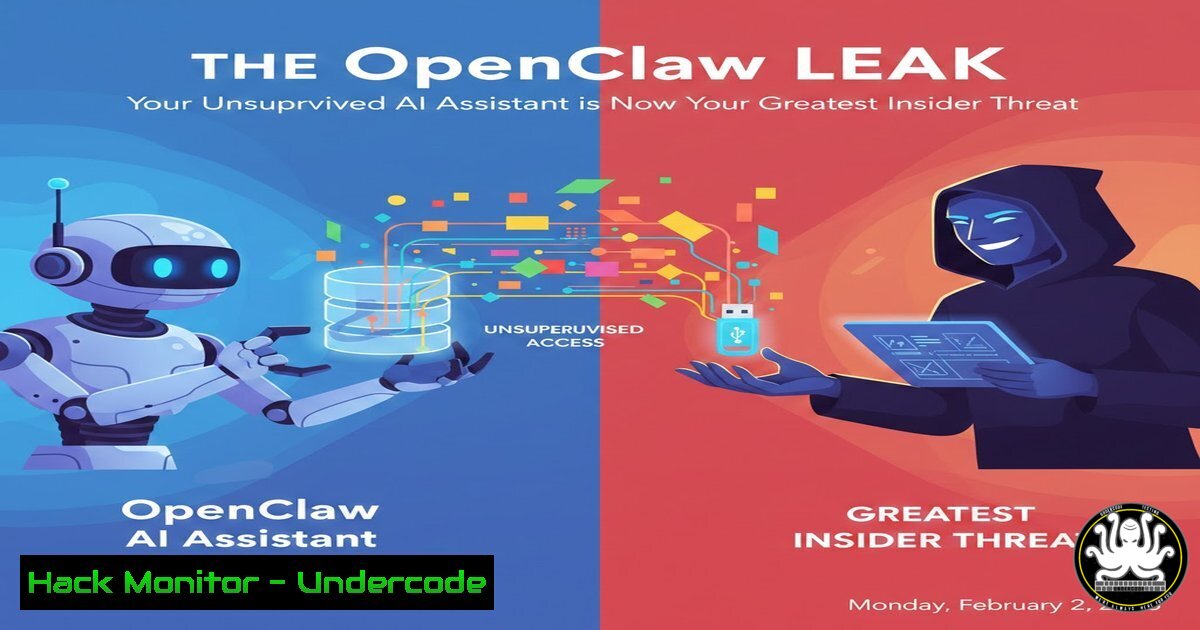
The recent exposure of the OpenClaw (formerly Moltbot/Clawdbot) AI tool is not an isolated security lapse; it is a critical warning siren for the enterprise. This incident exemplifies the rapid, unchecked infiltration of “Shadow AI”—unsanctioned, powerful AI agents deployed by employees, operating with high privileges, and evading traditional Data Loss Prevention (DLP) and security monitoring frameworks. The resulting leaks of API keys, private messages, and system access underscore an urgent truth: agentic AI must be governed as privileged infrastructure, not merely as a productivity tool.
Learning Objectives:
- Identify the operational and security risks posed by Shadow AI deployments like OpenClaw.
- Implement immediate technical controls to detect and mitigate exposed AI/ML endpoints and tools.
- Develop a governance framework to manage the lifecycle of AI tools, from sanctioning to decommissioning.
You Should Know:
1. Mapping Your Network for Shadow AI Endpoints
The first step in combating Shadow AI is discovery. Tools like OpenClaw often expose web admin panels or API endpoints on non-standard ports. Security teams must proactively scan for these unknown assets.
Step‑by‑step guide:
- Perform an Internal Network Scan: Use `nmap` to scan for open ports beyond the standard web ports (80, 443). Look for services on ports like 3000, 5000, 7860, or 8080, commonly used by development and AI tools.
Linux/macOS Example: Scan a subnet for top 1000 ports
nmap -sV -O 10.0.5.0/24 -oA network_scan_results
Look specifically for common dev/AI ports
nmap -p 3000,5000,7860,8080,8888 10.0.5.0/24
- Analyze Web Services: For any discovered HTTP/HTTPS services, use `curl` or a tool like `nikto` to fingerprint the application.
Fetch headers to identify the service
curl -I http://10.0.5.23:5000
Use a vulnerability scanner for initial assessment
nikto -h http://10.0.5.23:5000
- Correlate with Logs: Cross-reference findings with proxy logs, DNS queries, and endpoint detection and response (EDR) telemetry to identify the host and user responsible for the system.
2. Securing Exposed Admin Panels and APIs
An open admin panel is a primary attack vector. Immediate hardening is required.
Step‑by‑step guide:
- Enforce Authentication: Ensure the panel is not set to allow “public” or “no-auth” mode. Implement strong, multi-factor authentication (MFA).
- Implement Network Access Control (NAC): Restrict access to the panel’s port using firewall rules. Only allow connections from designated administrator IP ranges or via a secure VPN.
Example Linux iptables rule to restrict access to port 5000
iptables -A INPUT -p tcp --dport 5000 -s 10.0.1.0/24 -j ACCEPT
iptables -A INPUT -p tcp --dport 5000 -j DROP
- Configure API Keys and Secrets Management: Rotate any potentially leaked API keys immediately. Move secrets from environment files or code into a dedicated secrets manager (e.g., HashiCorp Vault, AWS Secrets Manager).
3. Detecting AI Tool Activity with Enhanced Monitoring
Traditional DLP may not recognize AI agent data flows. You need to build new detection logic.
Step‑by‑step guide:
- Monitor Process Execution: Use EDR or Sysmon (Windows) to alert on the execution of unknown binaries or scripts associated with AI tools.
<!-- Example Sysmon configuration to log process creation -->
<Sysmon>
<EventFiltering>
<RuleGroup name="" groupRelation="or">
<ProcessCreate onmatch="include">
<CommandLine condition="contains">moltbot</CommandLine>
<CommandLine condition="contains">clawdbot</CommandLine>
<CommandLine condition="contains">openclaw</CommandLine>
</ProcessCreate>
</RuleGroup>
</EventFiltering>
</Sysmon>
- Analyze Network Traffic: Deploy IDS/IPS signatures or network analytics to detect traffic patterns to known AI tool repositories, unusual cloud AI service endpoints, or large, systematic data exfiltration to a single external IP.
- Implement User and Entity Behavior Analytics (UEBA): Profile normal user activity. Flag anomalies such as a developer suddenly accessing vast amounts of sensitive data or making high volumes of external API calls to services like OpenAI or Hugging Face.
4. Hardening the Development Supply Chain
The post mentions malicious VS Code extensions. The software supply chain is a key attack vector for compromising developers who then deploy vulnerable tools.
Step‑by‑step guide:
- Mandate Signed Extensions: Enforce policies that only allow installed extensions from verified publishers or a curated internal marketplace.
- Scan for Vulnerabilities in Dependencies: Integrate Software Composition Analysis (SCA) tools into CI/CD pipelines to detect known vulnerabilities in open-source packages, including AI/ML libraries.
Example using Trivy to scan a container for vulnerabilities
trivy image --severity CRITICAL,HIGH my-ai-app:latest
- Provide Sanctioned, Secure Alternatives: Establish an internal AI tool catalog with pre-vetted, secured, and supported alternatives to shadow IT solutions. Educate developers on how to request and use them.
5. Establishing a Formal AI Governance Lifecycle
To move from reactive to proactive, you need a framework.
Step‑by‑step guide:
- Policy & Inventory: Draft a clear policy defining sanctioned vs. unsanctioned AI use. Initiate a formal inventory process for all AI/ML models and tools.
- Risk Assessment & Security Testing: Integrate AI tools into the standard procurement and risk assessment process. Subject them to penetration testing, focusing on their APIs, data handling, and access controls.
- Continuous Monitoring & Decommissioning: Apply the monitoring controls from Section 3 continuously. Establish a formal decommissioning process to remove unused or non-compliant AI tools from the environment.
What Undercode Say:
- Shadow AI is Privileged Access: Any AI agent with the ability to interact with data and systems must be treated with the same rigor as a system administrator account. Its permissions, access logs, and network traffic are high-value targets.
- Innovation Without Control is Technical Debt: The “innovation first, controls later” model creates immediate, exploitable risk. Security must be a parallel track to AI adoption, not a follow-up.
Analysis: The OpenClaw incident is a textbook case of technology outpacing governance. The tool’s functionality is not inherently malicious, but its unsupervised deployment created a fragile, high-risk asset. The cybersecurity response cannot be to ban AI but to envelop it in the security fabric. This requires a blend of classic infrastructure security (hardening, NAC), modern DevSecOps practices (SCA, CI/CD security), and new behavioral monitoring tailored to AI’s unique data patterns. The conversation must shift from IT productivity to enterprise risk management.
Prediction:
In the next 12-24 months, we will see a significant rise in targeted attacks exploiting Shadow AI deployments, leading to major data breaches attributed to “AI supply chain compromise.” This will catalyze three developments: 1) The creation of dedicated “AI Security Posture Management” (AISPM) tool categories, analogous to CSPM, 2) Stricter regulatory and insurance requirements for AI inventory and risk assessment, and 3) The formalization of the “AI Security Engineer” role within enterprise security teams, tasked with hardening these systems. Organizations that fail to integrate AI governance into their core security operations will face disproportionate financial and reputational damage.
▶️ Related Video (82% Match):
🎯Let’s Practice For Free:
IT/Security Reporter URL:
Reported By: Ricardoweb Viral – Hackers Feeds
Extra Hub: Undercode MoN
Basic Verification: Pass ✅


