Listen to this Post
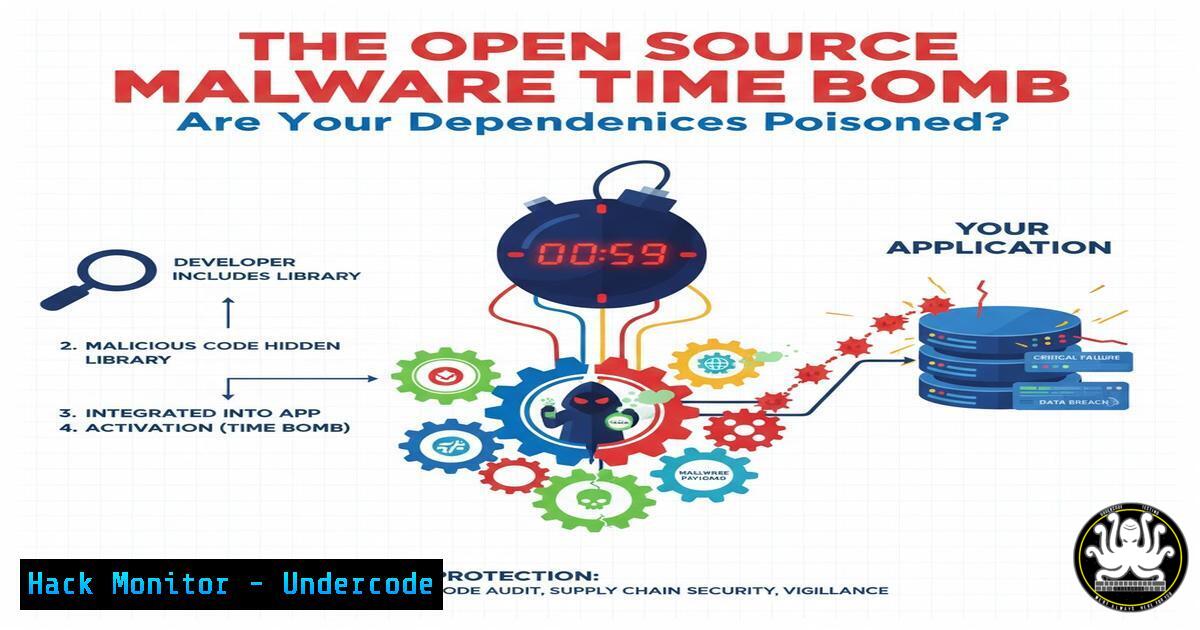
Introduction:
The discovery of the OpenSourceMalware database has sent shockwaves through the cybersecurity community, highlighting an escalating crisis in software supply chain security. This open database meticulously tracks malicious packages within massive ecosystems like npm and PyPI, providing a critical intelligence feed for defenders. Its existence underscores a new era where attackers are systematically weaponizing the very foundations of modern software development.
Learning Objectives:
- Understand the mechanisms of software supply chain attacks via open-source repositories.
- Learn to identify and audit suspicious packages within your project dependencies.
- Implement defensive commands and tools to harden your development environment against dependency confusion and typosquatting.
You Should Know:
1. Auditing Python Dependencies with SafetyDB
Verified Command:
 Install safety for vulnerability scanning
pip install safety

Scan your current environment for known vulnerable packages
safety check --full-report

Scan a requirements.txt file
safety check -r requirements.txt
Step‑by‑step guide: Safety is a Python package that cross-references your installed dependencies against a curated database of known vulnerable packages, including those tracked by OpenSourceMalware. After installation, running `safety check` will analyze your environment and output a detailed report of any packages with known security issues, their associated CVEs, and recommended fixed versions. Use this in your CI/CD pipeline to block builds with vulnerable dependencies.
2. npm Audit for JavaScript Supply Chain Defense
Verified Command:
 Run a comprehensive security audit of your npm dependencies
npm audit

Automatically install compatible updates to vulnerable dependencies
npm audit fix

Force audit fix to update to semver-major versions, which may include breaking changes
npm audit fix --force
Step‑by‑step guide: The `npm audit` command is your first line of defense in the Node.js ecosystem. It submits a description of your dependency tree to the npm registry and returns a report of vulnerabilities, including malicious packages. The `fix` subcommand automatically updates dependencies to non-vulnerable versions where possible. Integrate `npm audit –audit-level high` into your pre-commit hooks to enforce security standards.
3. Detecting Typosquatting with PyPI Hash Verification
Verified Command:
 Download a package and verify its hashes (replace with actual package name)
pip download <package_name> --no-deps

Generate hash for the downloaded wheel/tar.gz
sha256sum <package_name>-.whl

Cross-reference the hash with the one on the official PyPI project page
curl -s https://pypi.org/pypi/<package_name>/json | jq '.releases[][] | select(.filename=="<package_name>-X.Y.Z.whl") | .digests.sha256'
Step‑by‑step guide: Typosquatting attacks rely on users mistyping popular package names. This verification process ensures package integrity. First, download the package without its dependencies. Generate its SHA256 hash, then use the PyPI JSON API to fetch the officially published hash. A mismatch indicates a potential typosquatting attack or a compromised package, and the download should be aborted.
4. Querying the OpenSourceMalware Database Directly
Verified Command:
 Use curl to query the OpenSourceMalware API for a specific package (conceptual)
curl -H "Accept: application/json" https://opensourcemalware.org/api/v1/package/npm/<suspicious_package>

Search for recently reported malicious packages in the npm registry
curl -s https://opensourcemalware.org/api/v1/recent/npm | jq '.results[].package_name'

Check for a PyPI package
curl -s https://opensourcemalware.org/api/v1/package/pypi/<malicious_package>
Step‑by‑step guide: While the exact API endpoints for OpenSourceMalware are evolving, this conceptual guide demonstrates how to programmatically check if a dependency is listed in the database. The queries return structured JSON data containing threat intelligence about the package, such as the date it was flagged, the type of malware it contains, and alternative, safe packages. Automate these checks in your software bill of materials (SBOM) analysis.
5. Hardening Git Configurations Against Malicious Repos
Verified Command:
 Enable Git's built-in security feature to block execution of suspicious hooks
git config --global core.hooksPath /dev/null

Set Git to only use the HTTPS protocol, mitigating repo cloning attacks
git config --global url.https://github.com/.insteadOf git://github.com/

Verify and clean your Git configuration
git config --global --list | grep -E "(hooksPath|insteadOf)"
Step‑by‑step guide: Malicious open-source repositories can contain harmful Git hooks or scripts that execute upon cloning or other Git operations. Setting the `core.hooksPath` to a null directory prevents any local hooks from running. Forcing HTTPS instead of the unencrypted `git://` protocol adds a layer of verification. These global configurations proactively protect developers when experimenting with or auditing code from unknown sources.
6. SBOM Generation for Dependency Visibility
Verified Command:
 Install Syft to generate a Software Bill of Materials (SBOM)
curl -sSfL https://raw.githubusercontent.com/anchore/syft/main/install.sh | sh -s -- -b /usr/local/bin

Generate an SBOM for a Docker image
syft your-application:latest

Generate an SBOM for a local directory (e.g., your Python project)
syft dir:/path/to/your/project -o json > sbom.json
Step‑by‑step guide: You cannot defend what you cannot see. An SBOM provides a complete inventory of all dependencies, transitive dependencies, and their versions. Syft is a powerful CLI tool that generates this inventory in multiple formats. The resulting `sbom.json` file can be ingested by security tools to cross-reference with threat feeds like OpenSourceMalware, enabling automated detection of poisoned dependencies in your assets.
7. Container Image Vulnerability Scanning with Grype
Verified Command:
 Install the Grype vulnerability scanner
curl -sSfL https://raw.githubusercontent.com/anchore/grype/main/install.sh | sh -s -- -b /usr/local/bin

Scan a locally built Docker image for vulnerabilities and malicious packages
grype your-application:latest

Scan using the SBOM generated by Syft for a faster scan
grype sbom:sbom.json
Step‑by‑step guide: Grype works in tandem with Syft to scan container images and SBOMs for vulnerabilities. It checks the identified components against multiple databases, including those tracking malicious packages. The output provides a severity-rated list of issues, allowing you to prioritize remediation. Integrating `grype` into your container build pipeline ensures that images with known malicious dependencies are never deployed to production.
What Undercode Say:
- Proactive, Not Reactive, Intelligence is Non-Negotiable. The OpenSourceMalware database represents a fundamental shift from reacting to individual CVEs to proactively aggregating threat intelligence on entire malicious packages. Defenders must integrate these feeds directly into their development and deployment pipelines.
- The Attacker’s ROI is Skyrocketing. By poisoning a single open-source package, a threat actor can potentially infect thousands of downstream applications and organizations in a single, automated supply-chain strike. The scale and efficiency for attackers have never been greater.
The emergence of dedicated tracking resources like OpenSourceMalware is a direct response to the industrialization of software supply chain attacks. This is no longer a niche threat; it is a systemic risk. The security community’s move to crowdsource and standardize this intelligence, as highlighted by the LinkedIn discussion around API integration (MISP/TAXII/STIX), signals a maturation of our collective defense. However, the onus remains on every organization and developer to actively use these tools. Relying solely on traditional vulnerability scanners is insufficient when the threat is a deliberately malicious package designed to look legitimate.
Prediction:
The normalization of databases like OpenSourceMalware will force a paradigm shift in DevSecOps, making continuous dependency auditing as standard as version control itself. Within two years, we predict regulatory frameworks will mandate an attested, clean SBOM for any software used in critical infrastructure, with automated checks against live threat feeds. The next frontier will be AI-driven tools that can analyze package behavior and code patterns to predict malicious intent before a package is even publicly flagged, moving from a detection-based to a prediction-based security model.
🎯Let’s Practice For Free:
IT/Security Reporter URL:
Reported By: Thomas Roccia – Hackers Feeds
Extra Hub: Undercode MoN
Basic Verification: Pass ✅


