Listen to this Post
Introduction:
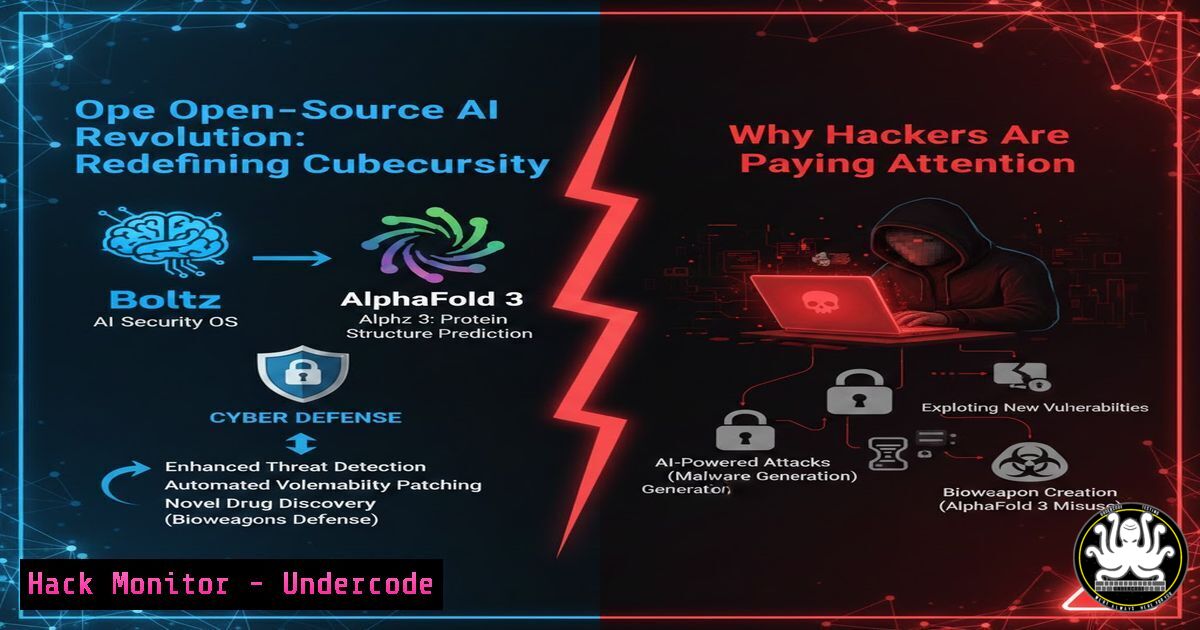
The emergence of open-source AI tools like Boltz, positioned against proprietary giants like AlphaFold 3, is transforming not just bioinformatics but also the cybersecurity landscape. As AI models become integral to critical infrastructure, understanding their security implications—from model poisoning to data breaches—is paramount for IT professionals. This article delves into the technical nuances of securing AI systems and leveraging them for cyber defense, with practical guides for hands-on implementation.
Learning Objectives:
- Understand the cybersecurity risks and benefits of open-source AI tools in IT and industrial environments.
- Learn how to deploy and harden AI models like Boltz against adversarial attacks and vulnerabilities.
- Master commands and configurations for securing AI-driven cloud and IoT systems, including API and data protection.
You Should Know:
- Setting Up Boltz for Security Testing and Ethical Hacking
Open-source AI tools like Boltz allow security teams to simulate attacks, test model resilience, and identify vulnerabilities in AI pipelines. To get started, install Boltz on a Linux system for controlled experimentation.
Step‑by‑step guide:
- First, ensure your system meets prerequisites: Python 3.8+, Git, and a virtual environment. Use these commands to set up a Linux-based lab:
sudo apt update
sudo apt install python3-pip git -y
git clone https://github.com/boltz-ai/boltz.git
cd boltz
python3 -m venv boltz_env
source boltz_env/bin/activate
pip install -r requirements.txt
- This installs Boltz for local use. Next, configure it to test protein folding predictions (akin to AlphaFold 3) by running sample scripts, such as
python3 predict.py --input sample_data.fasta. Use this to analyze how AI models process sensitive biological data, which can reveal injection risks or data leakage points. Regularly update the tool with `git pull` to patch known security flaws.
- Securing AI Models Against Adversarial Attacks and Data Poisoning
AI models, whether open-source or proprietary, are vulnerable to attacks that manipulate inputs or training data. For instance, adversarial samples can fool Boltz into incorrect predictions, impacting IoT or industrial systems relying on AI.
Step‑by‑step guide:
- Implement model hardening techniques. On Windows, use PowerShell to enable logging and monitor for anomalies in AI deployments:
Enable audit logging for AI service access
AuditPol /set /subcategory:"Process Creation" /success:enable /failure:enable
Use Python to add adversarial training to Boltz models
python -c "from boltz import defense; defense.adversarial_retrain(model='boltz_model.h5', dataset='training_data.csv')"
- Additionally, integrate tools like IBM Adversarial Robustness Toolbox (ART) with Boltz by installing it via
pip install adversarial-robustness-toolbox. Run regular scans to detect perturbations, and apply differential privacy to training data using commands like `python3 -m boltz.secure –privacy-epsilon 0.5` to mitigate poisoning risks.
- Leveraging AI for Vulnerability Detection in IT and IoT Networks
AI can automate vulnerability scanning, but it must be configured securely to avoid false positives or exploitation. Use Boltz to analyze network traffic patterns and identify weaknesses in cloud or IoT devices.
Step‑by‑step guide:
- Deploy Boltz as a network monitoring tool on a Linux server. First, set up a Docker container for isolation:
docker pull boltz/ai-scanner:latest
docker run -d --name boltz-scanner -p 8080:8080 -v /path/to/config:/config boltz/ai-scanner
- Configure it to scan for vulnerabilities by editing the `/config/scan.yaml` file to include target IP ranges and API endpoints. Use cron jobs to schedule daily scans: `crontab -e` and add
0 2 docker exec boltz-scanner python scan.py --output vulnerabilities.json. Analyze results with JSON parsers like `jq` to prioritize patches, ensuring compliance with industrial standards like IEC 62443.
- API Security Hardening for AI Services in Cloud Environments
AI tools often expose APIs that are prime targets for attacks. Secure Boltz APIs by implementing authentication, rate limiting, and encryption.
Step‑by‑step guide:
- If using Boltz on AWS or Azure, set up API Gateway with WAF rules. For on-premises Linux systems, use Nginx as a reverse proxy with ModSecurity:
sudo apt install nginx libmodsecurity3 sudo nano /etc/nginx/sites-available/boltz-api Add configuration: server { listen 443 ssl; server_name api.boltz.local; ssl_certificate /etc/ssl/certs/boltz.crt; ssl_certificate_key /etc/ssl/private/boltz.key; location / { proxy_pass http://localhost:5000; proxy_set_header Host $host; modsecurity on; modsecurity_rules_file /etc/modsecurity/boltz_rules.conf; } } sudo systemctl restart nginx - Test API security with OWASP ZAP: `docker run -t owasp/zap2docker-stable zap-baseline.py -t https://api.boltz.local`. Regularly update rules to block SQL injection or model theft attempts, and use API keys rotated via scripts.
- Cloud Hardening for AI Deployments with Kubernetes and Docker
As AI scales in cloud environments, misconfigurations can lead to data breaches. Harden Boltz deployments using Kubernetes security contexts and network policies.
Step‑by‑step guide:
- Deploy Boltz on a Kubernetes cluster with minimized privileges. Create a `boltz-deployment.yaml` file:
apiVersion: apps/v1
kind: Deployment
metadata:
name: boltz-ai
spec:
replicas: 3
selector:
matchLabels:
app: boltz
template:
metadata:
labels:
app: boltz
spec:
securityContext:
runAsNonRoot: true
seccompProfile:
type: RuntimeDefault
containers:</li>
<li>name: boltz
image: boltz/ai:latest
ports:</li>
<li>containerPort: 5000
resources:
limits:
memory: "512Mi"
cpu: "500m"
- Apply it with
kubectl apply -f boltz-deployment.yaml. Enable network policies to restrict traffic: `kubectl apply -f network-policy.yaml` where the policy denies all except authorized services. Use `kubectl audit` logs to monitor for unauthorized access, aligning with CIS benchmarks.
- Mitigating AI-Powered Cyber Threats with Behavioral Analysis and Patching
AI can be weaponized for phishing or malware, but it also enables defensive behavioral analysis. Use Boltz to detect anomalies in system logs or user behavior.
Step‑by‑step guide:
- On Windows, integrate Boltz with SIEM tools like Splunk for real-time analysis. Use PowerShell to feed logs into Boltz:
Export Windows event logs to CSV for AI processing
Get-WinEvent -LogName Security | Export-Csv -Path C:\logs\security_events.csv
Run Boltz anomaly detection
python C:\boltz\analyze.py --input C:\logs\security_events.csv --output anomalies.txt
- For Linux, set up automated patching of AI dependencies. Create a script
/usr/local/bin/patch_boltz.sh:!/bin/bash cd /opt/boltz git fetch origin git merge origin/main pip install --upgrade -r requirements.txt systemctl restart boltz-service
- Schedule it with `crontab -e` to run weekly, and test mitigations for common CVEs like model inversion attacks by reviewing Boltz issue trackers on GitHub.
- Training and Course Integration for AI Cybersecurity Skills
To stay ahead, IT teams must enroll in courses covering AI security. Leverage online platforms like Coursera or dedicated labs for hands-on Boltz experimentation.
Step‑by‑step guide:
- Set up a training lab using VirtualBox with Kali Linux and Boltz installed. Use these commands to simulate attacks:
In Kali, clone Boltz and run a security workshop
git clone https://github.com/boltz-ai/security-workshop.git
cd security-workshop
python3 workshop.py --module adversarial-ai
- Enroll in courses such as “AI for Cybersecurity” on edX or SANS SEC595, and practice with capture-the-flag events that incorporate Boltz tools. Document findings in a knowledge base using Markdown and share via internal wikis to foster team learning.
What Undercode Say:
- Key Takeaway 1: Open-source AI tools like Boltz democratize security testing but introduce new attack surfaces; rigorous hardening of models and APIs is non-negotiable for IT and IoT environments.
- Key Takeaway 2: The convergence of AI and cybersecurity requires continuous training, as threats evolve from data poisoning to AI-powered exploitation, necessitating hands-on skills in Linux/Windows commands and cloud configurations.
- Analysis: The post’s emphasis on “Vive le hacking!” underscores a proactive mindset—security professionals must embrace hacking techniques to defend AI systems. Boltz vs AlphaFold 3 symbolizes the tension between openness and control; while open-source AI fosters innovation, it also risks unauthorized access if not secured. The technical guides above provide a roadmap, but real-world implementation demands balancing accessibility with zero-trust principles, especially in industrial IoT where stakes are high. Organizations should prioritize AI security frameworks, integrating tools like Boltz into DevSecOps pipelines to automate vulnerability management.
Prediction:
In the next 3-5 years, AI-driven cyber attacks will surge, with tools like Boltz being dual-used for both defense and offense. However, open-source AI will also lead to more robust, community-vetted security models, reducing reliance on proprietary black boxes. As regulations catch up, certifications for AI security will become standard, and professionals skilled in securing AI deployments—as detailed in this article—will be in high demand. The bet between Boltz and AlphaFold 3 will extend beyond bioinformatics to influence national security policies, pushing for encrypted AI workflows and ethical hacking standards globally.
▶️ Related Video (74% Match):
🎯Let’s Practice For Free:
IT/Security Reporter URL:
Reported By: Blasdo Boltz – Hackers Feeds
Extra Hub: Undercode MoN
Basic Verification: Pass ✅


