Listen to this Post
Introduction:
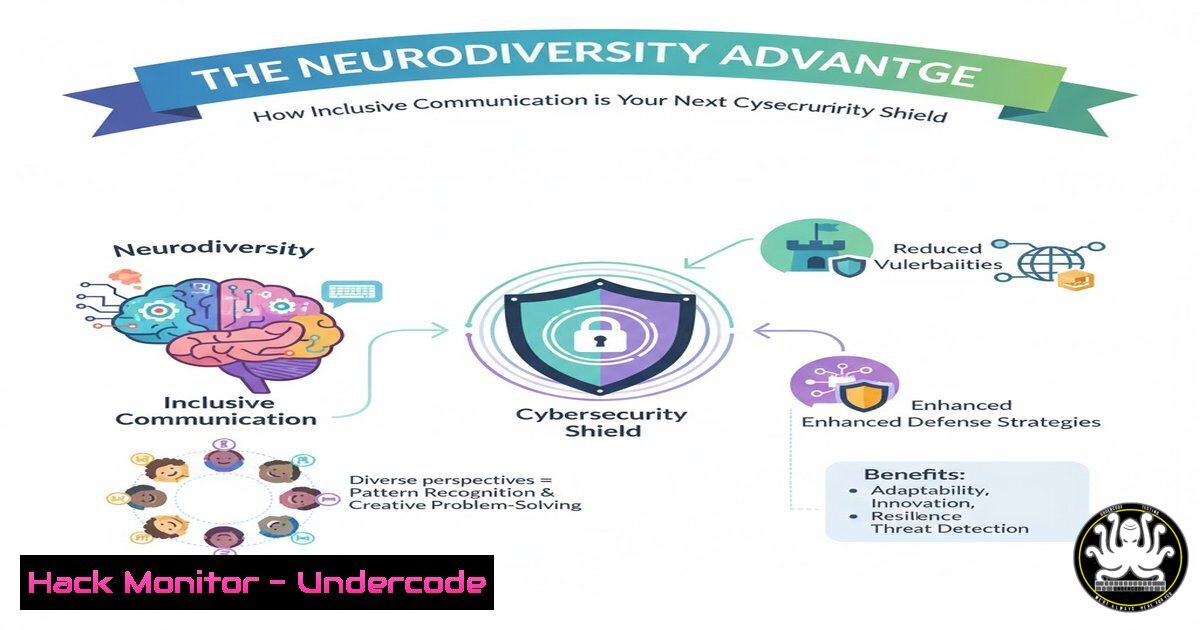
In the high-stakes world of cybersecurity, clear and unambiguous communication is not just an HR initiative—it’s a critical component of an effective defense strategy. Miscommunication between neurodivergent and neurotypical team members can create security gaps, slow incident response, and lead to costly errors. By embracing neurodiversity-affirming communication practices, security teams can transform potential friction into a formidable strategic advantage, fostering an environment where precision and clarity mitigate risk.
Learning Objectives:
- Understand the direct link between neuroinclusive communication and reduced security vulnerabilities.
- Learn practical strategies to implement “clarity as kindness” in security documentation and incident reporting.
- Develop tools to leverage diverse cognitive approaches for more robust threat analysis and system design.
You Should Know:
- The High Cost of Ambiguity in Security Protocols
Ambiguous instructions in runbooks, incident response plans, or access control policies are a primary source of human error. A neurodivergent individual, such as someone with Autism who processes information literally, may follow a vaguely worded command exactly as stated, potentially with unintended consequences. Conversely, a neurotypical team member might make assumptions that bypass critical security steps.
Step-by-step guide explaining what this does and how to use it:
Audit Your Documentation: Systematically review all operational playbooks, SOC procedures, and configuration guides.
Identify Ambiguous Language: Look for subjective terms like “check periodically,” “ensure it’s secure,” or “review the logs.” Replace them with explicit, measurable actions.
Implement a Peer-Review Process: Have documentation reviewed by individuals with different cognitive styles. A neurodivergent reviewer can often spot ambiguity that others gloss over.
Example – Linux Command Ambiguity:
Vague: “Clean up old log files.”
Precise: “Execute `find /var/log -name “.log” -mtime +30 -exec rm {} \;` to remove all files with the `.log` extension in the `/var/log` directory that are older than 30 days.”
2. Structured Communication for Enhanced Incident Response
During a security incident, stress exacerbates communication breakdowns. Neuroinclusive practices, such as providing written summaries after verbal briefings or using structured data forms, ensure critical details are not lost.
Step-by-step guide explaining what this does and how to use it:
Create Standardized Incident Reporting Templates: Use forms with specific, mandatory fields (e.g., Timestamp, IP Address, IOC Observed, System Impacted). This removes the cognitive load of deciding what information is important.
Leverage Command-Line Tools for Objective Data Gathering: Instead of subjective descriptions, encourage the use of commands that produce immutable, shared data.
Linux: `ss -tuln > network_status_$(date +%F).txt` to snapshot all listening ports to a dated file.
Windows (PowerShell): `Get-NetTCPConnection | Where-Object {$_.State -eq “Listen”} | Export-CSV listening_ports.csv` to export listening ports to a CSV.
Implement a “Repeat-Back” Protocol: After a verbal instruction is given in a crisis, the receiver repeats their understanding of the task and its expected outcome to confirm alignment.
3. Leveraging Cognitive Diversity for Threat Modeling
Neurodivergent individuals, particularly those with ADHD or Autism, may exhibit exceptional pattern recognition, deep focus, and a propensity for identifying system-level inconsistencies that others miss. This is a potent asset in threat modeling and code review.
Step-by-step guide explaining what this does and how to use it:
Form Diverse Red Teams: Intentionally include neurodivergent members in red team exercises and architecture reviews.
Utilize Specialized Tools for Systematic Analysis: Provide tools that cater to systematic thinking.
Example – Automated Code Scanning: Integrate SAST (Static Application Security Testing) tools like `Bandit` for Python into your CI/CD pipeline. A neurodivergent engineer might then deeply analyze the findings.
Command: `bandit -r /path/to/your/code -f json -o results.json`
Create “Deep Dive” Sessions: Allow for uninterrupted, focused time for individuals to analyze complex systems without the pressure of constant meetings, enabling them to uncover subtle logic flaws or attack paths.
4. Neuroinclusive Access Control and Authentication
Authentication processes can be a significant barrier. Social engineering attacks often prey on social norms and pressure, which may affect neurodivergent individuals differently. Furthermore, complex, frequently changing password policies can be challenging for those with working memory differences.
Step-by-step guide explaining what this does and how to use it:
Promote Password Manager Adoption: Mandate and provide corporate-wide password managers (e.g., Bitwarden, 1Password) to eliminate the memory burden and generate strong, unique passwords.
Implement Phishing-Resistant MFA: Move beyond SMS-based codes. Deploy FIDO2/WebAuthn security keys or platform authenticators, which are both more secure and provide a clear, consistent authentication action.
Security Awareness Training: Conduct training that uses clear, explicit examples of phishing attempts, explaining the “why” behind the rules rather than just the “what.”
- API Security and the Need for Explicit Specifications
APIs thrive on explicit specifications. Neurodivergent developers often excel at creating and adhering to rigorous, well-defined schemas, which is the foundation of secure API development.
Step-by-step guide explaining what this does and how to use it:
Mandate OpenAPI/Swagger Specifications: Require that all REST APIs are documented with a complete OpenAPI spec. This eliminates ambiguity in expected inputs, outputs, and error codes.
Automate Schema Validation: Use tools to validate all API requests and responses against the schema.
Example – Using `prism` CLI to Mock and Validate:
`prism mock openapi.yaml` – Creates a mock server from your spec.
`prism validate openapi.yaml` – Validates the specification itself.
Integrate Security Linters: Use tools like ` Spectral ` with custom rulesets to automatically check OpenAPI files for common security misconfigurations, such as missing authentication on certain endpoints.
What Undercode Say:
- Clarity is a Security Control. Unambiguous communication is not merely a “soft skill”; it is a technical control that directly reduces the attack surface created by human error. Documenting a command with precise syntax is as critical as writing the firewall rule itself.
- Cognitive Diversity is a Force Multiplier. A homogenous team thinks in homogenous ways, creating blind spots. A neurodiverse team, supported by inclusive processes, is inherently more resilient to a wider array of complex, novel attacks because it analyzes problems from multiple, non-overlapping perspectives.
The post’s core message about “clarity is kindness” and “direct communication” translates directly into cybersecurity operational excellence. The industry’s historical focus on technical controls has often overlooked the human system in which those controls operate. By architecting our communication and processes to be inclusive of neurodiversity, we are not just being socially responsible; we are building more robust, precise, and ultimately more secure organizations. The logical, detail-oriented, and pattern-seeking minds often found in neurodivergent individuals are a natural fit for the meticulous nature of security work, provided the environment is structured to support their success.
Prediction:
The future of cybersecurity will see “Neuroinclusive Security” mature from a niche concept to a standard best practice. We will see the emergence of specialized security frameworks that explicitly bake in communication and process guidelines to minimize ambiguity-driven risk. Security tools will increasingly incorporate AI-driven assistants that help translate vague natural language requests into precise, executable code or queries, acting as a universal clarifier for all team members. Ultimately, organizations that fail to adapt and harness the full spectrum of cognitive talent will find themselves at a strategic disadvantage, struggling with higher error rates and slower innovation compared to their more inclusive, and therefore more secure, competitors.
🎯Let’s Practice For Free:
IT/Security Reporter URL:
Reported By: Jesstoft Directcommunication – Hackers Feeds
Extra Hub: Undercode MoN
Basic Verification: Pass ✅


