Listen to this Post
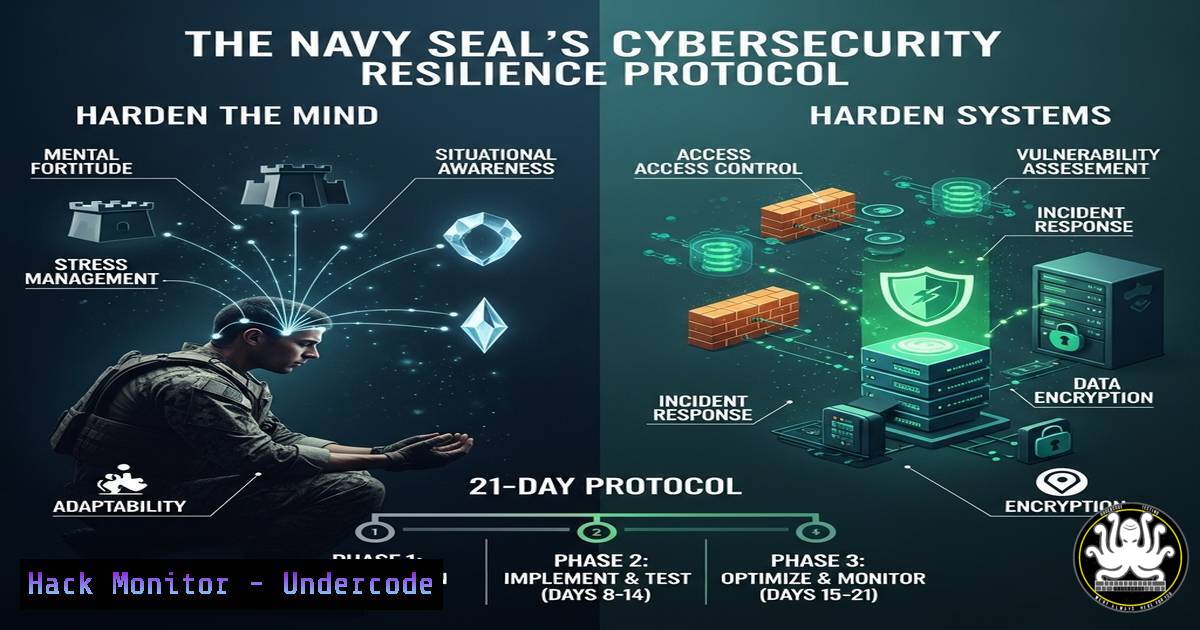
Introduction:
In an era of relentless cyber threats and alert fatigue, the human element remains the most critical—and most exploitable—layer of defense. The same mental resilience required to complete a Navy SEAL’s Hell Week is directly applicable to maintaining peak cybersecurity performance, preventing burnout, and ensuring consistent adherence to critical security protocols. This article translates elite human performance principles into a actionable technical regimen for cybersecurity professionals.
Learning Objectives:
- Implement a daily 21-minute movement protocol to combat cognitive fatigue and enhance focus during security operations.
- Apply the “Rule of Three” to prioritize daily security tasks, reducing alert overload and preventing critical oversights.
- Develop a non-negotiable routine for completing one proactive security action before engaging with reactive tasks like email and ticketing systems.
You Should Know:
1. The 21-Minute Cognitive Priming Movement Protocol
The goal is not physical fitness but neural activation. Perform this sequence daily before your first security task.
` Linux: Check system uptime (mental parallel: your own readiness)`
`$ uptime`
` 21:00 minute timer using the ‘at’ command`
`$ echo ‘echo “Protocol Complete” | wall’ | at now + 21 minutes`
Step-by-Step Guide:
This protocol uses simple commands to create a structured, timed routine. The `uptime` command provides a quick system status check, mirroring the need to assess your own mental state. The `at` command schedules a system-wide notification to mark the end of your 21-minute movement window, enforcing discipline. This isn’t about a workout; it’s about using a time-bound technical trigger to build the habit of non-negotiable commitment.
2. Pre-Email Revenue Action: The Daily Vulnerability Scan
Your “one revenue action” in cybersecurity is a proactive threat hunt. Never open your email before executing at least one automated scan.
` Nmap quick scan of critical infrastructure subnet`
`$ nmap -T4 -F 10.10.1.0/24 -oN /var/log/daily_scan_$(date +%Y%m%d).log`
` Check for critical vulnerabilities with OpenVAS CLI`
`$ gvm-cli –gmp-username admin –gmp-password password socket –xml “
Step-by-Step Guide:
This establishes a proactive security posture. The `nmap` command performs a fast sweep of the network to identify any new or unauthorized devices immediately at the start of the day. Logging the output with a date stamp ($(date +%Y%m%d)) creates an immutable audit trail. The OpenVAS/GVM command checks the status of ongoing vulnerability assessment tasks, ensuring you are reacting to the most critical threats first, rather than being distracted by the influx of emails.
3. The “I Forgot” Mitigation: Automated Configuration Auditing
The excuse “I forgot” is eliminated through automation. Use these commands to enforce baseline configurations.
` Windows: Audit a security policy (PowerShell)`
`PS C:\> Auditpol /get /category:`
` Linux: Verify file integrity of critical binaries (AIDE check)`
`$ sudo aide –check`
` Automate compliance checks with Lynis`
`$ sudo lynis audit system –quick`
Step-by-Step Guide:
Forgetfulness creates security gaps. These commands automate the auditing process. On Windows, `auditpol` verifies that logging policies are correctly set. On Linux, `aide` performs a file integrity check against a known-good database to detect unauthorized changes. The `lynis` tool provides a quick, comprehensive system audit for common misconfigurations. Scheduling these in a daily cron job or scheduled task removes the human memory element from critical security checks.
- “Nobody Supports Me” Countermeasure: Automated Log and Evidence Collection
Shift from blaming lack of support to automated data gathering for justification and incident evidence.
` Centralize logs via RSYSLOG (Client-side)`
`$ logger -p auth.warning “SECURITY EVENT: Failed login attempt”`
` Query Windows Event Logs for specific failure events`
`PS C:\> Get-WinEvent -FilterHashtable @{LogName=’Security’; ID=4625} -MaxEvents 10`
` Collect network evidence with TCPDump`
`$ sudo tcpdump -i eth0 -w $(hostname)-$(date +%Y%m%d).pcap -G 900 -W 1 port 443 or port 80`
Step-by-Step Guide:
This turns subjective feelings into objective data. The `logger` command sends a custom message to the central syslog server, ensuring an event is recorded. The PowerShell `Get-WinEvent` cmdlet actively hunts for specific login failure events (ID 4625) to prove a threat is active. The `tcpdump` command captures a rotating packet capture of web traffic, creating concrete evidence for analysis. Automated data collection provides the “support” needed to justify security requests and actions.
5. “This is Stupid” Firewall: Hardening Rule Deployment
When frustration hits, channel it into deploying definitive, blocking security measures.
` Windows: Block a malicious IP via Firewall`
`PS C:\> New-NetFirewallRule -DisplayName “Block_Malicious_IP” -Direction Inbound -RemoteAddress 192.0.2.100 -Action Block`
` Linux: Drop packets from a threat actor subnet with IPTables`
`$ sudo iptables -A INPUT -s 203.0.113.0/24 -j DROP`
` Persist IPTables rules`
`$ sudo su -c ‘iptables-save > /etc/iptables/rules.v4’`
Step-by-Step Guide:
This provides a tangible outlet for frustration. Instead of quitting, you actively block a threat. The Windows `New-NetFirewallRule` PowerShell cmdlet creates a new rule to block a specific malicious IP address. The Linux `iptables` command immediately drops all packets from a dangerous subnet. The `iptables-save` command ensures the rule survives a reboot. This transforms negative energy into a positive, security-enhancing action.
- The Day 18 “I Hate It” Surge: Active Threat Hunting
When the urge to quit is strongest, engage in aggressive, hands-on threat hunting.
` PowerShell: Hunt for suspicious processes`
`PS C:\> Get-Process | Where-Object { $_.CPU -gt 90 } | Select-Object ProcessName, ID, CPU`
` Linux: Look for hidden/privilege escalation processes`
`$ ps aux | awk ‘{if($3>80.0) print $0}’`
` Check for anomalous network connections with Netstat`
`$ netstat -tulnp | grep -v “127.0.0.1” | grep “LISTEN”`
Step-by-Step Guide:
This direct action overrides the desire to quit. The PowerShell command filters all running processes for those consuming excessive CPU, a potential indicator of malware or crypto-mining. The Linux `ps` and `awk` command performs a similar function. The `netstat` command lists all listening ports not bound to localhost, which could reveal unauthorized services. This hands-on engagement provides a immediate sense of control and purpose, pushing through the mental barrier.
- The Day 21 “Simple Beats Complex” Revelation: Automated Reporting
The final stage is realizing complexity can be managed with simple, automated workflows.
` Generate a daily security summary report`
`$ echo ” DAILY SECURITY REPORT $(date) ” > /var/log/daily_security_report.log`
`$ echo ” CRITICAL EVENTS ” >> /var/log/daily_security_report.log`
`$ grep -i “crit\|fail\|error” /var/log/syslog | tail -20 >> /var/log/daily_security_report.log`
` Windows: Email the report (using PowerShell)`
`PS C:\> Send-MailMessage -From “[email protected]” -To “[email protected]” -Subject “Daily Report” -Attachments “/var/log/daily_security_report.log” -SmtpServer “smtp.corp.com”`
Step-by-Step Guide:
This demonstrates the power of simplicity. A bash script is used to aggregate critical security events from the system log into a single, easy-to-read daily report. The PowerShell `Send-MailMessage` cmdlet then automatically emails this report to the SOC team. This entire workflow, which provides immense value, is built from a few simple commands automated via cron and scheduled tasks, proving that consistent, simple actions outperform complex, abandoned projects.
What Undercode Say:
- Mindset is a Configurable System: Mental resilience is not an innate trait but a system that can be engineered, configured, and hardened like any cybersecurity platform. The protocols provided are the configuration files for that system.
- Automation Eliminates the Weakest Link: The most common excuses for security failures are negated by pre-defined scripts and automated tasks. By removing the need for daily decision-making, you conserve cognitive resources for genuine zero-day threats and critical incidents.
The Navy SEAL’s core insight—that humans fail for predictable, simple reasons—is profoundly applicable to cybersecurity. SOC analysts and CISOs don’t fail because they lack tools; they fail because of alert fatigue, burnout, and the constant negotiation with cutting corners. The technical commands outlined here are not just about performing a function; they are about instilling the discipline of non-negotiable execution. This approach hardens the human firewall, which is the ultimate defense layer. By applying this 21-day protocol, security professionals can systematically rewire their habits to prioritize proactive measures, automate compliance, and channel frustration into productive action, ultimately creating a more resilient security posture.
Prediction:
The future of cybersecurity will see a formal convergence of human performance engineering and security operations. CISOs will not only be evaluated on their technical controls but on the mental resilience and cognitive readiness of their teams. We will see the rise of “Cognitive Security Posture” scores, measuring a team’s ability to maintain focus and discipline under sustained pressure. Training will increasingly incorporate biofeedback and stress inoculation techniques borrowed from special operations forces. Organizations that fail to invest in the human system’s resilience will find their multi-million dollar tech stacks rendered useless by simple human error and burnout, making mental hardening the next critical frontier in cyber defense.
🎯Let’s Practice For Free:
IT/Security Reporter URL:
Reported By: Greg Jones – Hackers Feeds
Extra Hub: Undercode MoN
Basic Verification: Pass ✅


