Listen to this Post
Introduction:
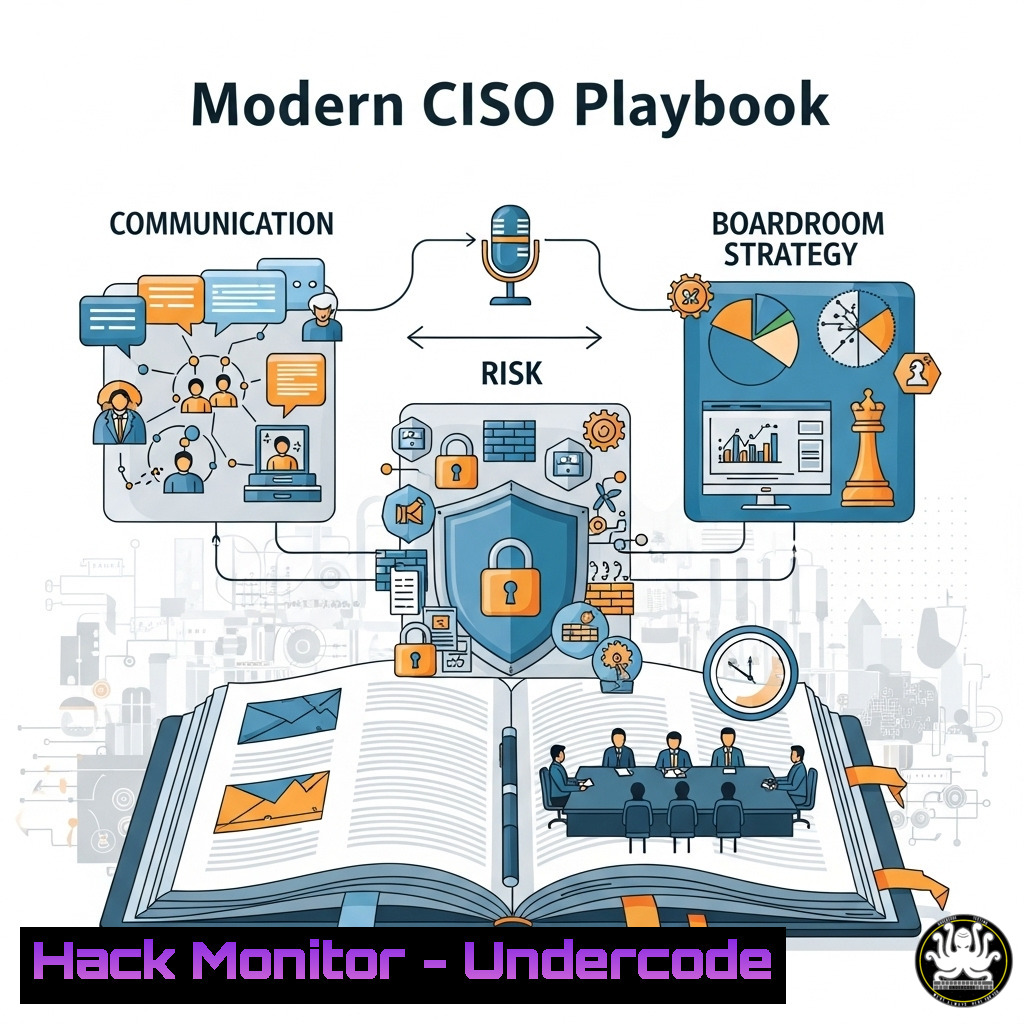
The role of the Chief Information Security Officer (CISO) has evolved far beyond technical oversight into a critical business function. This masterclass dissects the core responsibilities of a modern CISO, focusing on translating technical risk into business language, building effective incident response protocols, and securing executive buy-in for cybersecurity initiatives.
Learning Objectives:
- Understand the key reporting structures, communication strategies, and daily operational duties of a CISO.
- Learn to construct and implement actionable incident response playbooks and vulnerability management programs with weighted context.
- Master the art of executive and board-level communication to drive funding, build trust, and align security with business objectives.
You Should Know:
1. Building Incident Response Playbooks
A critical CISO function is moving from ad-hoc reactions to a prepared, documented response. This involves creating specific playbooks for different incident types (e.g., ransomware, data breach, DDoS).
Command/Code Snippet (Splunk Query for Ransomware Detection):
`index=windows EventCode=4663 Object_Name=”.encrypted” OR Object_Name=”.locked” OR Object_Name=”.crypt” | stats count by host, user`
Step-by-Step Guide:
This Splunk query searches Windows event logs for file creation events where the file extension suggests ransomware encryption activity.
1. Define the Scope: This query assumes Windows endpoints are forwarding Event Code 4663 (an attempt was made to access an object) to your Splunk index.
2. Customize the Trigger: The `Object_Name` field is filtered for common ransomware file extensions. You must update this list based on current threat intelligence (e.g., add .lockbit, .phobos).
3. Triage the Output: The results will show a count of matching events grouped by hostname and user, providing immediate targets for isolation and investigation. This data should trigger your dedicated ransomware response playbook.
2. Vulnerability Prioritization with Weighted Context
CISOs must avoid patching chaos by prioritizing vulnerabilities based on real risk, not just CVSS scores. This involves assigning weighted scores to assets and vulnerabilities.
Command/Code Snippet (Python Script Snippet for Risk Scoring):
 Example risk score calculation
asset_value = 5  Scale of 1-5
exploit_availability = 10  CVSS Exploitability score
threat_intel_score = 8  Internal threat intel value
business_impact = 7  Operational impact score

weighted_risk_score = (asset_value  0.3) + (exploit_availability  0.3) + (threat_intel_score  0.2) + (business_impact  0.2)
print(f"Prioritized Risk Score: {weighted_risk_score}")
Step-by-Step Guide:
This simplistic model demonstrates moving beyond a single metric.
1. Define Metrics: Establish criteria for scoring. `asset_value` (1-5 based on criticality), `exploit_availability` (from CVSS or other sources), `threat_intel_score` (is it actively exploited?), `business_impact` (will it disrupt operations?).
2. Assign Weights: The weights (0.3, 0.3, 0.2, 0.2) must be tailored to your organization’s risk appetite. A financial institution may weight `asset_value` higher.
3. Automate and Integrate: Integrate this logic into your vulnerability management platform (e.g., Tenable, Qualys) to automatically generate a prioritized list for remediation teams, cutting through the noise of thousands of vulnerabilities.
3. Executing Threat Modeling at Scale
Threat modeling is not a one-time architectural exercise. A CISO ensures it is an ongoing process, integrated into the DevOps lifecycle (DevSecOps) to identify threats early.
Command/Code Snippet (OWASP Threat Dragon CLI Init):
`threat-dragon-cli init –model my-app-model.json`
Step-by-Step Guide:
OWASP Threat Dragon is an open-source tool for systematic threat modeling.
1. Installation: Install the Threat Dragon CLI or use its web-based version. The CLI allows for integration into CI/CD pipelines.
2. Create a Model: Use the `init` command to start a new model file. Diagram your application’s data flow (DFD), outlining processes, data stores, data flows, and trust boundaries.
3. Identify Threats: The tool uses the STRIDE model (Spoofing, Tampering, Repudiation, Information Disclosure, DoS, Elevation of Privilege) to automatically generate potential threats for each element in your diagram. The CISO’s role is to institutionalize this practice, making it a mandatory step before code deployment.
4. Implementing a Risk Acceptance Workflow
Not all risks can be mitigated immediately. A formal risk acceptance process with documented approvals is essential for accountability and audit preparedness.
Command/Code Snippet (AWS IAM Policy for Risk Acceptance Write Access):
{
"Version": "2012-10-17",
"Statement": [
{
"Effect": "Allow",
"Action": "dynamodb:PutItem",
"Resource": "arn:aws:dynamodb:us-east-1:123456789012:table/RiskAcceptanceTable",
"Condition": {
"ForAllValues:StringEquals": {
"dynamodb:LeadingKeys": ["${aws:username}"]
}
}
}
]
}
Step-by-Step Guide:
This IAM policy grants a user permission to add an item to a DynamoDB table used for tracking risk acceptances, but only with their username as a key.
1. Create a Registry: Use a simple database (e.g., AWS DynamoDB, SQL table) to create a risk registry. Each entry should include the vulnerability ID, asset, business justification, expiration date, and approving manager.
2. Control Access: Implement fine-grained access control using policies like the one above. This ensures only authorized personnel (e.g., system owners, risk managers) can create entries and that they are accountable.
3. Automate Alerts: Configure the database to trigger alerts to the CISO’s office and the approving manager when a risk acceptance is nearing its expiration date, forcing a re-assessment.
5. Hardening Cloud Configurations
A fundamental CISO duty is ensuring security basics are covered, which often means eliminating tool overlap and hardening core infrastructure like cloud environments.
Command/Code Snippet (AWS CLI to check for unrestricted SSH access):
`aws ec2 describe-security-groups –filter Name=ip-permission.from-port,Values=22 Name=ip-permission.cidr,Values=’0.0.0.0/0′ –query “SecurityGroups[].[GroupId, GroupName]”`
Step-by-Step Guide:
Misconfigured security groups are a leading cause of cloud breaches.
1. Run the Audit Command: This AWS CLI command lists all security groups in your account that have an inbound rule allowing SSH (port 22) access from any IP address (0.0.0.0/0).
2. Triage Findings: Review the output. For any security groups returned, determine if the EC2 instance requires public SSH access. In 99% of cases, it should not.
3. Remediate: Immediately modify the security group rule to restrict the source IP to a specific management IP range or a bastion host. This is a basic but critical control that reduces the attack surface significantly.
What Undercode Say:
- The CISO is a Business Strategist, Not a Tech Lead: The core takeaway is that the modern CISO’s value is measured by their ability to articulate cyber risk in terms of financial impact, operational resilience, and strategic business enablement, not by their depth of technical scripting knowledge.
- Process Overrides Panic: The emphasis on structured playbooks, weighted risk scoring, and formal acceptance workflows provides a repeatable framework for managing chaos. This creates organizational resilience and moves security from a cost center to a value-protection function.
The analysis underscores a fundamental shift in cybersecurity leadership. The technical commands and scripts are merely tools in the toolbox; the real expertise lies in designing the system that uses those tools effectively. The modern CISO architects processes—for incident response, risk quantification, and board communication—that ensure technical teams are focused on what matters most to the business’s survival and success. This playbook is less about configuring a WAF and more about configuring the organization itself for security.
Prediction:
The evolution of the CISO role will accelerate, driven by increasing regulatory pressure and AI-powered threats. Future CISOs will be expected to possess fluency in AI governance and will leverage AI not just for threat detection, but for predictive risk modeling and automated compliance reporting. Their success will be directly tied to their ability to integrate AI security into overall business strategy, making AI risk a standard boardroom agenda item. The CISO of 2030 will be a hybrid executive: part technologist, part ethicist, and all business.
🎯Let’s Practice For Free:
IT/Security Reporter URL:
Reported By: Pcissp %F0%9D%90%88%F0%9D%90%A7%F0%9D%90%AC%F0%9D%90%A2%F0%9D%90%9D%F0%9D%90%9E – Hackers Feeds
Extra Hub: Undercode MoN
Basic Verification: Pass ✅


