
Listen to this Post
Introduction:
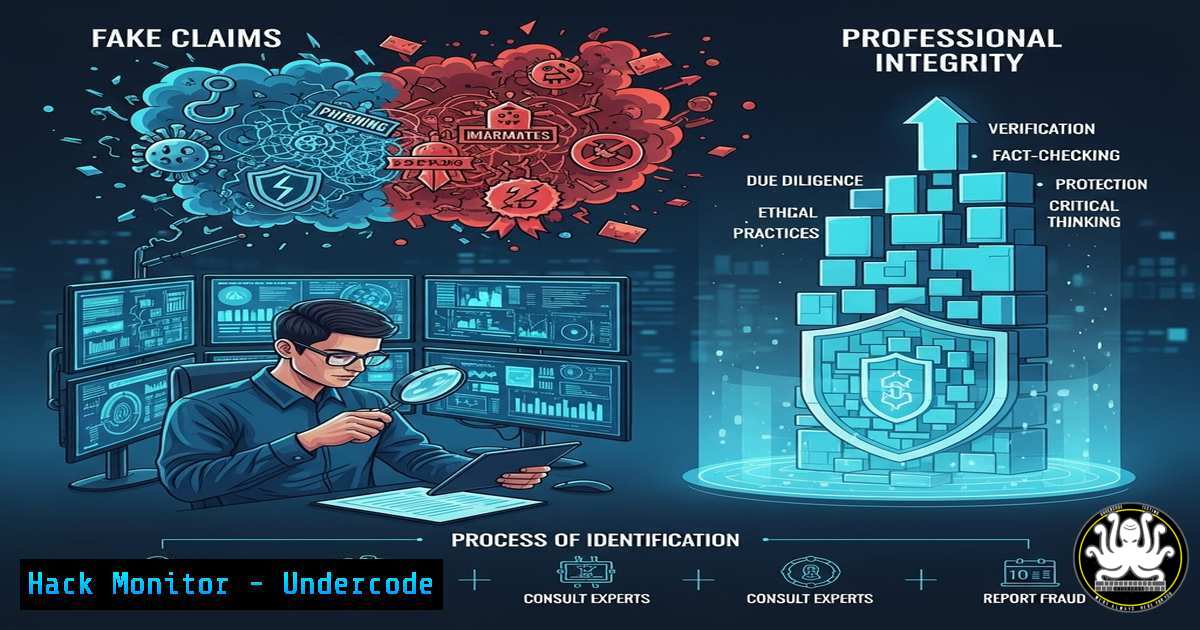
The recent exposure of a fabricated Meta bug bounty payout highlights a growing trend of misinformation within the cybersecurity community. This incident serves as a critical case study for professionals to hone their skills in digital forensics and source verification, essential for maintaining the integrity of the field.
Learning Objectives:
- Identify common red flags in fabricated security reports and screenshots.
- Utilize open-source intelligence (OSINT) tools to verify claims and individuals.
- Understand the structure of legitimate bug bounty programs from major tech firms.
You Should Know:
1. OSINT Verification with WHOIS and DNS
`whois linkedin.com`
`dig meta.com ANY`
Step‑by‑step guide: To verify the authenticity of a company’s digital presence, start with a WHOIS lookup. This command queries the domain registration database, revealing the registrant, registration date, and registrar. For a company like Meta, you would expect the registrant organization to be ‘Meta Platforms, Inc.’ with recent creation dates. Following this, a DNS query (dig) for ‘ANY’ record provides all associated DNS records, including mail exchangers (MX). A legitimate corporate domain will have properly configured SPF, DKIM, and DMARC records to prevent email spoofing, a common element in faked correspondence.
2. Email Header Analysis for Forgery Detection
`curl -IL https://security.fb.com/ | grep -i “strict-transport-security”`
Step‑by‑step guide: Faked emails often lack the security headers present in legitimate corporate communication. Use `curl` with the `-I` (head) and `-L` (follow redirects) flags to fetch the HTTP headers of the official Meta security page. The `grep` command then filters for the `Strict-Transport-Security` header. Its presence enforces HTTPS, a standard practice for all legitimate security portals. Its absence in a claimed communication is a major red flag.
3. Image Metadata and Forensics
`exiftool suspected_fake_image.png`
`strings suspected_fake_image.png | grep -i “photoshop”`
Step‑by‑step guide: Fabricated screenshots often contain digital fingerprints of editing software. The `exiftool` command extracts metadata (EXIF) from an image file, which can reveal the creation software, modification dates, and camera model. The `strings` command dumps all human-readable text from within the binary image file. Piping (|) this output into `grep` to search for terms like “Photoshop” or “GIMP” can instantly reveal if an image was edited, disproving its authenticity.
4. Cross-Referencing Official Bug Bounty Platforms
`nslookup security.facebook.com`
`theHarvester -d meta.com -b urlscan`
Step‑by‑step guide: Verify claims against official channels. Use `nslookup` to confirm the legitimate IP addresses of a company’s security subdomain. Then, employ OSINT tools like `theHarvester` to scour public data from sources like URLscan.io for all known subdomains (-d) related to meta.com. This builds a list of verified official domains. Any claim of a bounty payout that references an unlisted or unofficial domain is almost certainly fraudulent.
5. Network Analysis for Phishing Site Detection
`nmap -sV –script http-title suspected-domain.com`
`python3 -m http.server 8000 &> /dev/null &`
Step‑by‑step guide: If a claim includes a suspicious link, investigate it safely. The `nmap` command with version detection (-sV) and a script to fetch the page title can often reveal a phishing kit without directly visiting the site. For deeper analysis, security researchers often isolate the site in a virtual machine and use a simple Python HTTP server to host a downloaded copy for local inspection, avoiding interaction with the live, potentially malicious server.
6. Social Media Profile Investigation
`sherlock neeraj_sharma`
`mailhound -u “[email protected]” -b google`
Step‑by‑step guide: Use tools like `sherlock` to cross-reference a claimed individual’s username across hundreds of social media sites. Inconsistencies in professional history or activity can be a sign of a fabricated persona. For email addresses mentioned in claims, tools like `mailhound` can search (-b) public data breaches on Google to see if the email appears in any leaked databases, which can be indicative of a recycled or fake identity.
7. Automated Vulnerability Scanning Verification
`nuclei -u https://target.com -t exposures/apis/`
`gitleaks –path=/local/code/repo –verbose`
Step‑by‑step guide: Real researchers use real tools. If a individual claims a specific vulnerability class (e.g., an API leak), demonstrate how it’s actually found. `Nuclei` can scan a target URL (-u) for a specific template category (-t), like API exposures. For source code leaks, `gitleaks` can scan a local repository path (--path) to identify hardcoded secrets. The output from these professional tools will starkly contrast with the vague claims of a hoax.
What Undercode Say:
- Trust, but Verify: The foundational principle of cybersecurity must extend to interactions within the community itself. Blindly accepting claims damages collective credibility.
- Tool Proficiency is a Lie Detector: A deep practical knowledge of verification tools is the best defense against professional social engineering and misinformation. This incident was uncovered not by hearsay, but by applying technical scrutiny.
- analysis: The hoax reveals a vulnerability not in Meta’s systems, but in the community’s infosec practices. The rush to engage with a sensational claim overshadowed the basic duty to verify. This creates noise that distracts from genuine research, erodes trust in legitimate researchers, and can be weaponized for personal branding or worse. Cultivating a culture of evidence-based validation, where technical proof is paramount, is the necessary mitigation.
Prediction:
This incident foreshadows an increase in AI-generated hoaxes, including deepfake video testimonials and perfectly forged documents. The barrier to creating believable fakes will lower, forcing the cybersecurity industry to develop and standardize cryptographically verifiable attestation methods for bug bounties and professional achievements. Blockchain-based credentialing and signed, timestamped claim verification will transition from niche to necessity to maintain trust.
🎯Let’s Practice For Free:
IT/Security Reporter URL:
Reported By: Neeraj1337 This – Hackers Feeds
Extra Hub: Undercode MoN
Basic Verification: Pass ✅


